
News
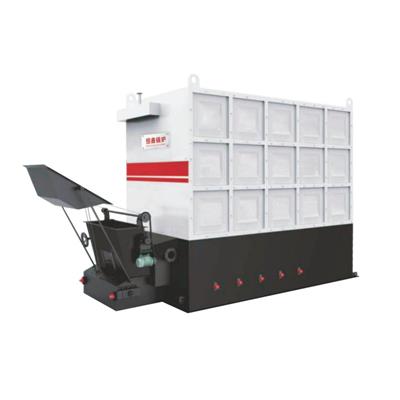
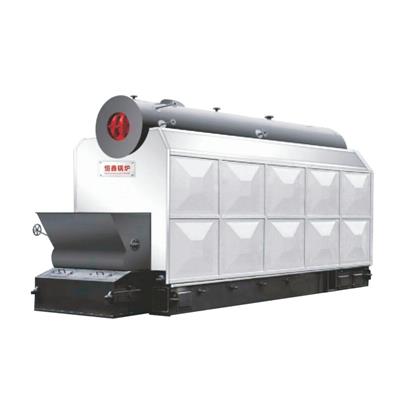
Biomass burning grate hot water boiler is a single boiler cylinder longitudinal fire tube boiler, combustion equipment for the grate. Thewaterwallonthe left andright sidesofthe furnace is the radiant heatingsurface,andthethreadedsmokepipeinthetwowingsofthe furnaceandthecylinderistheconvectionheatingsurface.Theboiler body adopts the form of upper cylinder, water wall tube and collecting box symmetrical arrangement on the overall structure. The barrel is welded by the barrel body and the front and rear tube plates. The furnace layout of the boiler is reasonable and the combustion efficiency is high.
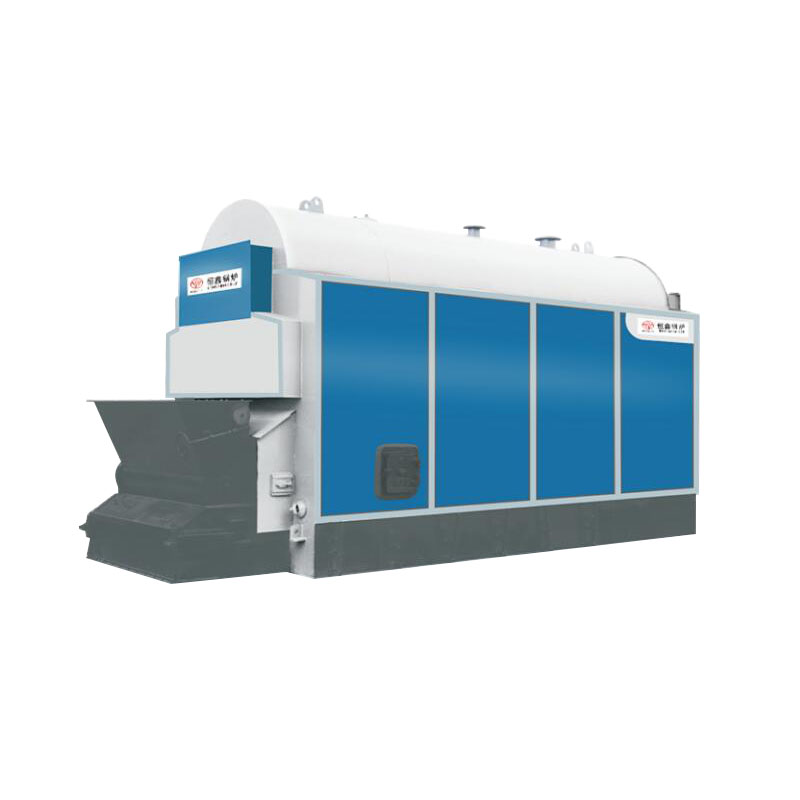
Hengxin Biomass boiler
1. What are the advantages of biomass boilers?
Biomass boilers are valued for their integrated environmental, economic, and social benefits. Key advantages include:
Environmental Sustainability & Renewability: They are considered carbon-neutral, as the CO? released during combustion is roughly equal to the amount absorbed by the biomass during growth. They also produce significantly lower emissions of SO? and NOx compared to coal and help in waste valorization by utilizing agricultural and forestry residues.
Economic Benefits: Biomass fuel costs are typically lower and more stable than fossil fuels like natural gas and oil. Many regions offer policy support such as subsidies or tax incentives. In areas with abundant fuel supply, they offer favorable long-term operating costs.
Technological Maturity & Versatility: The technology is well-established for applications in industrial steam, heating, and power generation. Existing coal-fired boilers can often be retrofitted at a relatively low initial investment.
Social Value: The biomass supply chain creates employment opportunities in rural areas and stimulates local economic development.
2. What is the application prospect for biomass boilers?
The prospects are broad, with development shifting towards more rational, high-quality, and diversified models.
Transition from Policy-Driven to Market-Driven: While early growth relied on subsidies, future development will emphasize techno-economic competitiveness and market-based operations. Under global "Dual Carbon" goals (Carbon Peak & Neutrality), biomass energy retains a key strategic role as a stable renewable source.
Technology Trends: The focus is on higher efficiency, broader fuel adaptability (handling diverse, high-moisture fuels), intelligent control systems, and Combined Heat and Power (CHP) generation for superior overall energy efficiency.
Expanding Applications: Core use remains in steam-intensive industries (e.g., paper, food). Significant potential exists in clean district heating and integration into hybrid renewable energy systems coupled with solar or storage.
Critical Challenges: Realizing this potential hinges on establishing sustainable fuel supply chains and ensuring strict emission controls to avoid issues like resource competition or pollution displacement.
3. What factors affect the thermal conversion efficiency of biomass boilers?
Thermal conversion efficiency refers to the percentage of fuel's chemical energy converted into usable heat (steam/hot water). Key influencing factors are:
1. Fuel Properties (Core Factor):
Moisture Content: High moisture increases latent heat loss, raising flue gas temperature and significantly reducing efficiency.
Volatile Matter: Higher volatile content promotes easier ignition and faster combustion.
Ash Content: High ash lowers the combustible fraction, absorbs heat, and can cause slagging, impairing heat transfer.
Particle Size & Uniformity: Affects feeding stability, combustion rate, and burnout.
2. Boiler Design & Manufacturing:
Furnace Geometry: Adequate volume and shape ensure sufficient residence time for complete combustion.
Heat Exchange Surface Layout: Optimal arrangement of radiant and convective heating surfaces to absorb heat from flue gases at different stages.
Insulation Quality: Effective insulation minimizes casing heat losses.
3. Operation & Control:
Excess Air Ratio: Too high increases flue gas heat loss; too low leads to incomplete combustion (chemical heat loss). Precise control is crucial.
Combustion Organization: Air distribution (primary/secondary air ratio and injection points) directly impacts combustion efficiency and pollutant formation.
Flue Gas Temperature: Lowering exhaust temperature improves efficiency (~1% gain per 15-20°C drop), but must avoid low-temperature corrosion.
Load Factor: Prolonged operation at low load reduces furnace temperature and combustion quality, lowering efficiency.
Fouling & Slagging: Soot and slag deposits on heat exchange surfaces act as insulators, increasing flue gas temperature and reducing efficiency.
4. How to improve the conversion efficiency of biomass boilers?
Based on the factors above, the following measures can be taken:
1. Fuel Pre-treatment & Quality Management:
Drying: Use natural air-drying or mechanical dryers to control fuel moisture content within an optimal range (typically 15%-25%).
Densification: Process loose biomass into pellets or briquettes to increase energy density, uniformity, and feeding stability.
Screening: Remove impurities and control particle size to ensure consistent fuel quality.
2. Optimize Boiler Design & Selection:
Select advanced, well-designed boilers with adequate furnace volume and optimized heating surfaces.
Consider condensing boilers to recover latent heat from water vapor in the flue gas, potentially boosting efficiency by over 10%.
Install economizers and air preheaters to recover waste heat from exhaust gases, preheating feedwater and combustion air.
3. Precision Operation & Automatic Control:
Implement Advanced Control Systems: Use real-time monitoring of O?, CO, temperature, and pressure to automatically adjust air supply and fuel feed, maintaining optimal excess air ratio.
Optimize Air Staging: Properly balance primary air (for stable ignition) and secondary air (for complete combustion and mixing).
Maintain Clean Heat Surfaces: Perform regular and effective soot blowing (e.g., steam, shock wave) to preserve optimal heat transfer.
Avoid Low-Load Operation: Match boiler capacity to demand or use thermal storage to keep boilers operating near their rated, efficient load.
4. Enhance Maintenance & Energy Management:
Regularly inspect and repair insulation and seals on the boiler casing and ducts to minimize radiation and air leakage losses.
Provide professional training for operators to raise awareness of energy-saving practices and operational skills.
Establish an energy efficiency monitoring system, conduct periodic performance tests, and analyze trends for continuous improvement.
In summary, improving biomass boiler efficiency is a systematic endeavor. It requires a coordinated effort across four dimensions: fuel source control, equipment performance, precise operational control, and diligent maintenance management. This holistic approach is key to maximizing energy utilization and achieving win-win economic and environmental benefits.