
Company News
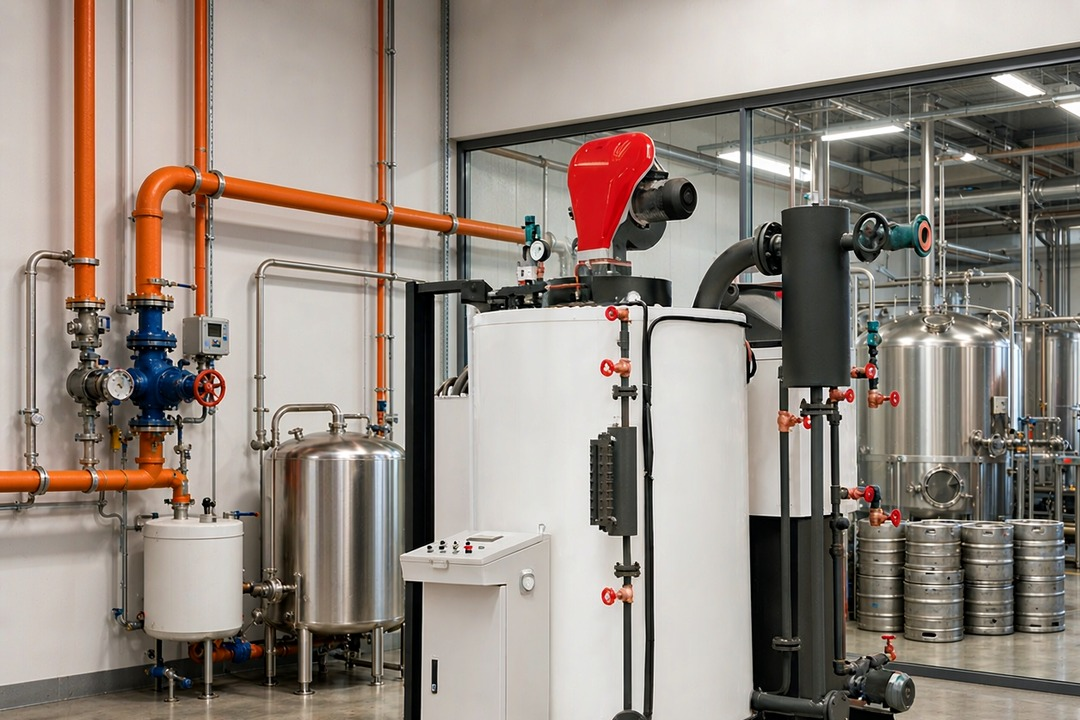
A brewery is one of the most demanding steam users in the food and beverage industry, and not because the total tonnage is large. The demand is shaped like a saw: strike water heating starts abruptly, the wort kettle pulls hard for an hour, CIP follows right behind it, and then the whole cycle rests while the next batch is mashed in. A boiler built for that pattern has to start fast, follow the load without pressure swings and fit into a production building where every square metre is already spoken for by tanks and pipework. The LSS tubular boiler was designed for exactly this kind of duty: a compact oil and gas fired steam boiler rated from 0.5 to 4.0 tonnes per hour at 1.0 to 1.6 MPa, able to supply usable steam within about five minutes of ignition and holding a thermal efficiency above 96.5 percent. This article walks through where the steam actually goes in a brewery, why a low water content design fits the batch rhythm of a brewhouse, what the four LSS models deliver, how to size a unit for a 50 hl brewhouse with real numbers, and what the fuel bill, the installation and the supplier terms look like.
Brewing converts heat into beer through a short chain of steps, and each step asks for steam at a different pressure and in a different rhythm. The hot liquor tank heats brewing water for mashing and sparging. The mash tun holds its temperature and climbs through rest steps on a jacket or coil. The wort kettle is the single heaviest user, because boiling is not just a temperature job but an evaporation job: the wort must actually boil and give off 6 to 10 percent of its volume per hour for 60 to 90 minutes. After the whirlpool, the CIP station heats caustic, acid and rinse water to clean the tanks and pipework, keg and cask washing adds pulses of hot water, and on packaging days a tunnel pasteurizer can run for hours at a moderate but steady load. The table below summarises the picture.
| Steam user | Working temperature | Pressure at use | Load pattern | Share of daily steam |
|---|---|---|---|---|
| Hot liquor tank and strike water | 75-80 C water | 0.3-0.4 MPa | Long steady draws before each brew | 20-25% |
| Mash tun step heating | 45-78 C mash | 0.3-0.5 MPa | Short pulses at each rest step | 10-15% |
| Wort kettle boil | 100-102 C wort | 0.4-0.6 MPa | 60-90 min steady block per brew | 30-40% |
| CIP station | 70-85 C solutions | 0.2-0.4 MPa | 30-60 min blocks after each brew | 15-20% |
| Keg and cask washing | about 80 C | 0.2-0.4 MPa | Batch pulses through the shift | 5-10% |
| Tunnel pasteurizer, packaging days | 60-65 C | 0.2-0.4 MPa | Long steady run while the line works | 10-15% |
A brewhouse works in cycles of roughly four to six hours, and within each cycle the kettle dominates. When the boil starts, the steam demand of the plant can jump from a trickle to more than half of the daily peak within a couple of minutes, because the kettle jacket or calandria is opened to full pressure at once. A conventional shell boiler answers that jump from a large store of hot water and steam, and it needs 40 to 60 minutes from a cold start before it can deliver anything at all. That is acceptable in a plant that boils around the clock, but a craft or regional brewery does not boil around the clock, it boils four to eight times a day in blocks separated by quiet periods. The boiler that matches this rhythm is one that holds little water and makes steam directly in the tubes, which is precisely the design of the tubular boiler family.
The LSS boiler is a cross flow tubular design: the feed water pump pushes water through a long tube arrangement that passes through a heating water section and an evaporation section before the steam reaches the collection box, and there is no boiler drum anywhere in the circuit. Because the water inventory is small and held inside the tubes, the metal reaches working temperature in minutes. After ignition the unit can supply the required steam within about 5 minutes, which changes the way a brewery plans its day: the first brew of the morning does not need the boiler fired an hour ahead of the mash in, and an unplanned extra CIP cycle does not need a phone call to the boiler room.
When the kettle valve opens, a drum boiler leans on its stored steam and the pressure dips until the burner catches up. In a low water content boiler the response is different: there is little stored energy to lean on, but there is also little thermal mass to slow the burner down, so the flame tracks the demand directly. The Hi-Low-Off burner control moves between firing stages instead of cycling on and off, which keeps the header pressure steadier during the quiet minutes between batches and avoids the short cycling that wastes fuel and wears burners. For a brewery that wants stable kettle pressure for a consistent boil off rate, this behaviour matters as much as the efficiency figure.
Breweries grow by adding tanks, and the boiler room is usually the last space anyone wants to give up. The smallest LSS model occupies about 2.1 by 1.6 metres of floor and stands about 2.1 metres tall, and even the LSS2.0 fits within 2.5 by 2.3 metres at 3.1 metres of height, so these units routinely end up in converted corners, mezzanine level plant rooms or a bay of the packaging hall. The whole machine arrives packaged, so site work is limited to water, power, fuel, drain and steam connections.
The same design has consequences a buyer should plan for honestly. With little water in circulation, feedwater quality has to be consistent every hour of every day, because there is no large buffer that dilutes a bad dose of treatment chemicals. A softener, and reverse osmosis where the local water is hard, a sampling point and a daily hardness test are not optional extras, they are part of the package. Blowdown is a short daily routine rather than a bulk job, and the low water cutoff, feedwater pump and level sensors deserve the scheduled testing described later in this article. Breweries that accept this discipline find the trade a fair one, because in exchange they get fast steam, low fuel use and a machine that fits their building.
Part of brewery steam touches the product, at least indirectly. Some kettle designs inject steam directly into the wort, mash heating often uses steam through a heat exchanger, and keg lines wash with steam or hot water that meets the package the beer will travel in. Where injection is used, the steam has to be culinary grade: boiler water treatment must be limited to additives approved for food plant steam, odour carrying amines are to be avoided, and the steam should be dry, with a dryness fraction above roughly 0.95, so that it does not carry boiler water droplets into the wort. The LSS design helps here, because an efficient external steam water separator is part of the standard supply, and a stainless delivery section with a filter can be added on the injection line. Steady water level control also matters, since priming and carryover are usually caused by sudden level swings rather than by the boiler itself.
A single header pressure with local reducing valves is the clean way to serve a mixed list of users. The three smaller LSS models deliver 1.0 MPa saturated steam at 184 degrees Celsius, and the LSS4.0 reaches 1.6 MPa with 204 degree steam. Running the header high and reducing at each user keeps pipe sizes small on long runs, protects the kettle jacket from overpressure and gives the CIP and keg lines their gentle 0.2 to 0.4 MPa supply. Breweries with a long steam main between the boiler room and the packaging hall often choose the LSS4.0 rating for exactly this reason, even when the tonnage of an LSS2.0 would be enough.
The table below lists the four LSS tubular boiler models as published by the manufacturer. All four burn diesel oil, heavy oil or natural gas, and all four hold a thermal efficiency above 96.5 percent, with an optional flue gas energy saving device that adds more than 2 percent on top.
| Parameter | LSS0.5 | LSS1.0 | LSS2.0 | LSS4.0 |
|---|---|---|---|---|
| Rated output (t/h) | 0.5 | 1 | 2 | 4 |
| Rated steam pressure (MPa) | 1.0 | 1.0 | 1.0 | 1.6 |
| Steam temperature (C) | 184 | 184 | 184 | 204 |
| Feed water temperature (C) | 20 | 20 | 20 | 20 |
| Burner control type | Hi-Low-Off | Hi-Low-Off | Hi-Low-Off | Hi-Low-Off |
| Thermal efficiency | above 96.5% | above 96.5% | above 96.5% | above 96.5% |
| Diesel oil consumption (kg/h) | 29 | 58 | 119 | 238 |
| Heavy oil consumption (kg/h) | 31 | 62 | 125 | 249 |
| Natural gas consumption (Nm3/h) | 36 | 75 | 148 | 296 |
| Main steam port | DN40 | DN50 | DN65 | DN125 |
| Feed water inlet | DN20 | DN25 | DN32 | DN40 |
| Electric power (kW) | 3 | 8 | 9 | 15 |
| Chimney diameter (mm) | 200 | 200 | 430 | 580 |
| Size L x W x H (mm) | 2100 x 1600 x 2100 | 2300 x 2000 x 3000 | 2500 x 2300 x 3100 | 3000 x 3200 x 4800 |
Three rows decide most brewery projects. The pressure and temperature rows set the header design: 1.0 MPa covers a typical brewhouse with reducing valves, and the 1.6 MPa LSS4.0 buys headroom for long mains and pasteurizer duty. The natural gas consumption row, read together with the duty point rather than at full load, becomes the monthly fuel budget. The size row settles the siting question before the drawings are made, because a unit that fits through a 2.5 metre door and stands 3.1 metres tall opens up plant rooms that a drum boiler could never use.
Take a regional craft brewery with a 50 hl brewhouse running four brews per day, about 200 hl of wort, plus keg filling and seasonal bottling. The first step is a plain list of users with their heat rate converted to steam. One tonne of steam per hour at 1.0 MPa carries roughly 750 kW of heat when raised from 20 degree feedwater, so kilowatts divide by 0.75 to become kilograms of steam per hour.
| Steam user | Basis | Heat rate | Steam rate |
|---|---|---|---|
| Hot liquor tank, strike and sparge water | 5,800 L from 15 to 65 C in 45 min | 450 kW | 600 kg/h |
| Mash tun step heating | 5,800 kg mash, 15 K step in 20 min | 283 kW | 380 kg/h |
| Wort kettle | Heat 5,000 L to boil, then 8% per hour evaporation | 312 kW | 420 kg/h |
| CIP station | 3,500 L solutions from 20 to 80 C in 45 min | 326 kW | 440 kg/h |
| Keg washing and miscellany | 150 kegs per shift plus losses | 40 kW | 55 kg/h |
The connected total is about 1,895 kg of steam per hour. Added over a full brew cycle the same figures come to roughly 1.5 tonnes of steam per brew, or close to 6 tonnes on a four brew day, which is a useful cross check against the rule of thumb of 0.25 to 0.35 kg of steam per litre of wort.
Not every user peaks together. Strike water heating for the next brew overlaps the boil of the previous one, CIP follows the transfer rather than the boil, and the keg line runs on its own rhythm. A simultaneity factor of 0.75 is a fair planning value for a single brewhouse with one CIP station, which brings the design load to about 1,420 kg per hour. Add 15 percent for distribution losses in a long steam main and for modest growth, and the required rating lands at about 1,630 kg per hour.
A required 1.63 t/h points at the LSS2.0, which would carry the peak at about 82 percent of rating. That is close to the top of the comfortable band, so the alternatives deserve a look. Two LSS1.0 units give the same installed tonnage with mutual backup: if one is down for service, the other still covers about 60 percent of the peak, enough to keep the kettle boiling and push CIP to the next window. A single LSS2.0 plus a small LSS0.5 covers the quiet summer weeks, when one or two brews per day leave the big unit averaging 30 percent or less and the Hi-Low-Off control short cycling. Which arrangement wins depends on the brew schedule, the fuel tariff and how much the plant values uptime over capital, and the engineering team can run both cases against real tariffs before an order is placed.
The published full load consumption figures translate directly into cost per tonne of steam. At rated output the LSS4.0 uses 296 Nm3 of natural gas, 238 kg of diesel oil or 249 kg of heavy oil per hour, which is about 74 Nm3 of gas or 59 to 62 kg of oil per tonne of steam across the range.
| Fuel | LSS0.5 | LSS1.0 | LSS2.0 | LSS4.0 | Indicative per tonne of steam |
|---|---|---|---|---|---|
| Diesel oil (kg/h) | 29 | 58 | 119 | 238 | about 59-60 kg |
| Heavy oil (kg/h) | 31 | 62 | 125 | 249 | about 62 kg |
| Natural gas (Nm3/h) | 36 | 75 | 148 | 296 | about 74 Nm3 |
For the worked example, a four brew day consumes close to 6 tonnes of steam, and a 300 brew day year comes to roughly 1,770 tonnes. On natural gas that is about 131,000 Nm3 per year, which a finance department can multiply by the local tariff in one line. Condensate return from the kettle and CIP heat exchangers lowers the feedwater temperature and the gas bill together, and the optional flue gas energy saving device takes a further share out of the stack.
| Item | What to provide | Why it matters in a brewery |
|---|---|---|
| Water treatment | Softener, RO where water is hard, sampling point, daily hardness test | A low water volume boiler has no buffer for inconsistent feedwater |
| Feedwater and hot well | Insulated hot well with condensate return, sized for the duty point | Warm return water is the cheapest efficiency in the plant |
| Steam header and PRVs | DN65 main for the LSS2.0, reducing stations to 0.2-0.4 MPa at CIP and keg lines | One header pressure, gentle supply at every user |
| Culinary steam kit | Food approved treatment only, stainless section and filter on injection lines | Steam that touches wort or packages must be clean and dry |
| Fuel train | Gas, diesel or heavy oil per model, with changeover procedure where dual fuel is wanted | All three LSS models accept oil or gas |
| Flue and ventilation | 430 mm chimney for the LSS2.0, combustion air per burner manual | Basement and mezzanine plant rooms often starve burners of air |
| Siting | 2.5 x 2.3 m footprint, 3.1 m height for the LSS2.0, clear service access | Most brewery plant rooms are conversions, measure the door first |
| Interval | Task | Reason |
|---|---|---|
| Daily | Blowdown, hardness test, log steam pressure and gas reading | Small water volume makes water chemistry a daily habit |
| Weekly | Test low water cutoff and feedwater pump, check reducing valves | These two devices carry the safety and the kettle pressure |
| Monthly | Check the steam separator drain, clean sensors, verify gauges | Dry steam and honest readings keep the boil consistent |
| Quarterly | Burner combustion tune, safety valve manual lift test | Efficiency and safety both live in the burner setting |
| Annual | Internal tube inspection, gasket replacement, full control test | Starts the brew year at the efficiency the unit was bought for |
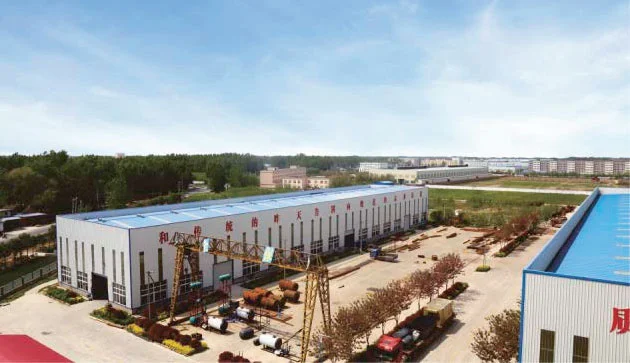
Hengxin Boiler has about 40 years of factory history, 660 thousand square metres of plant, 336 production units and a service team of more than 500 people, and the documents a brewery group purchasing department will ask for are in place: ISO9001 and ISO14001 system certification, the special equipment manufacturing licence and 3A credit standing, all listed on the company honor page. The engineering team works to customer drawings and offers OEM production and customised development, which for breweries usually means a non standard steam header, a culinary steam package, a dual fuel changeover, or an LSS4.0 ordered at 1.6 MPa to serve a distant packaging hall. Breweries and beverage plants are among the reference industries on the brewing and beverage application page, alongside food, textile, chemical and paper processors. The published service terms are concrete: a technical reply within 30 minutes, a clear plan within 2 hours, engineer dispatch within 24 to 72 hours, twelve months of free maintenance from shipment, and delivery in about 15 days for units under 15 tonnes, 20 days for 15 to 25 tonnes and 35 days above, so a boiler planned around a quiet week between brew cycles is a realistic schedule rather than a hope.
Yes, and this is the design intent. Because the water inventory is small and held in the tubes, the burner responds to the demand almost directly instead of leaning on stored steam, and the Hi-Low-Off control steps the firing to match. The practical result in a brewhouse is that the header pressure stays close to setpoint when the kettle valve opens, and the boil off rate the brewer dialed in is the boil off rate the kettle delivers.
It can be, with the right water discipline. The boiler accepts ordinary oil or gas firing, so steam purity depends on the treatment programme rather than on the fuel: use only additives approved for food plant steam, avoid odour carrying amines, keep the feedwater quality consistent and take steam from the standard separator so it leaves dry. A stainless section with a filter on the injection line completes a culinary steam setup, and the plant should confirm local food safety requirements before commissioning.
Three habits. Water treatment has to be checked every day because there is no large buffer to forgive a missed dose, blowdown becomes a short daily routine rather than a bulk job, and the low water protection devices deserve their scheduled tests. In exchange the boiler starts in about five minutes, follows batch loads closely and burns noticeably less fuel than a machine that must first heat several tonnes of steel and water.
Often yes, and the sizing example shows how: add the pasteurizer or bottle washer load to the connected list before applying the simultaneity factor, because packaging runs on a different rhythm from the brewhouse. Where packaging grows into a second shift, many breweries choose an LSS4.0 at 1.6 MPa, or a second small unit for the packaging hall, so a service day on one machine never stops the brewhouse.
Planning a new brewhouse, replacing an ageing shell boiler or adding a packaging line? Send the brew schedule, the equipment list and the site fuel situation through the tubular boiler product page, and the engineering team will return a model selection with a fuel cost estimate for your local tariffs and a delivery date that fits your build calendar.