
Company News
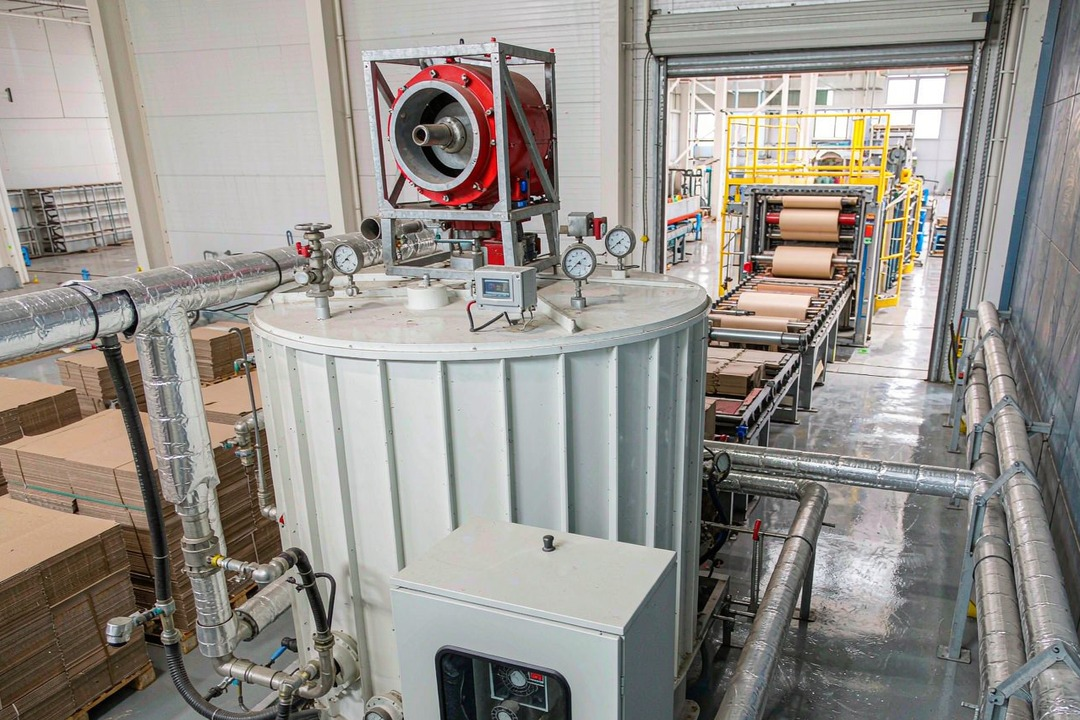
Every corrugated box starts as two or three webs of kraft paper that must be heated, plasticized and pressed into a rigid sandwich within seconds. The heat that does this work arrives as saturated steam, and it arrives in bursts: the corrugator ramps up at shift start, idles between orders, then surges again when the glue kitchen and the hot plates call for full flow at the same time. Buyers planning a new box plant, adding a second corrugator or replacing an ageing fire tube unit therefore search for a compact, fast, gas fired steam source rather than a one size power station style boiler. This article works through what a corrugator line actually demands from its steam supply, why a vertical tubular boiler fits that duty so well, and how to size one from a realistic corrugator load.
The planning figures below suit a typical mid sized plant running a 1.8 to 2.5 metre corrugator on one or two shifts, which is the most common class of enquiry we receive from packaging converters. They are engineering estimates for early discussions; a final selection should always be confirmed against the corrugator datasheet, the paper grades actually run and the fuel available on site.
A corrugator is essentially a long train of heated rollers and plates. The single facer bonds the fluted medium to a liner across the corrugating rolls, which run at surface temperatures that only pressurized steam can hold steadily. Preheater and pre-conditioner cylinders then dry and temper each web before it reaches the double facer, where the hot plates cure the second glue line under weight and heat. The glue kitchen cooks and holds the adhesive at a controlled temperature, and a light steam shower conditions the board before it is cut. Almost all of these users want saturated steam at roughly 1.0 to 1.3 megapascals, which a 1.6 megapascal class boiler covers with a comfortable margin for distribution losses.
Before sizing anything, list every consumer of steam along the line. The table below shows the users found on a typical single width corrugator.
| User | Working pressure | Load character | Consequence of a shortfall |
|---|---|---|---|
| Preheater cylinders, liners and medium | 1.0 to 1.2 MPa | Continuous, follows line speed | Wrinkles, poor bond, warp on the cut stack |
| Corrugating rolls, single facer | 1.1 to 1.3 MPa | Continuous, high condensing rate | Flute tip glazing, delamination, speed limits |
| Hot plates, double facer | 1.0 to 1.2 MPa | Continuous, largest single block | Soft board, weak glue cure, warp |
| Glue kitchen and gel tanks | 0.3 to 0.6 MPa via reducer | Batch, short peaks at cook start | Viscosity drift, sticky joints, glue waste |
| Steam shower before cut off | Low pressure, humidifying | Intermittent, small | Brittle edges, cracking at conversion |
Two patterns stand out. The main block of demand is continuous and rises and falls with line speed, while the glue kitchen adds short, sharp peaks on top whenever a new cook starts. A boiler that cannot follow those swings either starves the hot plates or blows off expensive steam to atmosphere, and both outcomes show up in the same place: warped board, weak bonds and rejected orders.
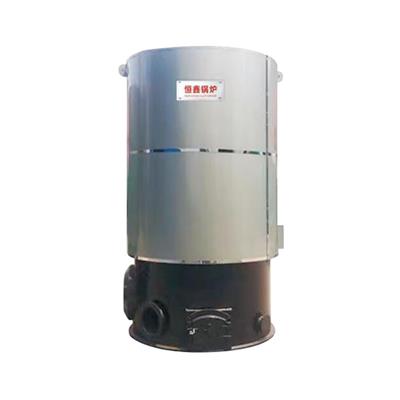
Traditional horizontal fire tube boilers carry tonnes of water, and that stored water is both their strength and their weakness. It buffers the load, but it also means the burner needs long firing periods to change output, which wastes fuel while the corrugator idles between orders, and it locks a large volume of pressurized water behind the operators, which drives inspection and licensing cost in many jurisdictions. A vertical tubular boiler takes a different approach: a coiled or straight tube bundle holds only tens of litres of water at any moment, so the heating surface responds to the burner almost instantly and the stored energy is small.
Three practical benefits follow for a box plant. First, speed: from a cold or warm standby state the unit reaches working pressure and delivers usable steam in roughly five minutes, so the boiler can be brought up as the corrugator threads paper and can drop back to low fire during order changes instead of idling hot all shift. Second, space: a vertical footprint of well under two square metres of plan area slots into a small boiler bay, a mezzanine corner or even alongside the corrugator itself, which matters in leased buildings where every square metre earns money. Third, fuel choice: the range fires natural gas, diesel and heavy oil with matching burners, so a plant can start on gas where piped supply exists and keep a diesel changeover path for regions with unstable gas networks.
Test thermal efficiency of 96.5 percent or better on the standard rating point, plus economizer options on the larger sizes, keeps the cost per tonne of board competitive. Because the water volume is small, chemical treatment dosages are modest and the unit reaches steady water chemistry quickly after each start, which reduces carryover risk and protects the corrugating roll surfaces from wet steam.
The catalogue covers four standard ratings from 0.5 to 4.0 tonnes per hour, which spans the needs of a single corrugator up to a two line plant with substantial conversion equipment. Design pressure spans 1.0 to 1.6 megapascals with saturated steam temperatures of 184 to 204 degrees Celsius, and the design fuels are natural gas, diesel and heavy oil. Figures verified from the product specification page are summarised below.
| Model class | Rated output | Steam pressure | Steam temperature | Typical duty |
|---|---|---|---|---|
| LSS0.5 | 0.5 t/h | 1.0 to 1.6 MPa | 184 to 204 degrees Celsius | Pilot lines, glue kitchens, small converters |
| LSS1.0 | 1.0 t/h | 1.0 to 1.6 MPa | 184 to 204 degrees Celsius | Single narrow corrugator, one shift |
| LSS2.0 | 2.0 t/h | 1.0 to 1.6 MPa | 184 to 204 degrees Celsius | Single 1.8 to 2.2 metre line, one or two shifts |
| LSS4.0 | 4.0 t/h | 1.0 to 1.6 MPa | 184 to 204 degrees Celsius | Two lines or one wide line with heavy conversion |
All ratings share the same vertical architecture, control philosophy and spare parts logic, so a plant that starts with one unit can standardise its spares and training as it grows. Where a buyer needs a non standard pressure, a different burner fuel or a skid mounted station with feed water and blowdown equipment, the factory builds to order from client drawings, which is a normal part of our OEM and custom work.
Corrugator datasheets usually quote steam consumption at rated speed, but real plants rarely run at the rating point all day. The four steps below turn a datasheet into a realistic boiler rating.
Step one: add the connected demand of every user at the target line speed. Step two: apply a simultaneity factor, because preheaters, hot plates and the glue kitchen never all peak together; 0.70 to 0.80 is typical for a single line. Step three: add a 10 to 15 percent design margin for condensate losses, blowdown and order ramps. Step four: check the loading of the chosen model at normal running, aiming for roughly 60 to 80 percent so peaks land inside the rating without chronic low fire cycling.
Consider a plant running a 1.8 metre corrugator at 150 to 180 metres per minute with conventional starch adhesive.
| Item | Connected demand | Notes |
|---|---|---|
| Preheater and pre-conditioner cylinders | 650 kg/h | Three webs conditioned |
| Corrugating rolls, single facer | 280 kg/h | High condensing rate at speed |
| Hot plates, double facer | 620 kg/h | Largest single block |
| Glue kitchen and gel tanks | 180 kg/h | Peaks at each cook start |
| Steam shower and losses | 120 kg/h | Intermittent |
| Total connected demand | 1,850 kg/h | Sum of the above |
Applying a simultaneity factor of 0.80 gives 1,480 kilograms per hour, and a 15 percent design margin raises the selection basis to about 1,700 kilograms per hour. An LSS2.0 at 2.0 tonnes per hour then runs at roughly 76 percent of rating on a normal production day, which sits inside the preferred band; the 5 minute start capability covers morning ramp up, and the same unit absorbs glue kitchen peaks without pressure dips that would disturb the rolls. A single LSS4.0 would run chronically low, while two LSS1.0 units in duty and standby suit plants that can never tolerate a shutdown, and both options should be priced before the order is placed.
With the rating settled, fuel becomes the largest lifetime cost, and the price spread between gas and oil decides the payback of a gas connection project. Consumption per tonne of steam at rated conditions is close to constant across the range, so planning is straightforward.
| Fuel | Consumption per tonne of steam | Planning note |
|---|---|---|
| Natural gas | 74 to 75 Nm3 | Lowest cost and cleanest flue gas where piped supply exists |
| Diesel oil | 58 to 60 kg | Convenient storage, highest running cost, suits standby fuel |
| Heavy oil | About 62 kg | Needs heating and tracing, middle running cost |
For the worked example, an LSS2.0 producing about 1.5 tonnes of steam per hour across two shifts and 300 working days delivers roughly 7,200 tonnes of steam a year. On natural gas that is about 540,000 cubic metres annually; on diesel it is about 430 tonnes. A plant that can secure a gas supply typically recovers the connection cost within one to two heating seasons at prevailing industrial tariffs, and the boiler changes fuel simply by fitting the matching burner and controls package, which our engineers specify during the order stage.
Most commissioning delays in packaging plants come from the room around the boiler, not the boiler itself. The checklist below reflects what our engineers ask for before shipment.
| Item | Requirement | Why it matters |
|---|---|---|
| Gas train and metering | Sized for burner input, with regulator and double block valves | Undersized gas lines cap output and cause pressure alarms |
| Feed water treatment | Softener plus chemical dosing, sample cooler on the line | Small water volume needs tight control to prevent scale |
| Condensate return | Insulated receiver, pumps sized for corrugator traps | Returning hot condensate cuts fuel use by several percent |
| Steam header and traps | Separate headers per pressure level, tested traps | Failed traps flood the return and starve the hot plates |
| Ventilation and flue | Grilles sized for combustion air, flue to a safe discharge | Starved combustion wastes fuel and trips safeguards |
| Floor and access | Level plinth, clearance for tube bundle withdrawal | Planned access shortens future inspection time |
A corrugator plant loses money by the hour when steam stops, so maintenance should be scheduled into low season windows rather than improvised after a trip. The calendar below suits the tubular range in normal duty.
| Interval | Task | Owner |
|---|---|---|
| Daily | Check water level controls, blowdown, log pressures and fuel use | Shift operator |
| Weekly | Test low water cutout and gauge glasses, check burner flame pattern | Maintenance technician |
| Monthly | Water chemistry panel, trap survey, clean strainers and filters | Maintenance technician |
| Quarterly | Burner tune up, feed pump seals, safety valve exercise per code | Service engineer |
| Annually | Full internal inspection, tube bundle check, controls calibration | Licensed inspector with factory support |
Because the water volume is small, an internal inspection is measured in hours rather than days, and the 5 minute start means the unit can be back on line the same morning. Plants that keep a second unit or a rated standby connection typically schedule this work without any corrugator downtime at all.
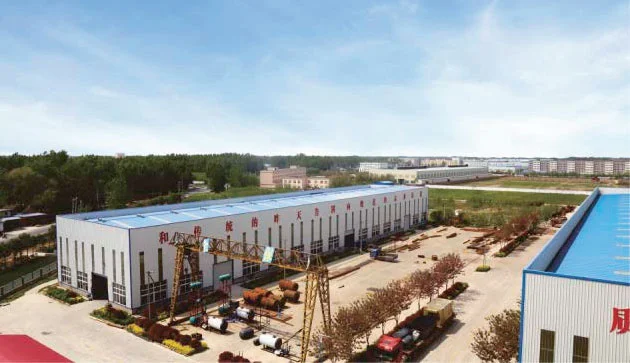
Henan Hengxin Boiler Co., Ltd. manufactures in Taikang County, Zhoukou City, Henan Province, and holds the special equipment manufacture licence for pressure vessels and boilers together with ISO9001 and ISO14001 certifications and 3A credit standing; the certificates are listed on our honours and qualifications page. Beyond standard models we build to client drawings: different pressures, alternative fuels, skid mounted steam stations and complete feed water and blowdown packages are routine factory work, and our engineers support layout drawings, gas train sizing and commissioning on site. Company background and factory scale are described on the company profile page.
Reference installations across the packaging, textile, food and chemical sectors are collected on the project cases page, where buyers can see comparable duty points before committing. Our sales engineers quote against your corrugator datasheet rather than a generic catalogue, which is the fastest route to a correctly sized, correctly fuelled machine.
Yes, provided it is sized on connected demand, simultaneity and margin as shown above. A 1.8 to 2.2 metre single line usually lands inside the LSS2.0 rating, while wider lines or two line plants move to the LSS4.0 or a two unit arrangement. Send the corrugator datasheet and we will confirm the rating and the standby philosophy before quoting.
The low water volume reaches working pressure in about five minutes from a warm start, so the unit can shut down or drop to low fire during long order changes and be back at pressure before the paper is threaded. Compared with a large fire tube boiler idling hot all shift, this behaviour typically removes several percent from annual fuel consumption, and exact savings depend on the changeover pattern.
Where piped natural gas reaches the site, gas is normally the best running cost at 74 to 75 cubic metres per tonne of steam. Diesel and heavy oil options keep the plant flexible where gas is unstable or seasonal; the boiler family is designed for all three, and the burner package is selected at order stage so a later changeover remains possible.
The corrugator datasheet or a steam user list, target line speed and shift pattern, the fuel available on site with its supply pressure, and the boiler room dimensions. With those four items we confirm the model, issue a layout and gas train proposal, and a standard unit normally ships from Taikang within the agreed production window, with commissioning support on site by arrangement.
Ready to size steam for your corrugator? Review the full tubular boiler specification, then send your line data through the enquiry channels listed on the site and our engineers will return a sizing note and quotation, including OEM and custom build options for your plant layout.