
Company News
Textile finishing plants run their stenters around the clock, and the heat source behind a stenter decides both fabric quality and fuel cost. A stenter (heat setting machine) needs a stable supply of thermal oil at high temperature, which is exactly the working condition a YGL biomass coal fired therm fluid heater is built for. Compared with a steam boiler, a thermal fluid heater reaches setting temperatures without high pressure vessels, and a biomass fired unit lets mills burn pellets, wood chips or other local fuels instead of expensive natural gas. This guide explains how the YGL heater works, how to match its capacity to a stenter line, how to size it step by step, and what a practical maintenance plan looks like. For a general view of where these units are applied, see the textile industry application page on the Hengxin website.
A stenter stretches and heat sets fabric while it passes through a series of heated chambers. For polyester and blended fabrics, setting temperatures typically fall between 180 and 220 °C, and the air in each chamber must stay within a narrow band, often with a deviation of no more than a few degrees, or the fabric width and shrinkage will drift between batches. Other chambers handle pre drying, curing and cooling, each with its own temperature demand.
Steam can serve the lower temperature zones, but producing 200 °C steam requires roughly 1.6 MPa of pressure, which pushes the whole system into a higher pressure class and raises both equipment and inspection costs. A thermal fluid heater circulates oil at 250 to 300 °C at a working pressure of well under 1.1 MPa, so the piping stays in a low pressure class while the process temperature stays high. That combination of high temperature and low pressure is the main reason thermal oil loops dominate stenter heating in modern mills.
| Stenter Zone | Typical Air Temperature | Heat Carrier | Control Requirement |
|---|---|---|---|
| Pre drying chambers | 120 to 150 °C | Thermal oil or steam | Stable output during moister start up |
| Heat setting chambers | 180 to 220 °C | Thermal oil | Tight tolerance, often within a few degrees |
| Curing or resin chamber | 150 to 180 °C | Thermal oil | Gradual ramp up and ramp down |
| Oil loop supply temperature | 250 to 300 °C | Thermal oil in coil heater | Continuous circulation, modulated firing |
Because the heater runs continuously, fuel choice matters as much as temperature control. A mill that consumes coal or gas for one or two shifts every day can often cut operating cost noticeably by switching the loop to biomass pellets or locally available agricultural residues, provided the heater is designed for that fuel.
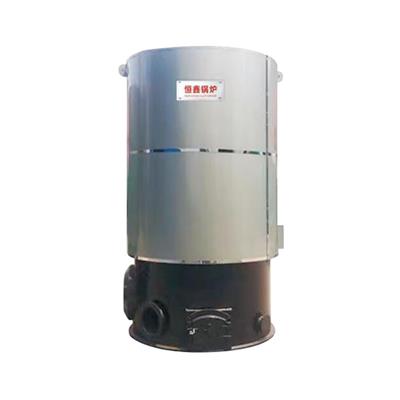
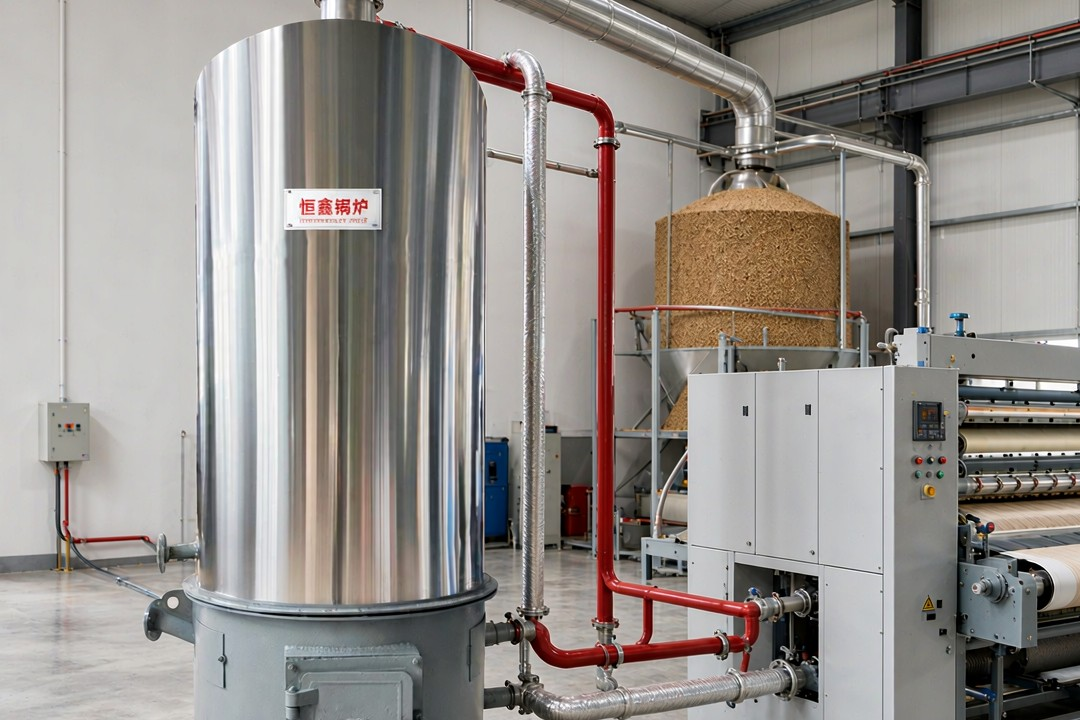
The YGL biomass coal fired therm fluid heater is a vertical, organic heat carrier furnace designed by Henan Hengxin Boiler for biomass and solid fuel firing. Heat released in the furnace is absorbed by a helical coil that surrounds the combustion chamber, and the heated oil is circulated by pumps to the stenter heat exchangers and back. The series is rated for design fuel of biomass, with coal accepted as an alternative fuel when biomass supply is short, which gives mills flexibility through the year.
The YGL unit arranges the radiant coil vertically around the furnace, so the footprint stays compact even though the heating surface is generous. Vertical arrangement also allows the flue gas to travel across the coil in a controlled path before it leaves through the back pass, which improves heat absorption. The insulation jacket keeps surface temperature low, which protects operators working close to the heater in a busy finishing workshop.
In normal operation, circulating pumps push oil from the expansion tank side through the coil, where it picks up heat, then through the stenter air heaters and back to the inlet. Because the oil itself never boils at operating conditions, the loop works at low pressure and the expansion tank handles thermal growth instead of a steam drum. Modulating the fuel feed and air keeps the supply oil temperature close to setpoint as chamber demand changes between drying and setting stages.
The figures below follow the data published on the Hengxin product page for the YGL series. Buyers should confirm final selection data with the factory for their specific fuel and site conditions.
| Item | YGL Series Value | Note for Stenter Projects |
|---|---|---|
| Rated heat power | 10 to 120 × 10,000 kcal/h (about 0.12 to 1.4 MW) | Small to medium stenter lines and satellite loops |
| Rated working pressure | 0.7 to 1.0 MPa | Low pressure class compared with high temperature steam |
| Max working temperature | 290 / 320 °C | Covers oil supply temperatures needed for 180 to 220 °C setting air |
| Design fuel | Biomass fuel (coal as alternative) | Pellets, wood chips and similar local residues |
| Structure | Vertical coil, organic heat carrier furnace | Compact footprint, suits retrofit beside existing stenters |
Stenter heat demand depends on the number of chambers, the working width, the fabric type and the evaporation load. As a planning reference, many mills work with an average thermal demand per chamber rather than a single precise number, then add margin for start up and peak drying. The table below shows how YGL sizes line up with common line configurations. These are indicative figures for budget planning, not a substitute for a heat balance calculation.
| Line Configuration | Typical Continuous Heat Demand | Suitable YGL Output | Comments |
|---|---|---|---|
| Sample or short stenter, 4 to 5 chambers | about 0.2 to 0.35 MW | 0.35 to 0.5 MW class | Laboratory and small batch production |
| Standard finishing stenter, 6 to 8 chambers | about 0.4 to 0.8 MW | 0.7 to 1.0 MW class | Common choice for dyeing and finishing mills |
| Wide width stenter, 8 to 10 chambers | about 0.8 to 1.2 MW | 1.2 to 1.4 MW class | Check whether two smaller heaters suit the layout better |
| Stenter plus small dyeing heat users | 1.2 MW and above | YGL plus a second unit, or move to YLW range | Discuss combined loop design with the supplier |
A disciplined sizing exercise prevents both undersizing, which limits line speed, and oversizing, which wastes fuel at part load. The four steps below mirror what Hengxin engineers ask for during quotation.
| Step | What to Collect | Why It Matters |
|---|---|---|
| 1. Map chamber demand | Chamber count, air temperatures, working width, line speed range | Sets the base thermal demand of the stenter |
| 2. Add evaporation load | Fabric gram weight, moisture in, target residual moisture | Drying water is often the largest single heat consumer |
| 3. Add losses and margin | Piping losses, start up demand, future expansion | A modest margin avoids chronic part load cycling |
| 4. Check fuel and oil data | Fuel analysis or pellet specification, oil type, pump head | Confirms burner, coil and pump selection |
When the result lands between two sizes, discuss duty cycle with the supplier. A mill running two shifts may prefer the larger unit for comfortable margin, while a continuous three shift operation often runs better on a unit sized close to its average load with modulation handling peaks.
The YGL design fuel is biomass, and the ability to fall back on coal is a practical advantage in regions where pellet supply fluctuates. The table below compares the three common fuel routes for a stenter thermal oil loop in qualitative terms, since actual prices vary by region and season.
| Fuel Route | Strengths | Points to Watch | Best Fit |
|---|---|---|---|
| Biomass pellets | Uniform size, easy feeding, renewable image for brands | Price and availability vary by region; storage must stay dry | Mills near pellet suppliers seeking lower cost than gas |
| Wood chips and agri residues | Often the cheapest local fuel | Moisture and size must be controlled; ash handling needed | Mills with in house wood waste, such as panel or furniture parks |
| Coal as alternative | Stable supply and price in many regions | Emission compliance and ash disposal must be planned | Backup fuel where biomass supply is seasonal |
| Natural gas | Clean flue gas, simple operation | Higher running cost where gas tariffs are high | Mills inside strict emission zones without solid fuel permits |
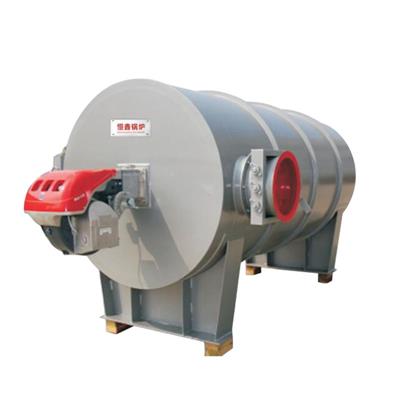
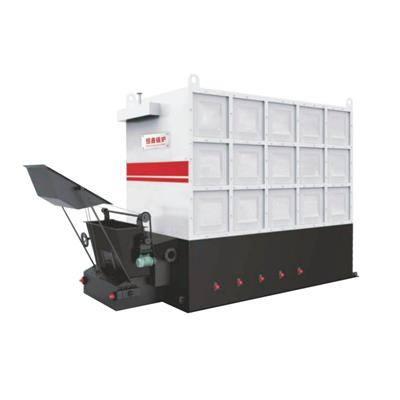
For a combined view, Hengxin also offers the YY(Q)W oil and gas fired thermal fluid heater and the YLW biomass coal fired heater for larger duties, so a mill can keep the same loop concept while changing fuel direction as policy and prices evolve.
Thermal oil systems reward careful installation. The heater should sit on a level foundation with clear access for fuel feeding and ash removal, and the stenter air heaters should be connected in a loop that keeps oil velocity within the range recommended for the oil type. Key points from completed textile projects include:
First, keep the expansion tank above the highest point of the loop and sized for the full oil volume growth between cold start and 300 °C operation. Second, plan a bypass and flushing circuit so the system can be cleaned before first fill, because residues left in new piping shorten oil life. Third, insulate all piping and valves, not only the heater, since bare flanges at 280 °C waste energy and are a burn hazard in a workshop. Fourth, confirm the local requirements for solid fuel firing, including dust collection on the flue path and safe ash storage, before the civil work starts.
Hengxin supports project layout drawings, control interlocks and commissioning guidance, and custom designs can be prepared against specific fuel analyses and plant layouts, which helps when a mill wants to integrate the heater into an existing stenter room without long downtime.
Thermal oil degrades slowly when the loop is clean and temperatures stay within limits, so most stenter availability problems trace back to housekeeping rather than the heater itself. The schedule below is a practical baseline for a mill running two or three shifts.
| Frequency | Task | Purpose |
|---|---|---|
| Daily | Check oil level, pump pressure and supply temperature trend; observe flame and fuel feed | Catch drift before it becomes downtime |
| Weekly | Clean fuel feeding and ash paths; test safety interlocks and low flow protection | Keeps combustion stable and protection active |
| Monthly | Sample oil for viscosity and acid value trend; inspect coil area through observation ports | Tracks oil aging and fouling early |
| Quarterly | Clean heating surfaces and flue path; verify instrument calibration | Restores heat transfer and keeps control honest |
| Annually | Full internal inspection, gasket and seal renewal, oil replacement decision based on test results | Prepares the loop for the next production season |
Two habits protect oil life the most. Never stop the circulating pump while the furnace is hot, and keep the supply temperature below the film temperature allowed for the oil. Mills that follow both rules routinely report long oil service intervals, which directly lowers running cost.
It can, provided the total simultaneous demand, including peak start up loads, stays within the rated output with a reasonable margin. Many mills run a shared loop serving a stenter plus small curing ovens or washing ranges. A heat balance across all users, weighted by their duty cycles, gives the correct figure, and the supplier can verify the proposal before order.
Stenter air heaters typically need oil between 250 and 300 °C to hold setting air near 200 °C with stable control. The YGL maximum working temperature of 320 °C covers this duty with headroom, while the loop pressure stays at or below about 1.0 MPa, far below the pressure that equivalent steam conditions would require.
Consumption depends on heat demand, fuel calorific value and moisture. As an illustration, a loop delivering an average 0.6 MW for eight hours consumes roughly 5,000 to 6,000 kWh of heat in that period, which corresponds to around one tonne of pellets at typical calorific values, and more if the fuel is wet chips. A fuel analysis allows the supplier to calculate the accurate figure for your fuel.
Compliance depends on local limits for dust, sulfur dioxide and nitrogen oxides, and on the flue gas cleaning equipment fitted. Mills in stricter zones often combine the heater with a bag filter or multicyclone arrangement and choose low ash pellets. Confirm the applicable limits with local authorities early, then let the supplier configure dust collection to match, so permits are not delayed after delivery.
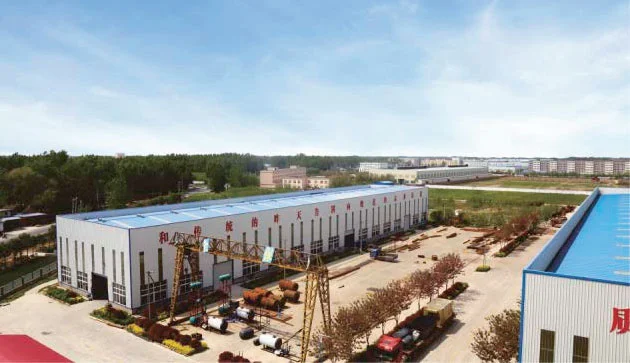
Henan Hengxin Boiler manufactures the YGL biomass coal fired therm fluid heater together with the full range of steam, hot water and thermal fluid boilers, holds ISO 9001 and ISO 14001 certification and special equipment production licensing, and supports custom design against customer drawings and fuel data. To size a heater for your stenter line, request a quotation through the contact page and include your chamber count, target setting temperature and preferred fuel, and the engineering team will return a selection proposal with layout drawings.