
Company News
Buyers searching for a biomass thermal fluid heater usually arrive with three questions in hand: which model matches the duty, what the figures in the datasheet actually mean, and whether the heater can be built and delivered to their site and brand requirements. This guide answers those questions around the YLW biomass(coal) fired therm fluid heater, a horizontal chain grate thermal oil boiler in the 1.4 to 7.0 MW class that burns biomass fuel and delivers heat at up to 320 degrees Celsius in a closed loop. It collects the full ten model data table from the manufacturer, explains how to read each column, walks through a four step sizing method with a worked example, and adds the site planning data - transport weights, module sizes, oil volumes and clearances - that decide whether a proposal really fits the plant.
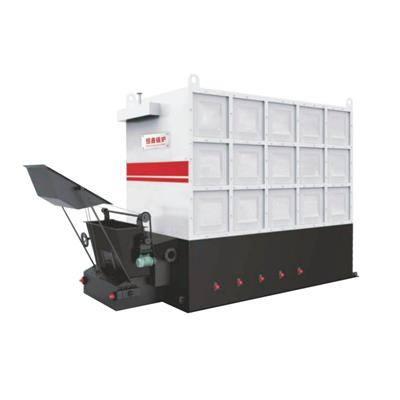
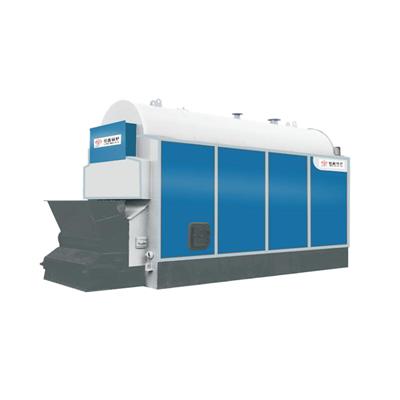
The YLW series is a forced circulation chain grate boiler developed for thermal oil duty. The heating surface is arranged in the furnace and the rear convection section, the furnace arch is shaped so that flue gas stays longer in the furnace for more complete combustion, and the furnace is built as double close coils so that the heat load on the pipe surface stays moderate. The rated working pressure is 1.0 MPa, the maximum working temperature is 320 degrees Celsius, the design fuel is biomass (coal compatible) and the thermal efficiency is 83 percent or higher across the range. Ten models cover heat duties from 120 to 600 in units of 10,000 kcal per hour, which corresponds to roughly 1.4 to 7.0 MW.
| Model | Rated heat power (10,000 kcal/h) | Approx. MW | Circulation rate (m3/h) | Heating area (m2) | Oil volume in furnace (m3) | Max transport weight (kg) | Max transport dimension L x W x H (mm) |
|---|---|---|---|---|---|---|---|
| YLW-1400SCIII | 120 | 1.40 | 80 | 104 | 1.2 | 18000 | 4600 x 2300 x 3200 |
| YLW-1900SCIII | 160 | 1.86 | 115 | 125 | 1.6 | 20000 | 4670 x 2320 x 2880 |
| YLW-2100SCIII | 180 | 2.09 | 155 | 145 | 1.9 | 25000 | 4700 x 2680 x 3300 |
| YLW-2400SCIII | 200 | 2.33 | 188 | 163 | 2.4 | 26500 | 4900 x 2700 x 3300 |
| YLW-3000SCIII | 250 | 2.91 | 200 | 188 | 2.9 | 34000 | 5900 x 2700 x 3550 |
| YLW-3500SCIII | 300 | 3.49 | 200 | 216 | 3.3 | 38000 | 7500 x 2900 x 1700 |
| YLW-4200SCIII | 360 | 4.19 | 225 | 280 | 3.5 | 40000 | 7700 x 2900 x 2200 |
| YLW-5000SCIII | 400 | 4.65 | 260 | 310 | 3.63 | 45000 | 8000 x 3000 x 2500 |
| YLW-6000SCIII | 500 | 5.81 | 300 | 389 | 3.9 | 60000 | 9000 x 3100 x 3000 |
| YLW-7000SCIII | 600 | 6.98 | 340 | 469 | 4.2 | 70000 | 10000 x 3200 x 3300 |
All models share a rated working pressure of 1.0 MPa, a maximum working temperature of 320 degrees Celsius, a thermal efficiency of 83 percent or higher and biomass as the design fuel with coal as an alternative. The figures above follow the manufacturer data sheet; always confirm the exact values for the selected model before ordering.
Chinese boiler makers rate thermal oil heaters in units of 10,000 kcal per hour. One such unit equals 11.63 kW, so the YLW-5000SCIII at 400 units delivers about 4.65 MW and the YLW-7000SCIII at 600 units about 6.98 MW. When collecting quotations from several suppliers, convert every offer to the same unit, because a difference of one model step changes both the price and the fuel consumption of the whole plant.
The medium circulation rate, from 80 m3/h on the smallest model to 340 m3/h on the largest, defines the circulating pump duty and the pipe diameter of the loop. At a customary oil velocity of 2 to 3 m/s in the main headers, the largest model needs a DN250 to DN300 main, while the smallest runs comfortably on DN125 to DN150. The oil volume in the furnace, between 1.2 and 4.2 m3, is the starting point for the total system charge: piping, consumer coils and the expansion tank add to it, and the expansion tank is sized from the thermal expansion of that total charge. The medium flows from the low to the high position inside the heater, which makes it difficult for gases generated in operation to stay in the coil and simplifies their discharge.
Transport weight rises from 18 t on the YLW-1400SCIII to 70 t on the YLW-7000SCIII, and the largest module measures 10,000 x 3,200 x 3,300 mm. These two columns decide more projects than the thermal data does, because they determine the crane capacity at the site, the door and gate widths on the delivery route and the load on the foundation. Note that the boiler body and the chain grate are shipped separately and combined on site, which reduces the transport cost and shortens the installation cycle.
Step one lists every heat consumer with its demand and required temperature: curing ovens, dry-off sections, pre-treatment tank coils, hot air generators or dryers. Step two applies diversity instead of the simple sum, because ovens and dryers rarely peak together; a factor of 0.85 to 0.95 is common for mixed duties. Step three adds a margin of about 10 percent for distribution losses in the piping and for fouling of the consumer coils. Step four selects the model with roughly 20 to 30 percent headroom over the calculated duty so that the heater keeps its efficiency in part load and leaves room for a later production increase.
| Sizing item | Value |
|---|---|
| Curing oven zones, continuous duty | 900 kW |
| Dry-off section and pre-treatment tank coils | 350 kW |
| Reserved connection for a second oven | 200 kW |
| Sum with diversity factor 0.9 | 1305 kW |
| With 10 percent distribution and fouling margin | about 1435 kW |
| Selected model | YLW-1900SCIII, 1.86 MW, about 77 percent load at the design point |
The same four steps work in reverse when a supplier proposes a model: ask for the consumer list behind the proposal and check that the diversity and the margins are stated openly rather than hidden in a single round number.
The foundation must carry the transport weight of the selected model on its plinth area, from 18 t for the smallest to 70 t for the largest unit, so confirm the bearing capacity of the floor and the pit depth with the civil engineer early. Plan the delivery route from the factory gate to the foundation: the longest module needs a clear path 10 m long and 3.3 m high on the largest model, and the site crane or forklift must match the heaviest section. Where the route is tight, the split shipment of body and chain grate helps, because the two parts can be brought in and assembled inside the boiler house.
Leave working space at the front of the grate for maintenance and ash removal and space along the coil headers for inspection. The expansion tank belongs at the highest point of the loop, above every consumer, so check the roof or platform height before the piping is routed. Size the main headers from the circulation rate of the selected model and keep the number of bends low, because every additional fitting adds to the pump duty over the life of the plant.
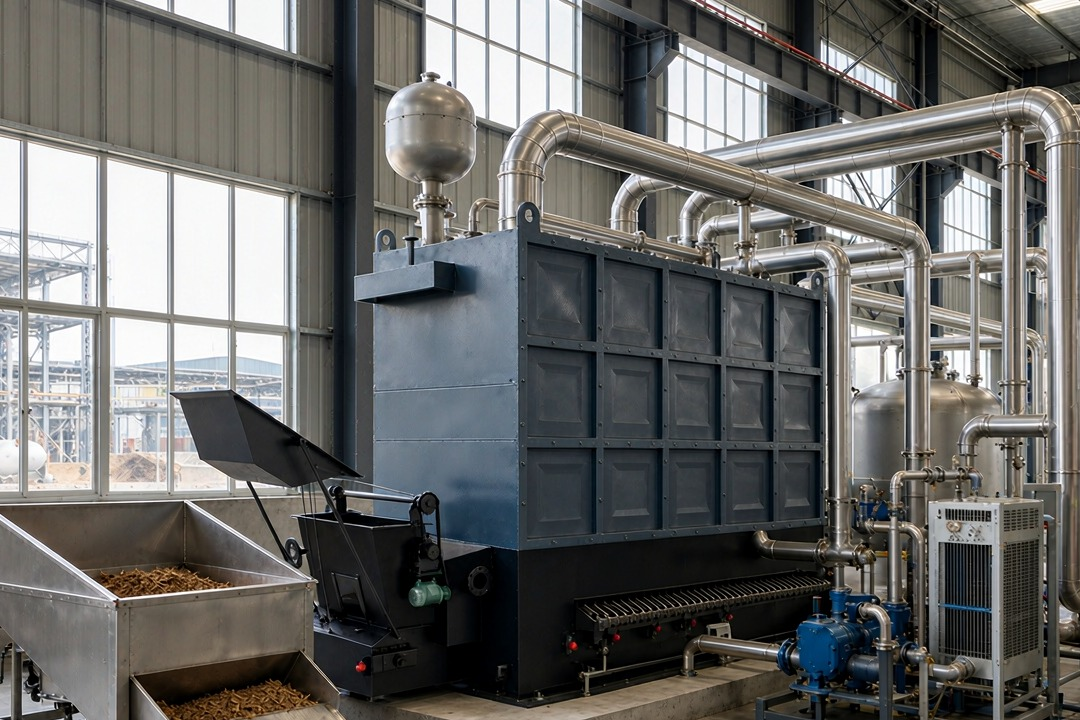
A chain grate boiler wants fuel that feeds steadily into the hopper, so plan a covered storage area sized for several days of operation together with the feeding arrangement. Wood chips, agricultural and forestry residues turn waste into fuel value, but the moisture content of the delivered fuel decides how stable the combustion will be, so agree on the fuel specification with the fuel supplier. On the flue gas side, provide for dust collection, for example a multi cyclone or a bag filter, and confirm the chimney height and the emission limits with the local authority; the manufacturer states that the emission indicators of the YLW are lower than the values required by the national Boiler Air Pollutant Emission Standard.
At 1.0 MW of useful output and 83 percent efficiency, the heater draws about 4,300 MJ of fuel energy per hour. The table converts that into fuel mass for the four fuels most often quoted, using typical heating values; the exact figure for a project follows the fuel analysis sent with the enquiry.
| Fuel | Typical heating value | Approx. consumption per 1.0 MW output |
|---|---|---|
| Wood pellets | 16.5 to 17.5 MJ/kg | 250 to 260 kg/h |
| Wood chips, about 35 percent moisture | 10.5 to 12 MJ/kg | 360 to 410 kg/h |
| Rice husk | 13 to 14 MJ/kg | 310 to 330 kg/h |
| Coal, bituminous | 23 to 25 MJ/kg | 170 to 190 kg/h |
For a plant that generates its own wood residue, the fuel cost of the loop can be close to the cost of handling the residue alone, which is one of the reasons biomass fired thermal oil heaters are chosen over gas fired units wherever sufficient residue exists. Where no biomass is available on site, the gas fired YY(Q)W oil/gas fired thermal fluid heater covers the same duty band with fuel oil or natural gas.
The central argument for a thermal oil loop is the pressure balance: 320 degrees Celsius in a thermal oil system needs only 1.0 MPa of working pressure, while the same temperature with steam would sit near the 9 MPa class. The closed loop keeps the oil away from air and from the flue gas path, and the manufacturer controls the air and water content of the working medium before circulation heating, because dissolved water in thermal oil is a safety topic that deserves attention at commissioning. Temperature is adjusted accurately to the actual process demand, the control system and the safety monitoring devices cover level, temperature and pressure of the loop, and the heating surface in the smoke chamber avoids flue gas short circuits that would locally overload the partition walls. For the user this adds up to a loop that holds its supply temperature steadily while the load moves up and down.
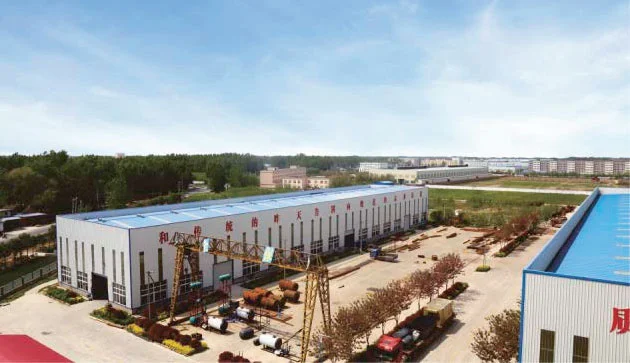
Hengxin Boiler builds the YLW range in its own works and supplies it directly. The company holds ISO9001 and ISO14001 certification, a special equipment manufacturing licence and 3A credit enterprise status, and the documents can be reviewed on the honor and certificates page. The factory works on 40 years of history, 660,000 square meters of works area, 336 production equipment sets, more than 300 production models and a service team of over 500 people, and every boiler is exported directly by the manufacturer.
Custom work is part of the standard offer rather than an exception. The hopper position and volume, the fuel feeding arrangement, the number of oil circuits and their supply temperatures, the economizer, the control cabinet layout and the paint colour can all be adapted to the plant layout, and manufacture can follow drawings supplied by the customer. Buyers who source under their own brand can agree OEM arrangements directly with the sales team. For duties below 1.4 MW the vertical YGL biomass(coal) fired therm fluid heater covers the smaller band, so a plant with mixed duties can standardise on one biomass fired heater family.
Typical delivery for YLW models falls in the band of about 20 to 35 days depending on the model and the season, and the units carry 12 months of free maintenance after shipment. On site, the body and the chain grate are combined on the foundation, the piping is connected to the consumer circuits, and commissioning includes filling the loop, circulating the oil and degassing before the first firing, so the schedule should reserve a few days between mechanical completion and production start.
| Interval | Work items |
|---|---|
| Daily | Check oil level in the expansion tank, record supply and return temperatures and furnace draft, observe the grate and its drive |
| Weekly | Check ash removal and the grate drive, clean strainers, inspect the fuel feeding line |
| Monthly | Test safety and interlock functions, take an oil sample for a visual check, inspect seals and insulation |
| Quarterly | Send oil for laboratory analysis: viscosity, acid number and flash point, and trend the results |
| Annually | Overhaul the coil and refractory, renew grate segments as needed, calibrate instruments and safety devices |
The oil analysis trend is the most useful document in a thermal oil plant: it shows slowly rising acid number or viscosity long before the oil becomes a limit problem and supports a planned oil change instead of an unplanned stop in the middle of a production campaign.
Yes. The loop can feed several consumers, and the design can provide two or more oil circuits at different temperatures according to customer requirements. Each circuit keeps its own control valve and set point, and the load calculation should use the diversity between continuous and batch duties rather than the simple sum.
The furnace holds between 1.2 and 4.2 m3 depending on the model, and the piping, the consumer coils and the expansion tank add to that. Collect the internal volumes of the consumers from their makers, add the piping volume and size the expansion tank from the thermal expansion of the total charge with a safety margin; the boiler supplier can check the figure together with you before ordering.
The models weigh between 18 and 70 t in transport condition and the largest module is 10 m long. The boiler body and the chain grate are shipped separately and combined on site, so the heaviest single lift is well below the total transport weight in most cases, and the installation cycle is shorter than for a fully assembled delivery.
Yes. Hopper position and volume, feeding arrangement, number of circuits, supply temperatures, economizer, instrumentation and control cabinet can be adapted, manufacture can follow customer drawings, and OEM arrangements for your own brand can be discussed directly with the sales team.
If you are comparing models for a curing line, a dryer, a chemical duty or a wood processing plant, send the heat consumer list, the fuel available on site and the expected running hours to the sales team. The engineers will return a model selection with the load calculation, a fuel consumption estimate, the transport data for your route and a quotation, including the optional economizer and the custom hopper arrangement. Full specifications of the YLW biomass(coal) fired therm fluid heater and examples of the industries served are available on the Hengxin Boiler website, together with the application overview.