
Company News
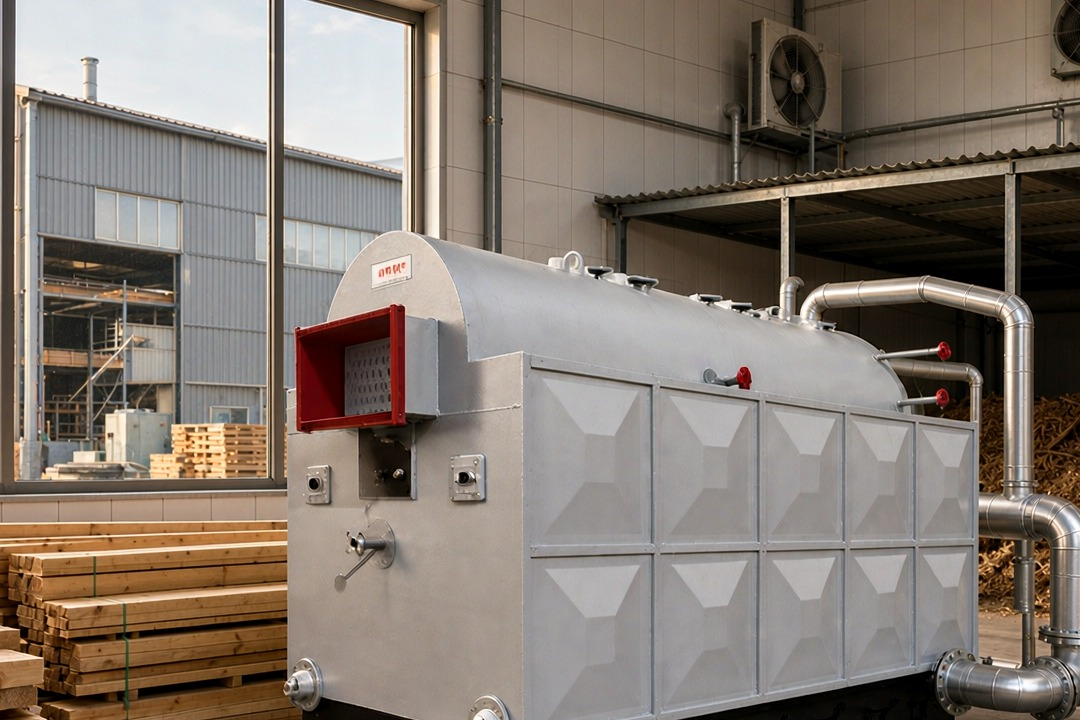
Every sawmill, timber yard and small wood processing plant lives or dies by one number: the cost of removing water from lumber. A conventional kiln cycle can run for several days, holding the wood at a controlled temperature and humidity until the moisture content drops from green levels above 60 percent to the 8 to 12 percent range required by furniture, flooring and construction buyers. All of that heat comes from steam or hot water delivered to the kiln coils, and all of that energy has to come from a fuel the plant can actually afford. This is exactly where the DZH manually biomass (coal) fired boiler has earned its place in wood processing zones: it burns the residues the sawmill already produces, it costs a fraction of a gas fired installation, and its 0.5 to 6 t/h capacity band matches the heat demand of small and medium kiln stations almost perfectly.
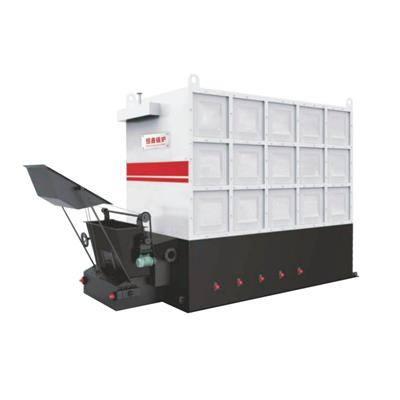
Henan Hengxin Boiler Co., Ltd. manufactures the DZH series as a hand fed shell type boiler with a design fuel of coal or biomass, which means a timber yard can switch between wood waste and coal depending on season, price and availability without changing the equipment. This article walks through the whole decision: how much steam a drying kiln really needs, how to turn sawdust and offcuts into reliable boiler fuel, which DZH size fits which kiln station, and what daily operation of a hand fired boiler looks like in practice.
A drying kiln is essentially an insulated chamber where air is heated by coils, circulated through the lumber stack by fans, and vented when it becomes too humid. The heat demand has three parts:
Sensible heat to raise the incoming air and fresh makeup air to the set temperature, typically between 40 and 90 degrees Celsius depending on the drying schedule.
Latent heat to evaporate water from the wood surface and, over the cycle, from deep inside the boards. This is by far the largest share of the load in the middle of a cycle.
Ventilation losses, because humid air must be exhausted and replaced with drier air, which must then be reheated.
Steam is the usual heat carrier because it gives the kiln coils a stable, easily controlled temperature and allows a final conditioning or steaming step at the end of drying, which relieves drying stress and evens out the moisture gradient in the stack. If the boiler cannot hold pressure while several kilns are venting hard, the kiln temperature sags, the schedule slips, and the wood can develop checks and collapse that reduce its grade. Stable steam is therefore not a comfort feature; it is a product quality feature.
The DZH series was designed for plants that need dependable steam without the cost and complexity of a fully automated stoker system. Several features explain why it is so common in wood processing areas:
Right sized capacity. Rated steam capacity runs from 0.5 to 6 t/h, covering everything from a single small kiln to a multi kiln station with a planning mill attached.
Useful pressure margin. Rated working pressure of 1.25 MPa with saturated steam at 194 degrees Celsius gives plenty of headroom above the 0.3 to 0.8 MPa that kiln coil circuits normally use, so pressure reducing stations can be simple and stable.
Dual fuel design. The design fuel is coal or biomass fuel. A sawmill can burn its own wood waste when it is dry and available, and fall back on coal in the wet season or when kiln demand spikes.
Low entry cost. A hand fired boiler needs no fuel silo, no automated stoker, no elaborate fuel pretreatment. For a family owned mill or a first kiln investment, this keeps the payback period short.
Simple structure, easy maintenance. The hand fired grate and shell type construction are straightforward to inspect, clean and repair with local skills, which matters in remote timber regions.
For buyers who prefer to evaluate the manufacturer first, the full product description and configuration options are available on the DZH boiler product page.
Before choosing a model, estimate the steam demand of the kiln station with four simple steps:
Step 1: list the kilns and their schedules. Note the volume of lumber per charge, the species, the target moisture content and the planned cycle length. Hardwoods often need one to two weeks, softwoods a few days.
Step 2: calculate the average evaporation rate. Divide the total water to be removed per charge by the charge time, then add a ventilation allowance of roughly 20 to 30 percent because exhaust air carries away both moisture and heat.
Step 3: convert evaporation to steam demand. As a working figure, evaporating one tonne of water needs about 1.5 to 2 tonnes of steam energy supply through the coils when ventilation losses are included, so multiply the evaporation rate accordingly.
Step 4: add a diversity and startup margin. If several kilns can vent or start conditioning at the same time, add 15 to 20 percent on top of the coincident peak, and confirm the boiler can cover the initial heating of a cold kiln from ambient temperature.
| Kiln station configuration | Typical coincident steam demand | Suitable DZH size |
|---|---|---|
| One small kiln, 15 to 30 cubic metres per charge | About 0.4 to 0.8 t/h | 0.5 to 1 t/h |
| Two to three small kilns or one medium kiln, 30 to 60 cubic metres | About 1.0 to 2.0 t/h | 2 t/h |
| Medium station, 3 to 5 kilns with planning mill heating | About 2.5 to 4.0 t/h | 4 t/h |
| Large hand fired station, 6 to 8 kilns or mixed wood working loads | About 4.5 to 6.0 t/h | 6 t/h |
These figures are planning values. The final selection should always be confirmed against the actual drying schedules, the coldest expected ambient conditions and any future expansion. Many mills deliberately install one size larger than the current peak so that a new kiln can be added later without touching the boiler house.
The economic argument for a biomass capable boiler in a wood processing plant rests on one fact: the plant already produces fuel every day. Sawdust, edgings, trim ends, planer shavings and bark all carry heating value that would otherwise be a disposal cost. In the DZH hand fired design, suitable wood fuel is fed onto the grate by hand in sized pieces, so the residues should be dried, chipped or cubed to a manageable form where necessary.
| Fuel option | Typical form at a sawmill | Practical notes in a DZH boiler |
|---|---|---|
| Wood offcuts and edgings | Billets 50 to 200 mm | Ideal hand feed fuel, burns steadily, minimal preparation |
| Chipped slabwood and bark | Chips, partially wet | Mix with drier offcuts, keep feed portions moderate to hold flame stability |
| Dried sawdust or briquettes | Briquettes or densified cubs | Briquettes feed cleanly; loose fine sawdust burns too fast for a hand fired grate and is better densified |
| Coal | Sized bituminous or blends | Fallback and peak fuel, useful in wet seasons or when residues are sold |
Fuel moisture is the variable that matters most. Residues dried under cover to below roughly 30 percent moisture keep the grate temperature healthy and the steam pressure steady; dripping wet green chips will drag combustion down and cost pressure every time the stoker opens the fire door. A simple covered fuel shed with one to two weeks of storage is usually the cheapest single investment a kiln operator can make.
The core nameplate data of the DZH series as published by the manufacturer is summarised below:
| Item | Value |
|---|---|
| Rated steam capacity | 0.5 to 6 t/h |
| Rated working pressure | 1.25 MPa |
| Saturated steam temperature | 194 degrees Celsius |
| Design fuel | Coal / biomass fuel |
Construction details worth confirming during procurement include the arched tube plate and threaded smoke tube design used across the Hengxin solid fuel range, which improves heat transfer and reduces the risk of tube plate cracking, and the hand fired grate arrangement that allows coal and biomass to be blended on the bed. Delivery weight and footprint vary across the capacity band, so request the dimensioned drawing for the chosen model early in the layout of the boiler house.
Kiln coil circuits usually run well below the 1.25 MPa nameplate pressure. A pressure reducing valve or a small back pressure turbine is not necessary at this scale; a well sized reducing station with a safety valve and a properly drained coil circuit is enough. Keep the coil circuit condensate return insulated and, where possible, gravity drained back to a hot well, because every tonne of returned condensate at 90 degrees Celsius or above is a tonne of water the boiler does not have to heat from cold.
A hand fired boiler rewards disciplined stoking. The practical routine that experienced kiln station operators follow looks like this:
Stoke in small, regular portions rather than large shovel loads, keeping the fire bed even across the grate.
Watch steam pressure as the leading indicator: a slowly falling gauge usually means the fuel is wet or the bed is thinning, not that the boiler is faulty.
Plan the heaviest kiln conditioning and venting periods and brief the stoker so the fire is built up beforehand.
Remove ash at fixed intervals, never letting it accumulate to the grate bars, especially when burning bark with a high ash content.
Log fuel consumption per shift. Over a few weeks this gives the mill a reliable figure for cubic metres of lumber dried per tonne of residue burned, which is the number that proves the economics.
The DZH is not the only solid fuel boiler in the range, and honest selection guidance includes knowing when to step up. The DZL chain grate biomass (coal) fired boiler automates the fuel bed with a travelling grate, which reduces labour, improves combustion stability at larger sizes and suits plants above roughly 6 t/h or those planning significant expansion. The trade off is a higher purchase price and more ancillary equipment.
| Consideration | DZH hand fired | DZL chain grate |
|---|---|---|
| Capacity band | 0.5 to 6 t/h | Larger industrial sizes |
| Labour per shift | Trained stoker required | Lower, supervision mainly |
| Fuel preparation demand | Sized, reasonably dry pieces | More tolerant, automated feed |
| Initial investment | Lowest | Higher |
| Best fit | Small and medium kiln stations, tight budgets | Multi kiln industrial plants, continuous duty |
A common path is to start with a DZH sized for the first two kilns, prove the drying business, then add a DZL when the station grows past what hand firing can comfortably supply.
Wood processing districts are increasingly attentive to dust and smoke. Three measures keep a DZH installation on good terms with neighbours and inspectors: burn the fuel as dry as the yard can achieve, because wet fuel is the main cause of visible smoke from hand fired boilers; fit an appropriate dust collection stage behind the boiler, commonly a cyclone or multi cyclone sized for the fuel mix; and keep stack observations in the daily log so any combustion problem is noticed the same shift rather than after a complaint. Ash from clean wood fuel can often be returned to the yard as a soil amendment or disposed of at low cost, which further trims operating expenses.
Many kiln stations run hardest in the dry season and coast in the wet months, so the maintenance plan should follow that rhythm:
| Interval | Task |
|---|---|
| Every shift | Check water level, blowdown, inspect fire bed and ash removal |
| Weekly | Clean smoke tubes and smoke box, check pressure gauge and safety valve operation, test low water protection |
| Monthly | Inspect grate bars and fire door seals, verify feed water treatment dosing, review fuel consumption log |
| Seasonal shutdown | Full internal inspection, scale removal, refractory repair, dry storage or nitrogen blanketing of the shell |
Water treatment deserves special emphasis in kiln service because the boiler often runs at partial load with variable makeup water. A consistent softening and dosing routine costs little and prevents the scale deposits that quietly raise fuel consumption year after year.
Yes, when the residues are sized and reasonably dry. The design fuel is coal or biomass fuel, and many mills run biomass only during the dry season, keeping coal available for wet weather or peak conditioning periods. Mixed firing on the same grate is also common practice.
It depends on species, thickness and schedule, but a medium kiln evaporating two to three tonnes of water per day typically draws roughly four to six tonnes of steam per day through its coils including ventilation losses. The four step estimation method in this article gives a defensible planning figure for the specific stack data.
Most kiln coil circuits operate between 0.3 and 0.8 MPa. The 1.25 MPa rated working pressure of the DZH provides a comfortable margin, and a simple reducing station delivers the coil circuit pressure while the boiler itself runs at its efficient nameplate point.
A hand fired shell boiler responds steadily rather than instantly, which is why the operating plan matters: brief the stoker ahead of known conditioning and venting periods, keep the bed built up, and size the boiler with the diversity margin described above so that coincident peaks stay within capacity.
Ready to plan a kiln boiler station? The engineering team at Henan Hengxin Boiler Co., Ltd. can size a DZH model against your kiln schedule and local fuel situation, provide dimensioned drawings and quotation, and support installation and commissioning. Visit the DZH product page or browse the wood processing industry application to see how other timber plants are organised.