
Company News
A large share of industrial drying and heating duty does not need steam or thermal oil at all. It needs hot air, in a controlled volume and at a stable temperature, delivered directly to an oven, a kiln or a drying chamber. A biomass coal hot blast stove serves exactly this duty: it burns solid fuel, transfers the heat to a separate stream of clean air and sends that air through a duct to the point of use, without a boiler drum, a pressure vessel or a secondary heat transfer loop in between. For plants with access to pellets, wood chips or coal, this is usually the shortest and simplest heat path available.
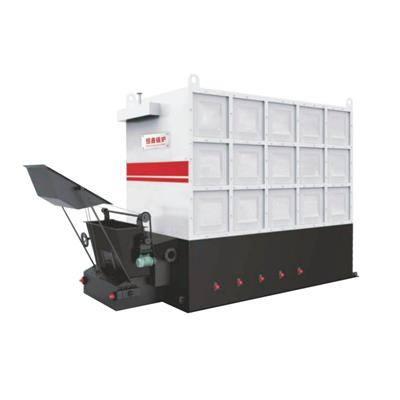
The LRF series biomass coal hot blast stove from Henan Hengxin Boiler covers rated heat power from 120 to 2350 thousand kcal per hour, roughly 0.14 to 2.7 MW, with outlet air from 50 to 220 degrees Celsius. The design fuel is biomass at a listed calorific value of 3850 kcal per kg, and coal is accepted as an alternative. Because the air stays clean and dry, the series serves wood processing, food plants, pharmaceutical herb drying, chemical raw material drying and several other sectors listed in our wood processing application pages.
This guide brings together the model data, a four step sizing method, temperature planning values, fuel consumption figures and a supplier checklist, so that a purchasing team can prepare a complete enquiry in one pass.
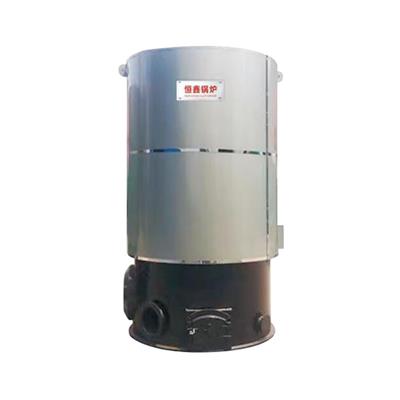
The combustion chamber and the heat exchanger are combined into a single body with a steel plate multi-layer jacket structure. The lower part of the core is the combustion chamber, while the upper part and the surrounding section form the ring heat exchanger. Air and flue gas travel in a double return arrangement and each stream keeps its own path, so the drying air never mixes with the flue gas. To raise the heat transfer rate, the surfaces use multi-head spiral groove technology, which thins the laminar boundary layer so both streams exchange heat effectively while rotating continuously through the jacket.
The inner liner is made of 310S and 304 grade stainless steel together with refractory material, which withstands high temperature and supports a long service life. The combustion design applies three sided circulation oxygen replenishment, so the fuel burns out quickly and the stack emission reaches a level where smoke and dust are hardly visible to the eye. The exhaust duct can also be routed through an oven for circulating heat exchange before entering the stack, and the factory states that this arrangement lifts heat utilization above 90 percent.
A fully automatic microcomputer controller with optimized temperature sensors holds the outlet temperature between precise upper and lower limits. Automatic ignition, automatic feeding and constant temperature control mean that fuel is added only two to three times per day depending on usage, so daily operation needs little manual work. The high temperature resistant forced draft and induced draft fans are low noise units with long service lives.
The table below lists the nine models of the LRF series with the data published in the factory parameter table. Working medium is air at normal inlet conditions, and the test thermal efficiency is listed at or above 80 percent for every model.
| Model | Rated heat power (10³ kcal/h) | Rated air outlet temp. (℃) | Air supply volume (m³/h) | Design weight (t) | Max transport dimension D×H (m) |
|---|---|---|---|---|---|
| LRF-10-SCIII | 120 | 50-220 | 800-1700 | 1.85 | 1.2×2.4 |
| LRF-20-SCIII | 240 | 50-200 | 2100-3200 | 2.56 | 1.4×2.7 |
| LRF-30-SCIII | 350 | 50-220 | 3100-4200 | 2.85 | 1.5×3.05 |
| LRF-40-SCIII | 500 | 50-220 | 3000-4700 | 3.7 | 1.7×3.3 |
| LRF-60-SCIII | 700 | 50-220 | 4200-6000 | 4.9 | 1.8×3.9 |
| LRF-100-SCIII | 1200 | 50-220 | 6000-8300 | 7.1 | 2.0×3.75 |
| LRF-120-SCIII | 1400 | 50-220 | 6000-9500 | 8.8 | 2.2×4.5 |
| LRF-180-SCIII | 2160 | 50-220 | 12000-20000 | 11.4 | 2.6×6.0 |
| LRF-200-SCIII | 2350 | 50-220 | 12000-20000 | 13.6 | 2.7×6.5 |
Model names group the range into capacity families, and the rated heat power in the parameter table is the authoritative figure. An LRF-100-SCIII unit, for example, is listed at 1200 thousand kcal per hour, equal to roughly 1.4 MW, while the LRF-200-SCIII tops the range at 2350 thousand kcal per hour, about 2.7 MW. When you compare offers between suppliers, always align the comparison on the rated heat power, the air supply volume and the outlet temperature together, because a single figure alone does not describe the duty a stove can carry.
Buyers can turn the data of a drying line into a stove duty with four simple steps. The method below is deliberately conservative and uses planning values, so the final model choice should still be confirmed with the engineering team.
Walk through the plant and record each consumer the stove will feed: drying chambers, ovens, preheating sections and any anti-mould warm air supply. For each one note the required air temperature, the circulating or fresh air volume, and the water to be evaporated per hour at peak. Peaks rarely coincide in every chamber, so note which loads run at the same time.
For evaporative duty, a common planning figure is 1.2 kWh of heat per kilogram of water evaporated, which covers latent heat, heating of the material mass and exhaust losses. For the fresh air itself, the heating power follows from the air volume, the temperature rise and the specific heat of air, about 0.33 kWh per hour for every 1000 m³ per hour raised by one degree Celsius. Add the two parts together to obtain the total duty in kilowatts.
Heat duty alone is not enough. The stove must also deliver the air volume the process needs, because heat reaches the material through moving air. Compare the required circulating volume with the air supply column in the model table, and check that the required supply temperature sits inside the 50 to 220 degrees Celsius outlet window with some control room left on both ends.
Add a margin of 10 to 15 percent for fouling of the heat exchange surfaces, start-up losses, fuel variation and possible future expansion. The resulting duty point identifies the candidate model. Our engineers then verify the choice against the chamber design, the altitude of the plant, the local fuel analysis and the ducting layout before the offer is issued.
Assume three lumber drying chambers with a combined peak evaporation of 600 kg of water per hour. The evaporative duty is 600 multiplied by 1.2 kWh, or about 720 kW. Suppose the line also heats 9000 m³ per hour of fresh air from 20 to 90 degrees Celsius, which adds roughly 210 kW. The combined duty is about 930 kW, and with a 15 percent margin it rises to about 1070 kW. An LRF-100-SCIII unit at 1200 thousand kcal per hour, equal to about 1395 kW, would run near 77 percent of its rating, which is a comfortable and efficient duty point. The airflow of 6000 to 8300 m³ per hour also matches the circulating demand of this example line.
Wood products cover a wide family of materials, and each one has its own temperature window. The values below are indicative planning ranges for hot air supply, and the final schedule always follows the process design of the kiln or dryer supplier.
| Application | Typical hot air supply range | Notes |
|---|---|---|
| Lumber drying kilns | 70-110 ℃ | Gentle schedules protect against checking and collapse; the outlet window easily covers conventional kiln duty |
| Plywood veneer dryers | 140-180 ℃ | Higher air speed shortens the drying time of thin veneer sheets |
| Fiber and particle drying for board production | 160-220 ℃ | Runs near the upper end of the outlet window; agree the duct design with the dryer maker |
| Sawdust and pellet feed pre-drying | 120-180 ℃ | Pre-drying stabilizes pellet mill input moisture |
The LRF-20-SCIII model is listed with an outlet range of 50 to 200 degrees Celsius, while all other models cover 50 to 220 degrees Celsius, so most wood related duties fall inside the series capability. For processes that need temperatures outside this window, our team can discuss the alternatives in the wider product range.
Fuel cost usually dominates the running budget of a hot air system, so it pays to estimate consumption before ordering. The calculation is straightforward: divide the heat demand by the product of the fuel calorific value and the efficiency. With the listed test efficiency of 80 percent or better, the planning figures below apply per million kcal of useful heat.
| Fuel | Calorific value basis | Indicative consumption per 106 kcal useful heat |
|---|---|---|
| Biomass pellets or briquettes (design fuel) | 3850 kcal/kg (factory listed) | about 325 kg |
| Coal (accepted alternative) | about 5000 kcal/kg (typical bituminous, to be confirmed by fuel analysis) | about 250 kg |
Local fuel prices decide which route is cheaper at your site, and moisture content strongly affects the real calorific value of biomass, so ask suppliers to quote on dry basis and keep the fuel shed covered. Ash removal space and a spark-free fuel feeding path should also be planned. Where a plant prefers a gas or oil fired route instead, our engineering team can compare this series with the WRF indirect hot air furnace family so the decision rests on data rather than habit.
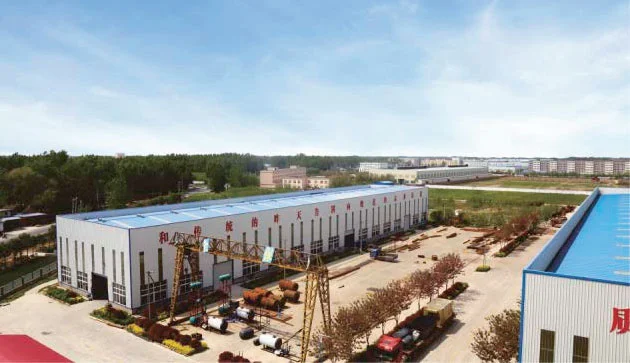
Hengxin Boiler works under the ISO9001 and ISO14001 quality and environmental management systems, holds the national special equipment manufacturing licence, and is rated as a 3A credit enterprise. Every certificate can be reviewed in the honor centre. The factory records 40 years of history, a 660,000 square metre production area, 580 million yuan of total assets, 336 production equipments and a service team of more than 500 people, which together give a buyer a verifiable basis rather than a slogan.
With more than 300 production models and an engineering team that accepts customized designs based on customer drawings, the factory can adapt the stove to an existing ducting layout, a specific fuel analysis or an unusual foundation. Plants that sell equipment under their own brand can also discuss OEM cooperation, and drawings or 3D interfaces are exchanged during the design stage.
Standard delivery windows are 15 days for units under 15 tons, 20 days for 15 to 25 tons and 35 days for larger equipment, and some products are available from stock. Engineers can be dispatched at home and abroad within 24 to 72 hours, technical consultation answers within 30 minutes and a clear plan within 2 hours, and free maintenance applies within 12 months since shipment. Across the wider application centre, buyers can see how the same service system supports steam boilers, hot water boilers and thermal fluid heaters as well.
The LRF series ships as compact vertical units with transport dimensions from 1.2 by 2.4 metres on the smallest model up to 2.7 by 6.5 metres on the LRF-200-SCIII, so civil work stays modest. The checklist below reflects the items our engineers ask about during layout planning.
| Item | Notes |
|---|---|
| Foundation | Level concrete base sized for the selected model, with the design weight of 1.85 to 13.6 tons in mind and lifting clearance during unloading |
| Fuel storage | Covered shed sized for two to three days of consumption, dry pellets near the feeding hopper, and a safe path for daily top-up |
| Ash and flue | Ash pit at the combustion end and a flue stack routed per local emission rules |
| Hot air ducting | Insulated ducts to each chamber with dampers for balancing, and temperature sensors close to each consumer |
| Power and control | Power supply per local standard, position of the control cabinet where the operator can watch the outlet temperature |
The series is designed for continuous duty with a small maintenance team. The schedule below combines the automatic features of the series with common industrial practice.
| Interval | Tasks |
|---|---|
| Daily | Record outlet and chamber temperatures, top up fuel 2 to 3 times per day, and observe the flue for any change in appearance |
| Weekly | Check fan bearing temperature and vibration, inspect duct joints for leakage, and clear ash in line with the operating manual |
| Monthly | Test the temperature control upper and lower limits, check door and flange seals, and inspect the grate and refractory through the inspection doors |
| Quarterly and annual | Inspect the stainless steel liner and heat exchange surfaces, calibrate sensors, and test all safety and alarm functions |
Yes. The design fuel is biomass with a listed calorific value of 3850 kcal per kg, and the structure accepts coal as an alternative within the design fuel envelope. Because calorific value, ash behaviour and volatile content differ between fuels, the feeding rate and control settings are adjusted for the fuel you actually use, and our engineers confirm the settings during commissioning.
The air and the flue gas each keep their own path through the jacket heat exchanger, so the delivered air is heat exchanged air without combustion residue. That makes it suitable for lumber kilns, veneer dryers, food and herb drying ovens and similar duty where the air may contact the product. When the exhaust duct is routed through an oven for circulating heat exchange, the factory states that heat utilization reaches above 90 percent.
Follow the four step method above: list the consumers, convert evaporation and fresh air heating into a heat duty, check the required air volume and temperature against the model table, and add a 10 to 15 percent margin. If the result sits near a model boundary, send us the data and our engineers will confirm the selection, usually with a clear plan within two hours of the enquiry.
Prepare the material and its moisture before and after drying, the hourly evaporation or output, the chamber or oven air volume and temperature, the available fuel with a proximate analysis if possible, the local power supply and the space available at the installation site. With these data our team can return a model selection, a quotation and a layout proposal, and customized designs based on your drawings are welcome.
Planning a new drying line or replacing an ageing hot air source? Review the full specification of the LRF biomass coal hot blast stove and send us your process data. Our engineers will return a model selection with the duty calculation, a quotation and a layout suggestion, and the delivery schedule can be matched to your project timeline.