
Company News
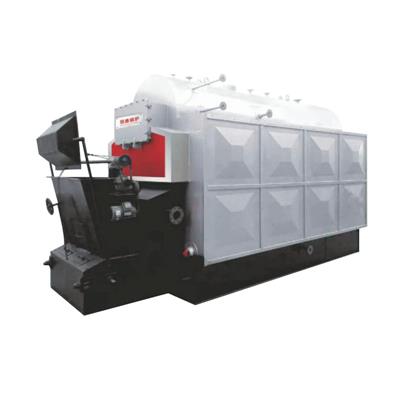
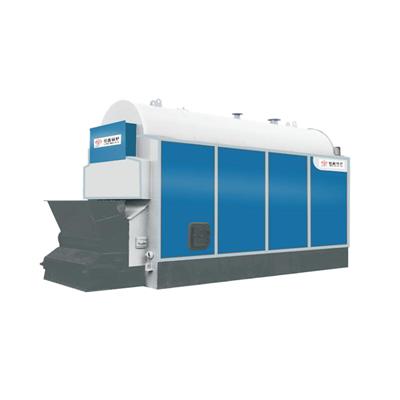
Many small factories, rural workshops and start-up plants face the same situation: the local gas pipeline has not reached the site, the capital budget is limited, and the daily steam demand is modest. For buyers searching for a DZH coal fired steam boiler for small factories or a hand fired biomass boiler, the DZH manually biomass (coal) fired boiler is a practical answer. This guide explains how the hand-fired design works, which applications it fits, how it compares with an automatic chain grate boiler, and what to prepare before installation. All parameters below follow the DZH manually biomass (coal) fired boiler product specification published by Henan Hengxin Boiler Co., Ltd.
Automatic boilers deliver convenience, yet they also raise the entry cost. In regions where solid fuel such as coal, wood chips or biomass briquettes is cheap and available, a manually fed boiler keeps the investment focused on the pressure parts rather than on feeding machinery. Three conditions usually point buyers toward the DZH type:
Steam demand stays within a small and medium range, roughly 0.5 to 6 tons per hour;
The factory has space for fuel storage and for manual stoking operations;
Natural gas is unavailable or the connection cost is disproportionately high.
Because the DZH design uses a fixed grate with manual feeding, the structure is compact and the boiler room layout stays simple. For a plant that only needs steam for a few hours per day, the trade-off between labor and capital often favors the hand-fed solution.
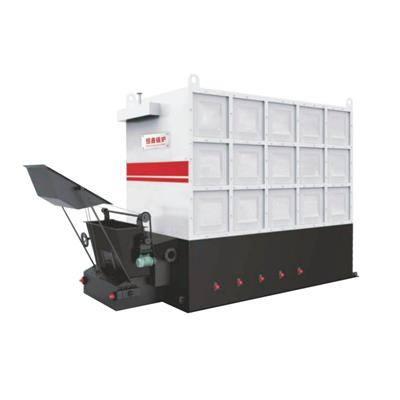
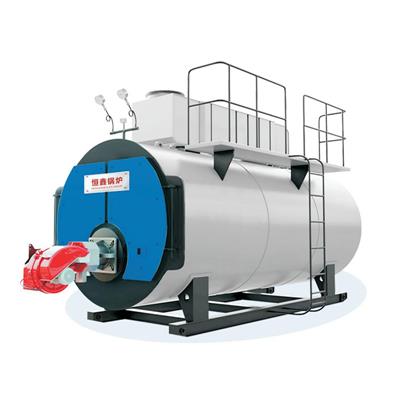
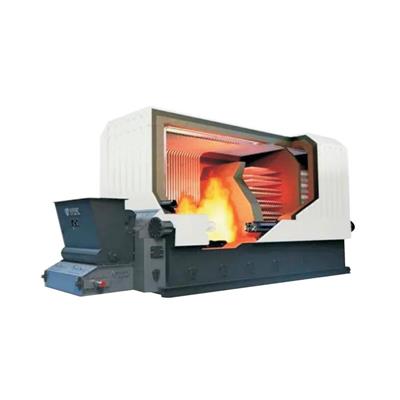
The DZH series is a horizontal shell-type boiler with a fixed grate. Fuel is loaded through the firing door by hand, burned on the grate, and the hot flue gas passes through the smoke tubes to heat the water in the shell. The furnace is arranged with a reasonable heating surface so that both coal and biomass fuel can reach stable combustion.
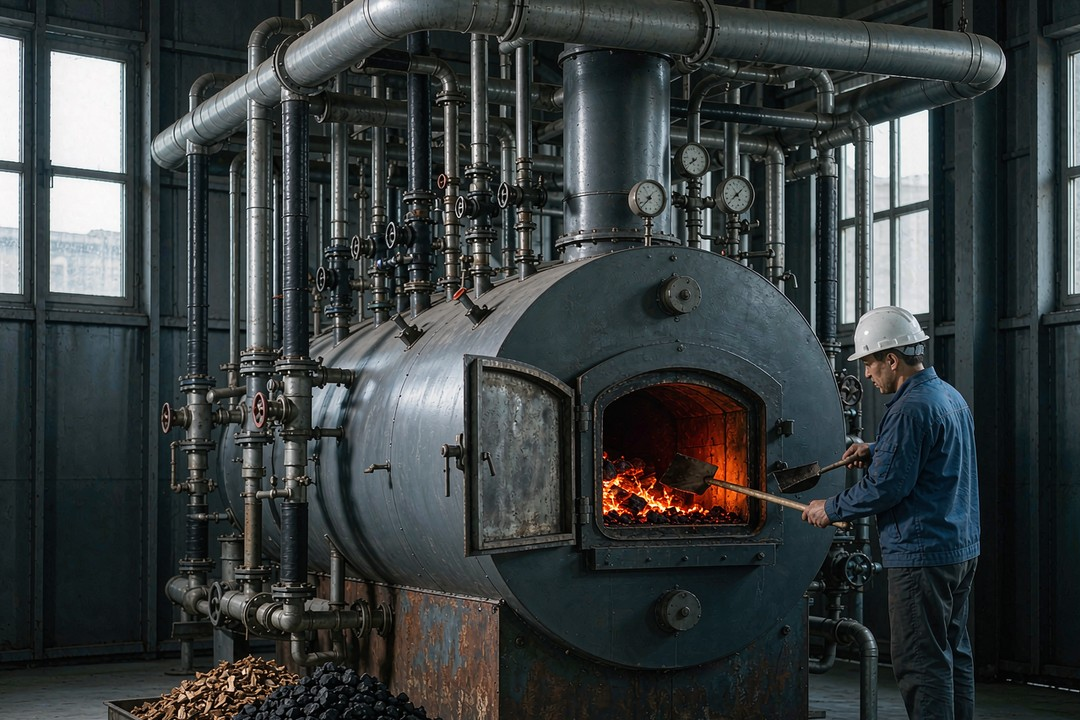
An operator spreads an even coal or biomass bed on the grate and ignites it. Combustion air enters through the ash door and the grate gaps. As the fire burns toward the rear, the operator opens the firing door at intervals, pushes fresh fuel onto the burning bed and rakes the fire to keep the bed uniform. Slag falls through the grate or is removed manually from the ash chamber. The whole process requires attention to bed thickness and firing rhythm, and experienced stokers can achieve steady pressure with a consistent routine.
The following parameters come from the official product page and represent the standard series:
| Item | Parameter |
|---|---|
| Rated steam capacity | 0.5 – 6 t/h |
| Rated working pressure | 1.25 MPa |
| Saturated steam temperature | 194 ℃ |
| Design fuel | Coal, biomass fuel |
| Feeding method | Manual loading through the firing door |
| Structure | Horizontal shell boiler with fixed grate |
Within this range, a 1 ton unit can support a small processing line, while a 4 or 6 ton unit can serve a mid-size plant with several steam consumers running in parallel.
The DZH boiler covers most solid-fuel steam scenarios of small and medium plants. Typical applications include:
| Application | Typical steam use | Suggested capacity |
|---|---|---|
| Food and beverage processing | Cooking, sterilizing, drying, cleaning | 1 – 4 t/h |
| Textile and dyeing workshops | Setting, drying, sizing | 2 – 6 t/h |
| Laundry plants | Pressing and drying equipment | 0.5 – 2 t/h |
| Wood processing | Hot pressing, drying kilns | 1 – 4 t/h |
| Chemical and pharmaceutical pilot plants | Reaction heating, distillation | 1 – 6 t/h |
| Brick, curing and agricultural drying | Curing rooms, grain and feed drying | 0.5 – 4 t/h |
Small food plants are one of the most common users of hand-fired boilers. Steam is needed for cooking kettles, retorts, pasteurizers and cleaning stations, and the load profile is often intermittent, which suits a manually fired unit that can be pushed harder during production hours and banked during breaks. If your plant belongs to this sector, the food and beverage processing application page shows further scenarios of steam use.
Commercial laundries, hardware curing shops and small pilot lines usually need less than 2 t/h of steam. A 0.5 or 1 t/h DZH unit occupies a small footprint, and the fuel cost stays predictable because the operator can weigh and record every loading of coal or briquettes.
The design fuel of the DZH series covers coal and biomass fuel, which gives buyers room to optimize cost according to local supply. Different fuels behave differently on a fixed grate:
| Fuel | Combustion behavior | Operation notes |
|---|---|---|
| Bituminous coal | Strong flame, easy ignition | Keep bed even, watch smoke color |
| Anthracite and briquettes | Slow ignition, long burning | Thinner bed, more frequent stoking |
| Wood chips and offcuts | Fast flame, light ash | Load in moderate batches to avoid packing |
| Biomass briquettes / straw pellets | Steady fire, higher ash | Remove ash regularly, keep air path clear |
Hand firing leaves room for operator skill, and a few habits make a measurable difference in fuel consumption:
Keep the fuel bed thickness consistent instead of dumping large batches;
Open the firing door briefly, because every long pause lets cold air cool the furnace;
Clean the grate and ash chamber on schedule so that combustion air is not blocked;
Treat the feedwater and control blowdown, because scale on the heating surface wastes fuel no matter how well the fire burns.
Buyers often hesitate between the hand-fed DZH and the chain-grate DZL. Both burn coal and biomass, yet they serve different budgets and staffing levels:
| Item | DZH (manual feeding) | DZL biomass (coal) fired boiler |
|---|---|---|
| Feeding | Manual through firing door | Automatic chain grate |
| Initial investment | Lower | Higher |
| Labor requirement | Stoker on duty | Less manual work |
| Cash flow pressure | Fuel cost paid in small batches | Batch and silo logistics |
| Best fit | 0.5 – 6 t/h, small plants, tight budget | Larger continuous loads |
A useful rule of thumb: if steam demand is below roughly 4 t/h and skilled stokers are available, the DZH keeps the budget lean; when the plant runs continuous shifts and labor cost is the concern, the DZL chain grate takes over the feeding work automatically.
A DZH boiler needs a level concrete foundation, clearance for the firing door swing, and a fuel bay within a few steps of the boiler. Plan space for ash removal as well, and keep the boiler room ventilated so that the stoker works in reasonable conditions. Local authorities may set minimum clearances and room dimensions, so confirm the layout with the local inspection body before pouring the foundation. A covered fuel bay keeps coal dry and briquettes intact, and dry fuel burns more predictably on a fixed grate.
In small plants the steam header is often assembled in a hurry, and this creates avoidable losses later. Keep the header above the boiler outlet, slope the pipes toward steam traps, insulate the main lines, and size the pipe diameter for the peak flow of the largest consumer rather than for the boiler nameplate. A simple separator or trap set at the end of the header protects dryers and kettles from wet steam. These low-cost measures usually repay themselves in reduced fuel use within a short period.
Even the sturdiest shell boiler suffers from scale, so a softener or other feedwater treatment should be planned from day one. Safety valves, water level gauges and pressure gauges are fitted as standard, and they must be checked and calibrated according to local regulations. Chimney height and dust removal arrangements also follow local environmental requirements, and a simple dust collector is commonly added for solid fuel firing.
Check the water level and pressure gauges at every shift, and blow down as scheduled;
Observe the fire bed and keep the stoking rhythm steady;
Remove ash and slag before they pile up against the grate;
Inspect the grate, door gaskets and hand holes weekly, replacing packing when leaks appear;
Record fuel consumption per shift, which turns fuel cost into a visible, manageable number;
Arrange an internal inspection at the interval required by your local boiler authority.
These routines cost little, yet they extend boiler life and keep steam pressure stable for production.
Before requesting a quotation, prepare these five answers so that the manufacturer can size the boiler correctly:
Peak and average steam demand in t/h, and the daily operating hours;
Fuels that are actually available on site, with approximate prices;
Required working pressure of your steam equipment, since the standard series delivers 1.25 MPa;
Boiler room dimensions and the plan for fuel and ash handling;
Local requirements for operators, inspection and emissions.
If you are unsure about any item, contact our engineering team with your process data and the team will recommend a capacity and a configuration that matches your plant.
The standard series covers 0.5 to 6 t/h at a rated working pressure of 1.25 MPa, with a saturated steam temperature of 194 ℃. Small plants usually start at 0.5 or 1 t/h, while plants with several steam consumers choose 4 or 6 t/h.
Yes. Coal and biomass fuel are the design fuels of the series. Switching between coal, briquettes and wood chips mainly changes the stoking rhythm and ash handling, and the operator should avoid oversized lumps or wet, freshly chipped wood that smother the fire.
It depends on the load and the fuel. In typical small-boiler service, stokers add fuel at intervals of tens of minutes rather than continuously, and the interval shortens at high load or with fast-burning fuels such as wood chips. Keeping the bed thin and even works better than large, occasional loads.
In most regions, pressure boilers must be operated and maintained by trained or certified personnel, and small hand-fired units are usually no exception. Confirm the exact requirement with your local boiler inspection authority before commissioning, and arrange training for the responsible stoker.
Service life depends on water treatment quality, firing practice and inspection discipline rather than on the feeding method itself. Plants that soften the feedwater, blow down on schedule and repair door gaskets promptly generally keep shell boilers in service for many years, while neglected units suffer from scale damage and air leaks far earlier. Follow the maintenance checklist above and the annual inspection requirements of your local authority.
For buyers without a gas connection, the DZH manually biomass (coal) fired boiler turns locally available coal and biomass into dependable 0.5-6 t/h process steam with a modest initial investment. Review the full DZH product specification, compare it with the automatic chain grate option, and reach out with your steam profile so that the selected unit matches both your process and your budget.