
Company News
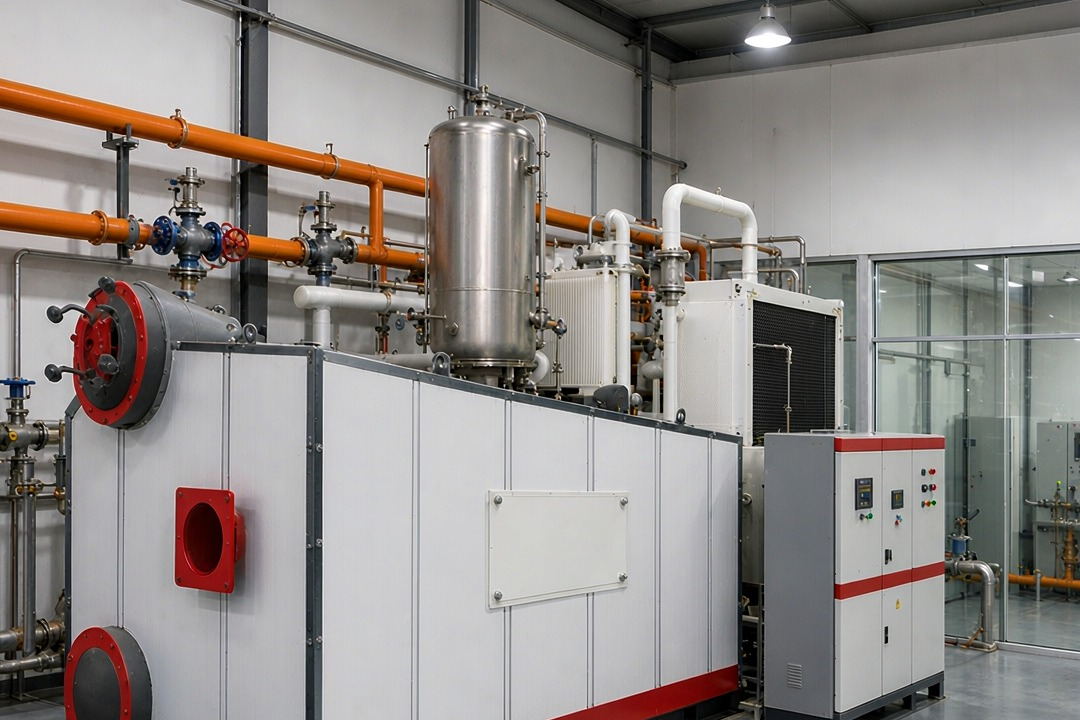
When a dozen factories share one boundary wall, the cheapest kilogram of steam is the one produced in a properly designed central plant. Each tenant alone would buy a small fire tube boiler, hire an operator, hold a fuel contract and accept a maintenance burden that never disappears; together they can run three large water tube boilers around the clock, meter every tonne, and pay one fuel bill instead of ten. The engineering problem is real, though: the plant has to absorb dyeing houses that pull steam in waves, a corrugator that never stops, a pharmaceutical block that demands absolute pressure stability, and a winter heating coil that appears for three months and vanishes. This article works through that problem for a mid sized park and shows how an SZS oil/gas fired boiler range covers it from end to end.
The worked example uses a park of fourteen tenants with a connected steam demand of 62 tonnes per hour: two textile dyeing mills, a food processing cluster, a pharmaceutical plant, two packaging and paper converting lines, a rubber moulding shop, a laundry, an electroplating shop, a plywood mill and the common services. The method, however, is the same for any park, and the numbers can be rebuilt with the tenant list of any site the reader is planning.
The first document a park steam plant needs is not a boiler specification but an honest tenant load list. In practice the list is assembled from the equipment each tenant intends to install, and it is the forgotten consumers, the laboratory autoclave, the winter heating coil, the tanker heating jacket, that later break the balance.
| Tenant category | Typical steam conditions | Load character | What a shortfall costs |
|---|---|---|---|
| Textile dyeing and finishing | 0.6 to 0.8 MPa to dyeing machines, dryers and washing ranges | Batch waves, two to eight tonnes per hour per mill | Dye lots rejected when temperature dips mid cycle |
| Food processing cluster | 0.5 to 0.8 MPa to blanchers, cookers, sterilisers and CIP | Shift peaks, hygiene driven cleaning blocks | Production stops, cleaning cannot start, shift lost |
| Pharmaceutical plant | 0.8 MPa plant steam feeding clean steam generators, 0.2 MPa sterilisation | Strict stability, autoclave batches | Batch documentation fails, whole batch discarded |
| Paper converting and packaging | 0.8 to 1.2 MPa to corrugator preheaters and glue kitchen | Continuous, the highest single connected load | Corrugator speed drops, delamination and waste |
| Rubber and tyre moulding | 0.8 to 1.0 MPa to vulcanising presses and bladders | Batch, cure cycles of one to three hours | Cure interrupted, scrap and press downtime |
| Laundry and uniform service | 0.6 to 0.8 MPa to washers, extractors and ironers | Day shift, Monday and Friday peaks | Contracts missed, ironer wrinkles rejected |
| Electroplating and surface treatment | 0.2 to 0.4 MPa to tank heating and degreasing | Steady, small, sensitive to chemistry | Bath temperature drift, plating defects |
| Plywood and wood processing | 0.6 to 0.9 MPa to hot presses and log conditioning | Cycle batches with sharp opening of the press | Press cycle extended, output per shift falls |
| Park services | 0.4 to 0.6 MPa to heating coils, hot water and tanker heating | Seasonal and intermittent | Cold offices, frozen lines in winter nights |
Two things stand out. First, the pressures wanted by the tenants span from 0.2 to 1.2 MPa, which means the plant must produce at one pressure and distribute at several, a subject taken up below. Second, the textile and food waves rarely arrive together, and that is exactly where the economics of a shared plant come from.
Adding the connected loads of fourteen tenants gives 62 tonnes per hour. Buying boilers for 62 tonnes would be absurd, because no tenant reaches its maximum at the same moment as every other tenant. The ratio between what is actually drawn and what is connected is the diversity factor, and it is the single most important number in the whole project.
| Load group | Behaviour | Share of annual steam | Design consequence |
|---|---|---|---|
| Continuous process base | Corrugator, plating tanks, hot water, running whenever the park runs | 55 to 65 percent | Carried by one or two boilers at steady output |
| Batch process peaks | Dyeing waves, cure cycles, autoclaves, 30 to 180 minutes long | 25 to 35 percent | Drives installed capacity and pressure stability |
| Seasonal heating | Office and workshop heating coils, three to five months | 5 to 10 percent | Decides whether a fourth boiler is justified |
| Night and weekend | Park runs at 15 to 25 percent of the day load | Small | Decides how many boilers can stay in low fire |
The way to check the diversity assumption is a load duration curve: plot the estimated hourly demand for a full year from highest to lowest. If the curve shows 62 tonnes only for a few winter hours when heating overlaps a dyeing wave, the plant buys boilers for something like 49 tonnes and accepts a rare curtailment rule; if the curve is flat and high, the connected sum is closer to the truth and the boiler count grows. Parks that skip this exercise usually discover the error in the first winter, either as a header that cannot hold pressure at four in the afternoon or as three boilers idling at 30 percent through the summer.
At twenty tonnes per hour and above, the engineering argument shifts from fire tube to water tube construction, and the SZS range is the platform this article is built on.
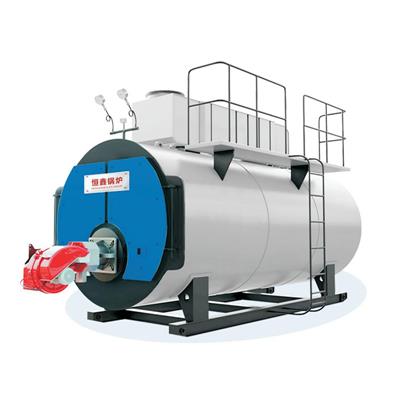
The SZS is a double drum horizontal water tube boiler with a D-type layout: convection tube bundle on one side, radiant furnace on the other, both surrounded by membrane water walls. The membrane wall replaces refractory brick, so the furnace reaches operating temperature in minutes rather than hours and the outer casing stays cool, which cuts the insulation weight and the heat loss into the boiler house. The large radiant furnace keeps the heat release rate moderate, which is what makes a stable, low emission flame possible at large capacities.
A water tube boiler holds far less water than a fire tube shell of the same output. The stored energy is smaller, but the circulation is faster and the burner sees the load change immediately, so the header recovers from a dyeing wave in tens of seconds. For park duty, where waves arrive from several tenants at unpredictable intervals, this response matters more than the shell thermal ballast that helps a single factory boiler ride through short spikes.
Up to SZS75 the boiler ships as a quick assembled package, which keeps the site schedule measured in weeks; the SZS100, SZS110 and SZS150 ship in bulk and are assembled on site by the supplier crew. A park of the size in the worked example never needs the bulk route, but it is worth knowing the ceiling exists before a master plan promises a tenant cluster an unbounded steam supply.
Many park proposals start from a row of large fire tube boilers because the type is familiar. The comparison below sets out where the two constructions actually differ, and where each one stops being the right answer.
| Aspect | SZS water tube | Fire tube shell |
|---|---|---|
| Capacity band | 6 to 150 tonnes per hour | Commonly 1 to 20 tonnes per hour |
| Structure | Double drum, D-type, membrane water walls | Corrugated furnace inside a large shell, wet back |
| Transport weight | 32,000 to 80,500 kg assembled packages | 5,500 to 30,000 kg typical |
| Response to load waves | Fast, small water volume, immediate burner action | Slower, large shell damps short spikes |
| Pressure rating | 1.25, 1.6 or 2.5 MPa | Typically up to 2.5 MPa, smaller surface |
| Best fit | Park steam plants above roughly 20 tonnes per hour | Single factories up to about 20 tonnes per hour |
A park with a design load below 20 tonnes per hour may well be served by two or three fire tube boilers at lower capital cost, and honesty requires saying so. Above that line the water tube construction wins on efficiency at sustained load, on furnace volume for clean combustion and on the simple fact that eight fire tube shells would be needed where three SZS20 packages stand.
The plant produces at the highest pressure any tenant needs plus margin, and every lower pressure level is created at a pressure reducing station, not inside the tenants. Each station carries a strainer, a reducing valve with a standby path, a separator and a trap set, so the tenants receive dry steam at a stable pressure whatever the boiler is doing.
| Level | Supplied users | Notes |
|---|---|---|
| 1.25 MPa main header | Corrugators and the highest duty dryers | Produced directly by the SZS boilers |
| 0.8 MPa station | Vulcanising presses, food cookers, heavy dryer coils | Most of the connected load sits here |
| 0.6 MPa station | Dyeing machines, hot presses, log conditioning | Wave load, station sized for the simultaneous wave |
| 0.4 MPa station | Laundry, plating tanks, heating coils, hot water | Also feeds the make up water heater |
| 0.2 MPa station | Sterilisation and any direct steam injection | Separate separator and trap, dry steam only |
Running the whole park on one pressure is a common false economy. Tenants at 0.2 MPa supplied from an uncontrolled 1.25 MPa header burn their control valves, water hammer travels down the line, and the pharmaceutical tenant discovers that its sterilisation cycle drifts whenever the corrugator opens its preheaters.
Twelve ratings span 6 to 150 tonnes per hour at 1.25 MPa, with 1.6 and 2.5 MPa available for parks that want margin on the header or feed a turbine. Saturated steam at full pressure leaves the boiler at 194 to 225 degrees Celsius, the design fuels are natural gas, light oil and heavy oil, and published efficiency is 93.3 to 97 percent thanks to the finned tube economiser and condenser at the boiler tail. The table reproduces the transport data a project team needs for foundations and cranage.
| Model | Capacity (t/h) | Max transport weight (kg) | Transport size L x W x H (mm) |
|---|---|---|---|
| SZS6-1.25-YQ | 6 | 32,000 | 7,800 x 2,400 x 2,400 |
| SZS8-1.25-YQ | 8 | 32,000 | 7,800 x 2,400 x 2,400 |
| SZS10-1.25-YQ | 10 | 32,000 | 7,800 x 2,400 x 2,400 |
| SZS20-1.25-YQ | 20 | 40,000 | 8,000 x 3,600 x 4,500 |
| SZS30-1.25-YQ | 30 | 40,000 | 8,000 x 3,600 x 4,500 |
| SZS40-1.25-YQ | 40 | 40,000 | 8,000 x 3,600 x 4,500 |
| SZS50-1.25-YQ | 50 | 51,000 | 8,900 x 3,900 x 4,000 |
| SZS65-1.25-YQ | 65 | 68,200 | 10,500 x 4,300 x 4,320 |
| SZS75-1.25-YQ | 75 | 80,500 | 12,330 x 4,400 x 4,530 |
| SZS100 / 110 / 150-1.25-YQ | 100 / 110 / 150 | Bulk supply, site assembly | Assembled on site |
The burner is an imported Baltur unit with full automatic control: pre purge, ignition, power modulation, shutdown and flameout protection run without operator intervention, and the programmable control adds water level control, overpressure protection, gas leakage detection and the interlocks that a park operator with several boilers on one header cannot do without.
The fourteen tenants of the worked example add up to 62 tonnes per hour connected: the corrugator line at 12, the two dyeing mills at 9 and 7, food at 8, pharmaceutical at 6, rubber presses at 7, plywood at 6, laundry at 3, plating at 2, and park services and contingencies at 2. The number is real, and it is also not the design load.
From the tenant schedules and a winter heating overlap, a diversity factor of 0.72 is justified, which brings the coincident demand to about 44.6 tonnes per hour. The diversity assumption should be signed off by the park operator, because it fixes the capital cost, and a conservative 0.80 adds two boiler sizes that may never earn their keep.
Ten percent covers fouled coils, cold make up water in winter, calibration drift in the meters and the first phase of park expansion. The design load is therefore 44.6 multiplied by 1.10, which is 49.1 tonnes per hour.
The comparison below holds the same 49.1 tonne design load against four plausible configurations.
| Item | Basis | Result |
|---|---|---|
| Connected load, fourteen tenants | Tenant equipment list | 62 t/h |
| Coincident demand | 62 x 0.72 diversity | 44.6 t/h |
| Design load with margin | 44.6 x 1.10 | 49.1 t/h |
| Scheme | Installed capacity | Load at design point | If one unit stops | Verdict |
|---|---|---|---|---|
| A: one SZS50-1.25-YQ | 50 t/h | 98 percent | No steam at all | Rejected, no margin and no standby |
| B: two SZS30-1.25-YQ | 60 t/h | 82 percent | 30 t/h, heavy curtailment | Workable, winter is tight |
| C: three SZS20-1.25-YQ | 60 t/h | 82 percent | 40 t/h, 81 percent of design | Selected, genuine N plus one |
| D: SZS40 plus SZS20 | 60 t/h | 82 percent | 20 t/h only | Rejected, one outage stops half the park |
Scheme C is the configuration most park operators settle on. Three identical SZS20 packages share the header through isolating valves, any two of them carry the design load, and the third rotates into maintenance without a shutdown notice to fourteen tenants. Overnight, a single unit at low fire covers the 15 to 25 percent night demand, which keeps the burner in a clean part of its modulation range instead of cycling.
A park lives or dies on its ability to bill steam fairly and to keep the boiler water under control, and both are design tasks, not administrative ones.
Each branch leaves the metering room through a flow computer that reads the vortex or differential pressure meter together with pressure and temperature, because one kilogram of steam at 0.8 MPa occupies a very different volume than at 0.2 MPa and an uncompensated meter bills accordingly. The metering room sits between the boiler house and the tenant blocks, with isolation valves so that a meter can be serviced without stopping the branch, and the monthly statement should show mass, pressure, temperature and the tariff, so disputes end in the data instead of in a negotiation.
In a single factory, 80 percent condensate return is normal. In a park it is earned, tenant by tenant: the corrugator and the laundry return clean hot condensate willingly, a dyeing house may return condensate coloured with dye residues, a plating shop may return condensate with metal traces, and any line that fails the acceptance test drains to the effluent plant until it is corrected. The acceptance rule is simple: pH between 8.5 and 9.5, hardness zero, iron below 0.3 mg/L, no oil sheen, conductivity within the agreed band. Every accepted tonne returns at 80 to 95 degrees Celsius and saves fuel, water and treatment chemicals in equal measure.
| Parameter | Target | Reason |
|---|---|---|
| Make up water hardness | 0.03 mmol/L or lower | Scale on membrane walls and drums is the main failure driver |
| Boiler water pH at 25 degrees Celsius | 10 to 12 | Protects the pressure parts inside the accepted treatment programme |
| Total dissolved solids | 3,000 to 3,500 mg/L | Keeps carryover low so tenant meters and control valves stay dry |
| Dissolved oxygen after deaerator | 0.05 mg/L or lower | Prevents pitting in drums, tubes and economiser |
| Returned condensate pH | 8.5 to 9.5 | Acid condensate marks corroded tenant lines before they cost a shutdown |
| Returned condensate oil and iron | Negligible, tested per acceptance list | Contaminated return goes to effluent, never to the deaerator |
At an average output of 28 tonnes per hour over 6,500 operating hours, the plant delivers about 182,000 tonnes of steam a year. The consumption figures below assume 50 to 70 percent of condensate returned at 80 degrees or hotter, which is the realistic band for a park with a firm condensate acceptance policy.
| Fuel | Per tonne of steam | Annual at 182,000 t | Note |
|---|---|---|---|
| Natural gas | 75 to 80 Nm3 | 13.7 to 14.6 million Nm3 | Pipeline supply, cleanest flue gas, lowest maintenance |
| LPG | 59 to 62 kg | 10,700 to 11,300 t | Sites without a pipeline, stored in spheres |
| Light diesel | 61 to 64 kg | 11,100 to 11,650 t | Backup fuel, dual fuel burners switch automatically |
| Heavy oil | 63 to 66 kg | 11,500 to 12,000 t | Needs heating and treatment, chosen on price |
A park boiler house operates for decades, and the emission permit is renewed in an environment that only tightens. The Baltur burners are configured with flue gas recirculation where the local limit demands it, and a park of this size is normally able to hold nitrogen oxide in the low tens of milligrams per cubic metre with gas firing, which is comfortably inside the strictest regional limits. Continuous monitoring of oxygen, carbon monoxide and nitrogen oxide on each stack is part of the control package, and the flue gas leaving through the economiser and condenser at 60 to 80 degrees Celsius carries the recovered sensible and latent heat that puts the 93.3 to 97 percent efficiency on the fuel bill.
Three SZS20 packages burn roughly 6,000 Nm3 of gas per hour at full load, so the gas train, the double block and bleed valves, the leakage detection and the venting of the relief valves are engineered as one system, inspected against the special equipment rules that apply in the jurisdiction. The explosion relief doors at the boiler tail, the flameout protection and the purge sequences are all standard on the SZS control programme, but they only protect the plant if the operating team keeps them tested, which is a maintenance calendar question.
| Item | Why it matters |
|---|---|
| Foundations for three packages of 40,000 kg each, crane access planned | Each SZS20 ships at 8,000 x 3,600 x 4,500 mm, the lift needs a clear route and certified gear |
| Gas pressure regulating and metering skid sized for 6,000 Nm3 per hour | Undersized PRS drops the burner below its pressure window at peak |
| Main header with expansion loops and graded slope to drains | A park header is long, and trapped condensate becomes water hammer |
| Five pressure reducing stations built as specified, each with separator and traps | Tenant pressure stability is created here, not at the boiler |
| Tenant branch metering room with compensated flow computers | Billing disputes end in data only if the meters were right from day one |
| Condensate lines with per tenant check valves and acceptance sampling points | One contaminated tenant line must be isolable without debate |
| Water treatment skid, softener train, deaerator and dosing | Three boilers share one water circuit, chemistry errors multiply |
| Blowdown tank and sampling cooler per boiler | Blowdown is hot and legal limits apply to the drain |
| Control integration of three boilers on one header | Lead lag logic, rotation and standby is commissioned, not bought |
| Steam purge and burner tuning at first fire | Low emission numbers are set at commissioning and checked every year |
| Interval | Tasks |
|---|---|
| Daily | Water level checks, bottom and surface blowdown, log header pressure and stack readings, walk the header and listen for water hammer |
| Weekly | Gauge glass tests, safety valve lever check, water chemistry full panel, meter room walkthrough, strainer differential check |
| Monthly | Burner inspection, flue gas analysis and trim, PRS valve exercise, trap survey with an ultrasonic tester, condensate sampling per tenant |
| Quarterly | Flow computer calibration check, low NOx recirculation verification, feed pump and deaerator service, membrane wall visual inspection |
| Annual | Statutory inspection of pressure parts, safety valve certification, refractory and casing check, economiser and condenser cleaning, control interlock functional test |
| Mistake | What it causes | The fix |
|---|---|---|
| Sizing on the connected sum instead of the diversity factor | Two boilers too many, running all summer at 30 percent | Build the load duration curve and sign off the diversity assumption |
| One large boiler instead of two or three smaller ones | Any outage or inspection stops fourteen tenants at once | N plus one with identical packages on one header |
| Uncompensated tenant meters | Billing disputes, tenants pay for pressure they never used | Pressure and temperature compensated flow computers per branch |
| Condensate returned without an acceptance test | Contaminated return foams the boiler water and poisons the chemistry | Per tenant acceptance list, isolable lines, sampling points |
| Winter heating added at the last minute to the day load | Header collapse on the first cold afternoon | Include the heating coil in the load duration curve from the start |
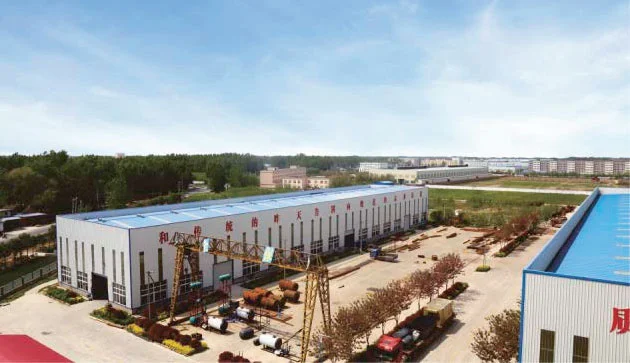
Henan Hengxin Boiler Co., Ltd. manufactures the SZS range at its works in Taikang County, Zhoukou, Henan, and holds ISO 9001 and ISO 14001 certification, a special equipment manufacturing licence and a 3A credit rating, with the certificates listed on the honor page. For a park steam plant the engineering team starts from the tenant load list rather than a catalogue: the diversity assumption, the pressure levels, the fuel analysis, the altitude and the master plan for park expansion all shape the proposal, and the central heating application page shows comparable district scale installations. Custom drawings, non standard pressure ratings, dual fuel burners, containerised metering rooms and OEM supply under the customer brand are all routine, and the SZS natural gas, light oil and heavy oil fired boiler detail page carries the full parameter set for the technical committee.
Project documentation normally includes the general arrangement, foundation loading, gas train schematic, header isometrics, electrical interface list, commissioning procedure and the operating manual, issued in English or in the language of the end user. Spare parts recommendations for the first two years are quoted with the boiler, so the life cycle cost the park finance team sees is the real one.
With a signed off diversity factor of 0.72 and a ten percent margin, the design load is about 49 tonnes per hour, which is met by three SZS20-1.25-YQ packages. Any two carry the full design load at 82 percent, the third rotates through maintenance, and a single unit covers the night load in low fire. A park with different tenant mix should rebuild the load duration curve before copying the answer.
Above roughly 20 tonnes per hour the SZS water tube construction wins on sustained efficiency, on furnace volume for clean low emission combustion and on plant simplicity, because three packages replace eight shells with eight burners and eight maintenance schedules. Below that line two fire tube boilers are often the cheaper honest answer.
Every branch passes a flow computer that reads mass flow together with pressure and temperature and integrates the compensated result. The monthly statement shows mass, pressure, temperature and tariff per tenant, so the corrugator with its 12 tonnes per hour pays for what it draws and the plating shop is not subsidised into a complaint.
Only the tenants that pass the acceptance test, and the test is repeated, not assumed. Clean condensate from the corrugator and laundry returns at 80 to 95 degrees Celsius and pays for itself twice, while a dyeing or plating line that fails the pH, iron or oil test drains to the effluent plant until its lines are corrected. Every accepted percentage point of return lowers the fuel bill, which is why the acceptance policy belongs in the tenant contracts from the first draft.
A park steam plant is the one place where boiler engineering and utility accounting meet in the same room, and the SZS range was built for exactly that meeting: enough capacity to hold a header steady against fourteen unpredictable tenants, efficiency that survives the fuel audit, and a control package that runs three boilers as one system. Send the tenant load list, the pressure levels and the fuel situation to the Hengxin application team, and the reply will include the load duration check, a boiler count, a layout drawing and the fuel figures at the local gas price.