
Company News
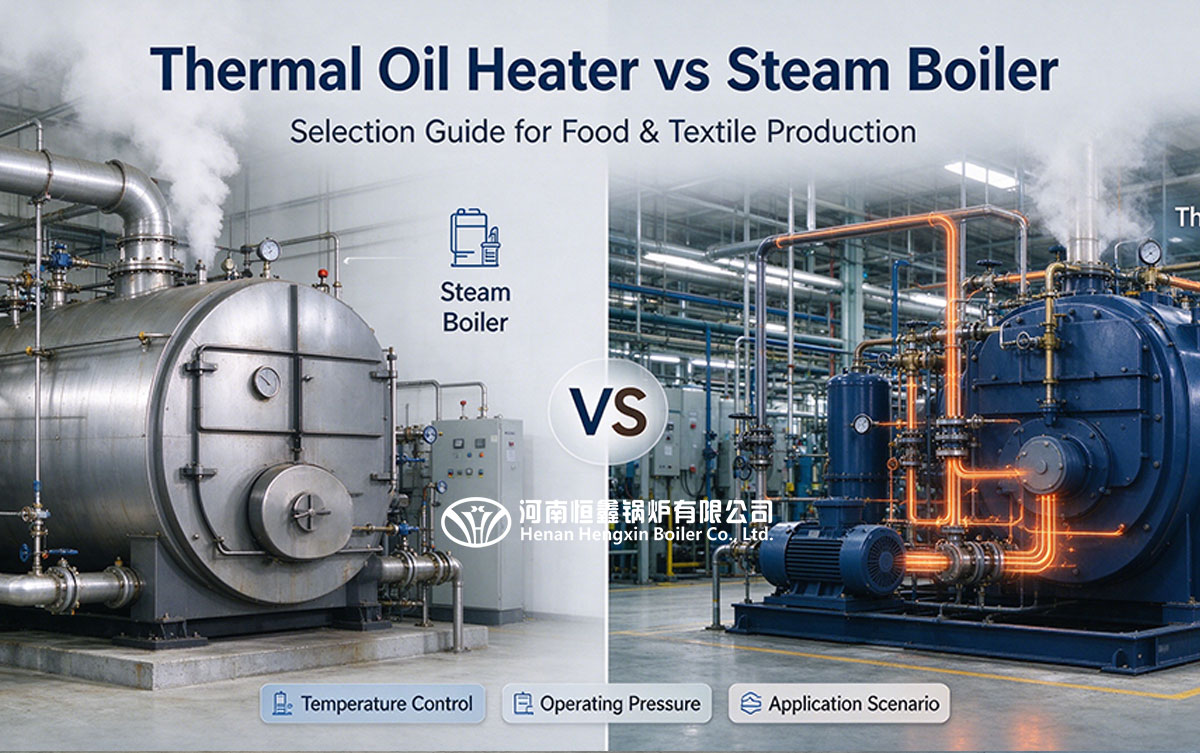
Food processing and textile manufacturing have strict and differentiated heating requirements in daily production. Factories often face confusion when selecting heating equipment: choosing a steam boiler or a thermal oil heater (hot oil boiler). Both types of industrial heating equipment are widely used in food drying, textile printing and dyeing, curing, and constant-temperature production lines, but they differ greatly in working temperature, operating pressure, energy consumption, and application scenarios. Selecting the wrong heating system will lead to unstable production temperature, high operating costs, and even affect product quality qualification rates. This professional comparison guide helps overseas factory buyers, engineering contractors, and project investors choose the most suitable heating equipment for food and textile production lines.
To make a scientific selection, it is necessary to clarify the core working principles of thermal oil heaters and steam boilers:
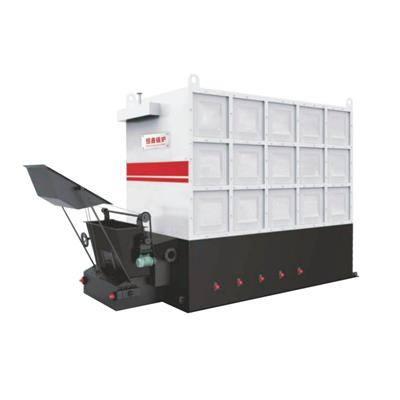
Steam Boiler: Uses water as the heat medium, generates high-temperature steam through heating, and realizes heat transmission and production heating through steam pressure transportation. It belongs to high-pressure heating equipment, with working pressure usually ranging from 0.7MPa to 2.5MPa.
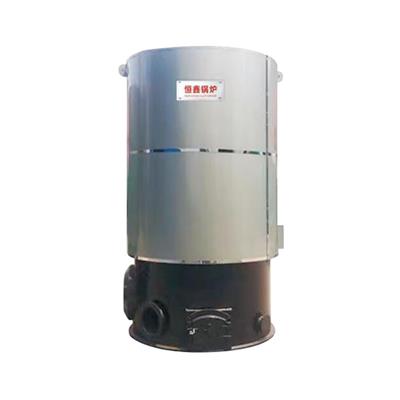
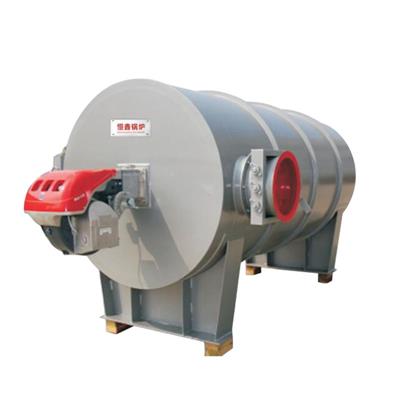
Thermal Oil Heater: Takes heat conduction oil as the circulating medium, realizes closed-loop heating through circulating pumps, and achieves constant-temperature heating. It can realize high-temperature heating under low pressure, with normal working pressure below 0.5MPa.
Thermal Oil Heater: Supports precise constant temperature control within 200℃-350℃, with small temperature fluctuation. It is very suitable for textile printing and dyeing, food baking, and food drying processes that require strict temperature stability.
Steam Boiler: The temperature is affected by pressure fluctuation, and precise constant temperature cannot be realized. The temperature difference is large during peak and valley production periods, which may cause uneven dyeing and unqualified food baking.
Thermal Oil Heater: Low-pressure closed-loop operation, no high-pressure explosion risk, simple safety management, and low daily maintenance difficulty, which is very friendly for food and textile factory workshops.
Steam Boiler: Belongs to special pressure equipment, requires regular inspection by special institutions, and has higher operating risks and management costs.
Thermal Oil Heater: Closed-cycle heat circulation, almost no heat loss, high thermal efficiency, and long-term operation saves more fuel costs, suitable for 24-hour continuous production of textile and food factories.
Steam Boiler: A large amount of heat loss is generated during steam condensation and water replenishment, with relatively low comprehensive thermal efficiency and higher long-term operating costs.
Steam Boiler: It has absolute advantages in processes requiring steam participation, such as food steaming, sterilization, textile humidification, and steam shaping.
Thermal Oil Heater: It is more suitable for pure heat conduction processes, such as drying, baking, heating roller, and constant-temperature reaction equipment.
Need stable high-temperature heating of 250℃-320℃;
Strict requirements for constant temperature, no allowable temperature fluctuation;
Long-term 24-hour continuous production, pursuing low operating costs;
Workshop does not allow high-pressure equipment operation;
Main processes: textile printing and dyeing drying, food dehydration, baking, hot pressing and forming.
Production needs direct steam supply for processing;
Required heating temperature is below 200℃;
Processes: food sterilization, steaming, textile steam shaping, workshop humidification;
Need to supply steam for multiple production equipment at the same time.
Common Issue: Heat conduction oil coking, pipeline blockage, and reduced heating efficiency after long-term operation.
Solution: Regularly replace heat conduction oil, clean pipeline coking, and strictly control the operating temperature to avoid local overheating.
Common Issue: Steam pressure instability, water scale accumulation, low thermal efficiency, and frequent water treatment failures.
Solution: Equip professional water treatment equipment, regularly clean boiler scale, and adjust combustion parameters according to production load.
Hengxin Boiler provides customized thermal oil heater and steam boiler solutions for global food processing and textile manufacturing factories. We supply biomass-fired, gas-fired, oil-fired heating equipment, which can perfectly match different production processes, temperature requirements, and factory budget needs. Our equipment features high thermal efficiency, stable operation, low failure rate, and full after-sales technical support, including scheme design, installation guidance, and after-sales maintenance.
Browse our full range of industrial heating equipment for factory production:
https://www.hengxin-boiler.com/
A: For long-term continuous textile drying and printing processes, thermal oil heaters are more energy-saving. The closed-loop circulation design reduces heat loss and maintains stable temperature, effectively reducing long-term fuel consumption compared with steam boilers with condensation heat loss.
A: It depends on the production process. Thermal oil heaters can replace steam boilers for food drying, baking and dehydration processes. However, for food steaming, high-temperature sterilization and other processes that require direct steam, steam boilers are irreplaceable.
A: The conventional working temperature of Hengxin thermal oil heaters ranges from 200℃ to 350℃, which can meet the high-temperature constant-temperature production needs of most textile printing and dyeing, food processing and chemical industries.
A: Thermal oil heaters have lower daily maintenance costs. They operate at low pressure without regular pressure inspection, and have fewer failure points. Steam boilers belong to special pressure equipment, requiring regular inspection, water treatment and scale cleaning, with higher comprehensive maintenance costs.