
Company News
Food and beverage plants run on steam. Cooking, blanching, sterilization, extraction, cleaning in place and drying all draw heat from the same header, and demand swings from a low overnight baseline to a sharp peak the moment a retort or a pasteurizer starts. A steam generator that holds pressure across that curve keeps production moving; one that cannot turns a good shift into a bottleneck. This guide explains how a WNS gas boiler from Henan Hengxin Boiler is applied in food factories, how to size it correctly, and what it really costs to run.
In a textile mill or a chemical plant, steam is usually a working medium. In a food plant it is often a process ingredient or a direct contact medium, and that raises the bar. Steam used for direct injection into product, for cooking vessels or for sterilizing filling lines has to be dry, free of entrained boiler water and free of combustion residue.
That is why gas firing is the default choice for most food and beverage projects. Natural gas burns cleanly, needs no storage yard, and produces no ash or soot that could reach the process area. The fuel itself is delivered by pipeline, so the plant avoids the land, dust control and handling labour that solid fuels require. Electricity is clean at the point of use but running cost is high for continuous loads, which is why electric units in food plants are usually reserved for small laboratory or pilot lines.
The practical requirements that follow are straightforward: steady steam pressure at the header, stable steam temperature, controlled feedwater quality, and a boiler that reacts quickly when a batch process opens a large valve. A fire-tube package boiler with a modulating burner meets all four.
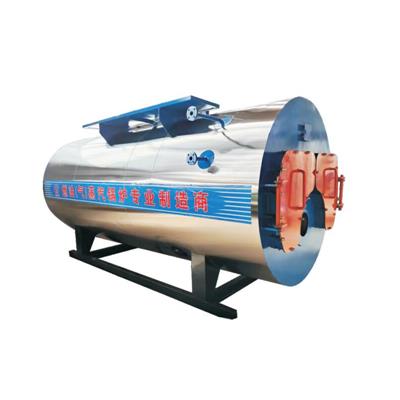
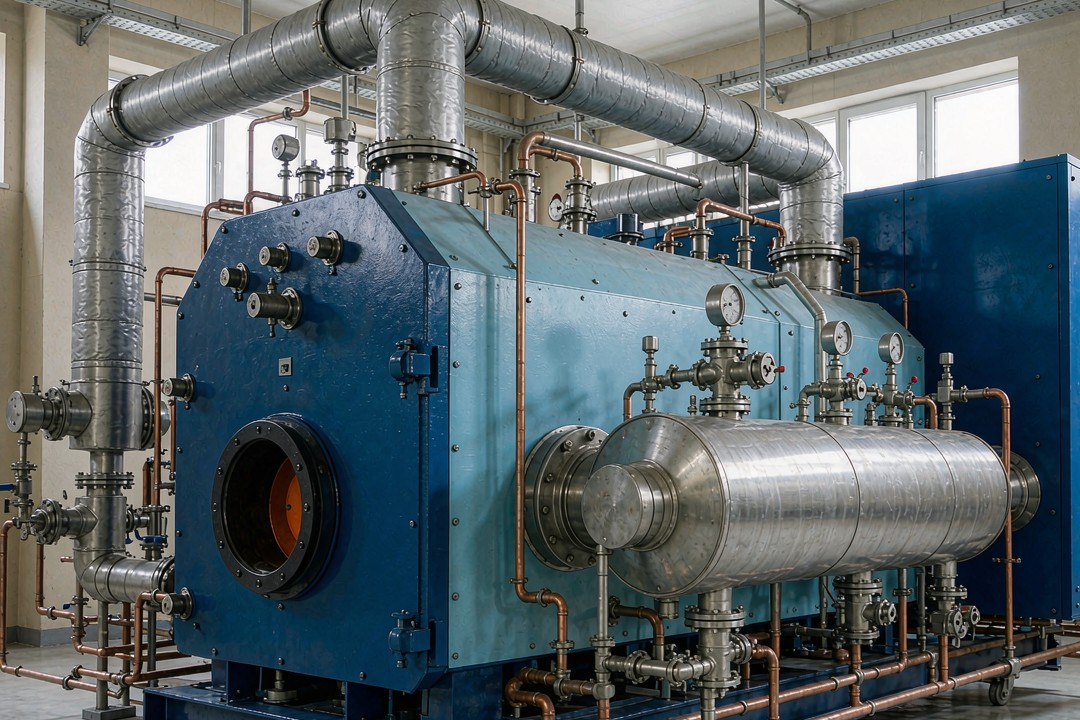
The WNS is a horizontal, internally fired, three-pass fire-tube steam boiler supplied as a factory-assembled package. The Hengxin unit is built as an ultra-low nitrogen gas boiler using a wet-back structure, delivered with boiler body, economizer, deaerator, burner, water system, instrumentation and energy saving device as a matched set. It is compact, simple to operate and widely used across food, beverage, pharmaceutical, textile and building material industries.
Fuel is injected by the burner and burned under micro positive pressure inside the corrugated furnace tube, which forms the first pass. Hot flue gas then turns 180 degrees in the wet-back return chamber and travels through the second and third pass smoke tubes before turning again into the rear smoke box and the economizer. Heat from the flue gas preheats the feedwater on its way to the drum, so less fuel is needed for the same steam output. The corrugated furnace absorbs thermal expansion and keeps the furnace crown stable through repeated load changes, which matters in batch cooking duty.
The WNS range is designed for natural gas, light oil and heavy oil, so a plant connected to a city gas line can still keep a liquid fuel burner as a backup for supply interruptions or peak shaving. Electronic ignition, micro positive pressure combustion and a modulating burner allow the firing rate to follow the steam demand instead of cycling on and off. Modulation is the single largest contributor to fuel savings in plants with a wide load swing, because every unnecessary on-off cycle purges heat up the stack.
The control system covers automatic ignition, flame-out protection, automatic burner firing regulation, high and low water level alarm and low water level interlocking protection. A cloud monitoring platform gives the plant manager a live view of boiler operating status, which shortens fault diagnosis. For a food plant operating three shifts, the value of that remote visibility is that maintenance can be planned against real data rather than a fixed calendar.
Before choosing a boiler size, map the plant process by process. The table below shows the patterns that appear most often in food and beverage work. The header pressure must be set above the highest consumer after allowing for pipe and valve losses.
| Process | Typical Steam Pressure | Load Character | Notes |
|---|---|---|---|
| Cooking and blanching | 0.4 - 0.8 MPa | Batch, high short-term draw | Jacketed kettles and cookers release steam suddenly |
| Sterilization and retorts | 0.6 - 1.0 MPa | Batch, sharp peak | Pressure must recover fast between batches |
| Pasteurization, dairy and beverage | 0.6 - 1.0 MPa | Continuous, fairly steady | Temperature stability affects product shelf life |
| Extraction and concentration | 0.5 - 1.0 MPa | Continuous with daily variation | Evaporators are the largest single steam user |
| Cleaning in place (CIP) | 0.4 - 0.7 MPa | Scheduled peak | Usually overlaps end of shift cleaning |
| Drying and baking | 0.6 - 1.0 MPa | Continuous daytime load | Often supplied through heat exchangers |
| Packing and shrink tunnels | 0.4 - 0.6 MPa | Low, steady | Small share of total load |
In most plants the baseline load is between 40 and 60 percent of peak. That ratio decides whether a single boiler with modulation is enough or whether two smaller units should share the duty, running one at high load during the day and one during the night shift.
The standard range covers 1 to 20 tonnes per hour. Higher working pressure is available when a plant needs 225 degrees C saturated steam for a specific process or for a turbine-driven pump.
| Model | WNS1 | WNS2 | WNS4 | WNS6 | WNS8 | WNS10 | WNS15 | WNS20 |
|---|---|---|---|---|---|---|---|---|
| Rated steam capacity (t/h) | 1 | 2 | 4 | 6 | 8 | 10 | 15 | 20 |
| Rated working pressure (MPa) | 1.0 / 1.25 / 1.6 / 2.5 | |||||||
| Saturated steam temperature (C) | 184 / 194 / 204 / 225 | |||||||
| Boiler thermal efficiency (%) | 93 - 98 | |||||||
| Design fuel | Natural gas, light oil, heavy oil | |||||||
| Max transport weight (kg) | 5500 | 7500 | 10000 | 14000 | 20226 | 21500 | 27700 | 30000 |
Add the rated steam consumption of every consumer, apply a diversity factor for processes that never run at the same minute, then check the result against a real production day. A common mistake is to size on the monthly gas bill divided by hours, which hides the peaks that cause pressure alarms at two in the morning.
If a stopped boiler stops a filling line, redundancy earns its cost. Two 4 t/h units cover the same 8 t/h peak as one 8 t/h unit but also allow maintenance during production, and they follow the load curve better in low season. Where a second unit cannot be justified, a smaller standby or a rental agreement can be considered.
Capacity planning should look three to five years ahead. Adding a line usually means adding steam, and the difference between buying one size larger now and rebuilding the boiler house later is small compared with lost production.
The figures below are reference values for saturated steam at 1.25 MPa with a boiler efficiency near 95 percent and feedwater around 20 degrees C. Actual consumption depends on feedwater temperature, load factor, blowdown rate and stack losses.
| Fuel | Approximate Fuel per Tonne of Steam | Unit | Practical Notes |
|---|---|---|---|
| Natural gas | 78 - 82 | Nm3 | No storage, no handling, cleanest option |
| Light oil (diesel) | 64 - 68 | kg | Common as backup fuel or off-grid main fuel |
| Heavy oil | 68 - 72 | kg | Requires heating and atomization equipment |
Two operating habits dominate real-world cost. The first is keeping the load factor high enough that the boiler is not cycling. The second is recovering heat from blowdown and from the continuous blowdown flash, which together can return a measurable share of the energy that would otherwise be dumped to drain. Installing an economizer, as supplied on the WNS package, is the third lever, because every degree recovered from the flue gas is fuel that is not burned.
Steam that touches product has to stay clean. Three measures carry most of the weight.
Feedwater treatment. Softening plus deaeration controls scale and dissolved oxygen. Scale on the furnace tube wastes fuel and shortens life.
Controlled blowdown. Bottom blowdown removes sludge, surface blowdown controls dissolved solids. Both should follow a tested schedule, not a habit.
Steam purity. Where steam is injected directly into product, a stainless steel separator close to the point of use removes entrained droplets and any carryover from the drum.
Combustion air should also be drawn from a clean area. A boiler house next to a flour or spice handling zone needs filtered intake air so that dust does not foul the burner.
A packaged WNS unit arrives largely assembled, which shortens site work considerably. Typical requirements are a level concrete foundation able to carry the transport weight shown in the specification table, a boiler house with adequate ventilation and combustion air openings, a water treatment set, a feedwater tank with deaerator where specified, a main steam header with safety valve and pressure reducing station, and a flue stack sized to the local code. Access must be left for tube inspection and for burner service. Because skid-mounted and containerised arrangements are possible, plants with tight space can often reduce civil work by having the package pre-piped and pre-wired before shipment.
Confirm peak and baseline steam demand in tonnes per hour, not kilograms per shift.
Confirm the highest process pressure and add 0.2 to 0.3 MPa for distribution losses.
Confirm the fuel, gas pressure at the meter, and whether a dual-fuel burner is required.
Confirm local emission limits for nitrogen oxides and the required certification.
Ask for thermal efficiency measured on a stated fuel basis, such as lower heating value.
Check spare parts availability, service response time and whether the supplier provides installation and commissioning.
Check the manufacturer certificates: special equipment manufacturing licence, ISO 9001 and ISO 14001 quality and environmental management systems.
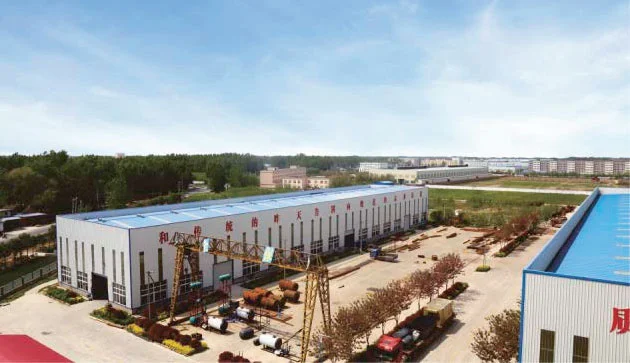
Hengxin holds a special equipment manufacturing licence and is certified to ISO 9001 and ISO 14001, and it is rated as a AAA credit enterprise. Drawings-based and fully customised designs are accepted when a project does not fit the standard range. More detail is available on the certificate and honour page.
Add the steam consumption of all consumers, apply a diversity factor for processes that do not run simultaneously, and size to about 1.1 to 1.2 times the resulting peak. A plant with a 6 t/h peak is normally served by a single WNS6 unit, while a 10 t/h peak with three-shift operation is often better covered by two smaller units for redundancy.
Yes. The boiler is designed for natural gas, light oil and heavy oil, and a dual-fuel burner allows switching from gas to liquid fuel when the gas supply is interrupted. Burner configuration should be specified at the order stage, because the fuel train and nozzle set are selected for the intended combination.
The rated thermal efficiency of the Hengxin WNS range is 93 to 98 percent depending on model, fuel and load. Actual efficiency in service depends on load factor, excess air setting, scale condition and blowdown rate, so a commissioning report with flue gas analysis is the best way to confirm real performance on site.
Units below 15 tonnes per hour can generally be delivered within about 15 days, units of 15 to 25 tonnes per hour within about 20 days, and larger or highly customised units within about 35 days. Some standard models are held in stock, which shortens the lead time further.
Steam in a food plant has to be clean, stable and cost effective at the same time. The food and beverage industry section of the Hengxin product range covers distillation, sterilization, disinfection, extraction, drying, curing and packing duties, and the technical team can review a load list and propose a size that matches the real production pattern rather than a nominal figure.
Share your load data, fuel supply conditions and site constraints, and the engineering team will return a sizing proposal with a steam and water flow diagram. Start the conversation on the contact page, or review the dedicated food and beverage industry steam boiler application range.