
Company News
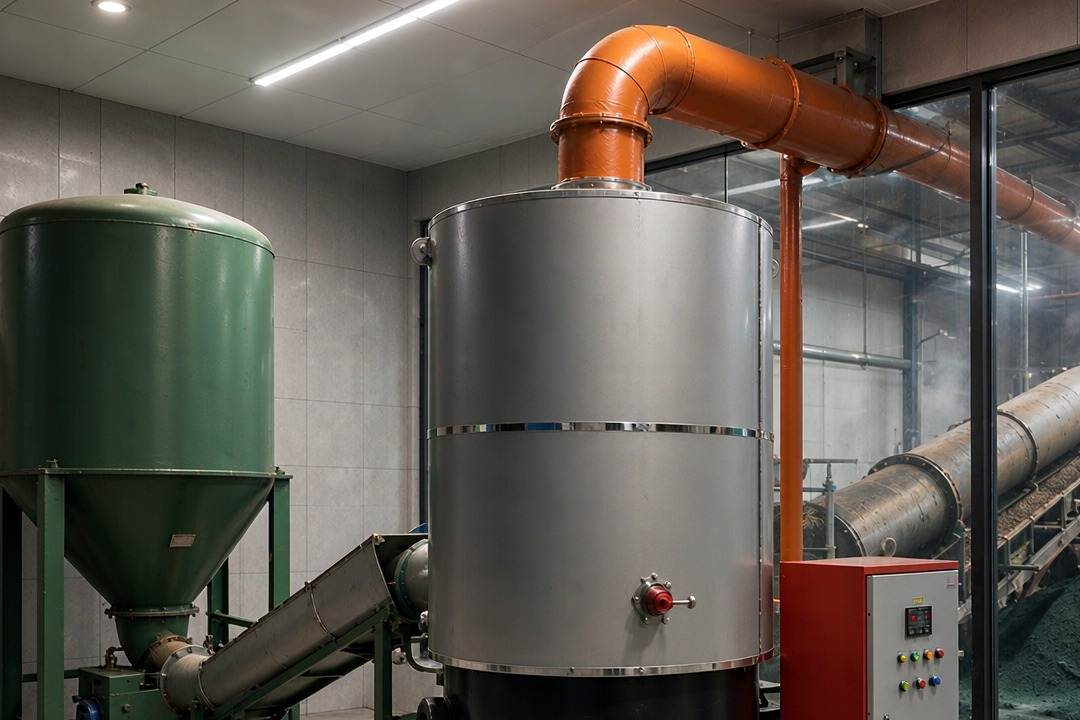
A casting foundry buys metal, melts it, pours it, and then spends a surprising share of its energy budget on sand. Green sand systems circulate hundreds of tonnes of moulding sand a day, and every tonne that leaves the system as spillage, core sand or dust must be replaced with new sand that arrives damp from the quarry or the bag. Reclaimed sand comes back from the thermal or mechanical reclaimer warm and moist. Both streams have to be dried before they can be mixed to a controlled moisture and used again, and the air that does the drying has to be clean, because the sand it touches ends up against a casting surface.
That duty, hot clean air at moderate temperature in large volumes for long shifts, is exactly what a solid fuel hot blast stove is built for. This article works through what a foundry sand plant actually needs, why indirect heating suits the duty, and how to size a unit from the LRF biomass and coal fired hot blast stove range against a realistic sand balance. The numbers below suit a steel or iron foundry running a 100 tonne per hour sand system with roughly ten percent new sand make up, which is a common medium sized plant class.
Moulding sand is not supposed to be dry in the mixer; green sand runs best at two to four percent moisture, where the clay develops its bond. The problem sits earlier in the chain. New sand and reclaimed sand are stored and batched before they meet the water addition, and any moisture they carry is uncontrolled moisture. A sand that arrives at the mixer at six percent instead of one percent forces the operator to cut the water addition, and the muller then has to blend a wet, lumpy feed into a narrow target band that it never quite reaches.
The consequences show up at the casting, not at the mixer. Excess moisture in the mould generates steam when the metal arrives, and the steam either pushes metal back up the sprue or leaves gas porosity and blowholes on the surface and just below it. Wet sand also compacts unevenly, so mould hardness varies across the flask, and the soft patches wash or scab under the metal stream. In resin bonded and cold box cores the effect is even less forgiving: resin coats a wet grain poorly, the coated sand pre-cures in the mixer, and core strength scatters from batch to batch.
| Sand stream | Typical moisture as received | Target after drying | What goes wrong if it is missed |
|---|---|---|---|
| New silica sand, bagged or bulk | 3 to 8 percent | 0.5 percent or below | Uncontrolled water in the mixer, lumpy mull, uneven mould hardness |
| Reclaimed sand after washing | 4 to 10 percent | 0.5 percent or below | Steam defects, scabbing, higher bentonite demand |
| Base sand for resin coating | 0.5 to 2 percent | 0.3 percent or below, plus temperature control | Poor resin wetting, pre-cure, weak cores, amine odour |
| Refractory mould and core wash | Wet coating, 25 to 35 percent water | Dry film before closing | Boiling wash at the pour, inclusion and rough surface |
The last row is often overlooked. A water based zircon or graphite wash that is still damp when the mould closes behaves like a sponge against the incoming metal, and the resulting gas is trapped under a skin that has already set. Curing that coating with 150 to 250 degrees Celsius air for a controlled period is a cheap way to remove a whole defect family.
Before any equipment is discussed, list every consumer of heat in the area. A single stove can usually serve the whole list, which is why the exercise pays for itself in saved capital.
| User | Air temperature at the user | Load character | Consequence of a shortfall |
|---|---|---|---|
| Rotary or vertical sand dryer, new sand | 200 to 250 degrees Celsius at dryer inlet, sand out at 60 to 90 degrees Celsius | Long continuous shift, dominant load | Sand above moisture target, mixer starved of dry feed |
| Reclaimed sand dryer or cooler | 150 to 220 degrees Celsius | Continuous, follows reclaimer output | Wet reclaim, blocked hoppers, cold sand in winter |
| Mould and core wash drying | 150 to 250 degrees Celsius in a batch oven or tunnel | Batch, high peak for short periods | Damp coating, gas defects at the pour |
| Core room and sand preparation area | 40 to 60 degrees Celsius space air | Winter, moderate | Condensation on cold sand and tooling |
| Workshop and pattern store heating | Comfort air | Winter, small | Staff comfort, rust on patterns and flasks |
The sand dryer dominates, and that is convenient: one well chosen stove with a duct network and motorised dampers carries the lot, with the batch oven taking priority for its short cycle and the space heating trimming back when the dryer runs hard.
Dryer types differ far more in air temperature than in air volume, and the difference decides whether a 220 degree stove is enough or whether the high temperature variant is needed. The table summarises the usual foundry arrangements.
| Dryer type | Inlet air temperature | Outlet sand temperature | Fit with an indirect stove |
|---|---|---|---|
| Triple pass rotary drum, counter flow | 250 to 400 degrees Celsius | 60 to 90 degrees Celsius | High temperature variant at 250 degrees Celsius, or two units in parallel for large evaporation |
| Single pass rotary drum, co-current | 200 to 300 degrees Celsius | 50 to 80 degrees Celsius | Standard range, drum sized for the lower temperature |
| Vertical or fluidised bed dryer | 150 to 250 degrees Celsius | 50 to 70 degrees Celsius | Standard range, close match |
| Apron or tunnel dryer for mould wash | 120 to 200 degrees Celsius | Coating surface 80 to 120 degrees Celsius | Standard range, good match |
| Batch oven for cores and moulds | 100 to 180 degrees Celsius, recirculated | Part surface 70 to 100 degrees Celsius | Standard range with recirculation duct |
Direct fired hot air generators mix combustion products into the process air. That is cheap and fast, and for aggregate drying it is perfectly acceptable. For foundry work it brings three problems. The water vapour formed by combustion raises the humidity of the drying air, which slows the last part of the moisture removal exactly where the specification is tightest. The combustion gas carries carbon dioxide, nitrogen oxides and traces of sulphur into air that contacts resin coated sand, and resin chemistry is sensitive to all three. And a direct burner sits in the same duct as sand dust, so the flame sees a dust laden stream with its own safety implications.
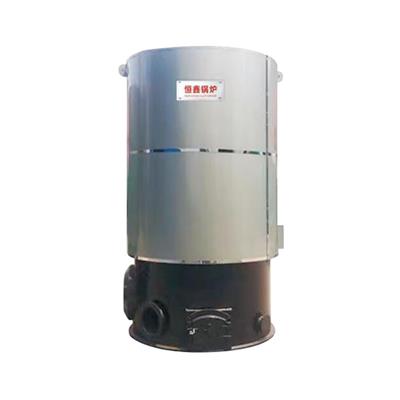
An indirect stove keeps the flame and flue gas inside a refractory lined chamber and a separate exchange bundle. The process air crosses those surfaces and leaves clean, dry and dust free, at a temperature the controller sets. For a foundry that coats sand with resin, or that cures wash on a mould it will pour within the hour, that separation is not a luxury; it is the difference between a repeatable process and one that drifts with the weather.
The standard LRF range delivers 50 to 220 degrees Celsius at the outlet, and a high temperature variant can be set to 250 degrees Celsius. Three practical routes cover the gap to a rotary drum that would prefer 300 degrees Celsius. The first is to accept a lower inlet temperature and size the drum for a longer residence time, which is what most new installations do: at 220 degrees Celsius and good insulation, a triple pass drum still evaporates at a respectable rate, and the sand leaves at the right moisture without the risk of overheating the outer shell. The second is the high temperature variant at 250 degrees Celsius, chosen when the drum already exists and its capacity must be preserved. The third is to split the duty between two smaller stoves feeding the same duct, which also gives partial redundancy during maintenance.
What should not be done is to accept a stove rated at 220 degrees Celsius and then expect the drum to perform as if it had 350 degrees Celsius available. That mismatch is one of the most common reasons a new dryer disappoints on its first shift.
Nine ratings cover 120 to 2,350 thousand kilocalories per hour, roughly 0.14 to 2.73 megawatts of delivered heat. The working medium is air at atmospheric pressure, inlet air is ambient, rated outlet temperature spans 50 to 220 degrees Celsius with one model limited to 200, test thermal efficiency is 80 percent or better, and the design fuel is biomass at 3,850 kilocalories per kilogram with coal accepted as an alternative. Figures below are taken from the published specification page.
| Model | Heat power (x1,000 kcal/h) | Approx. output (MW) | Air volume (m3/h) | Weight (t) | Transport size D x H (m) |
|---|---|---|---|---|---|
| LRF-10-SCIII | 120 | 0.14 | 800 to 1,700 | 1.85 | 1.2 x 2.4 |
| LRF-20-SCIII | 240 | 0.28 | 2,100 to 3,200 | 2.56 | 1.4 x 2.7 |
| LRF-30-SCIII | 350 | 0.41 | 3,100 to 4,200 | 2.85 | 1.5 x 3.05 |
| LRF-40-SCIII | 500 | 0.58 | 3,000 to 4,700 | 3.70 | 1.7 x 3.3 |
| LRF-60-SCIII | 700 | 0.81 | 4,200 to 6,000 | 4.90 | 1.8 x 3.9 |
| LRF-100-SCIII | 1,200 | 1.40 | 6,000 to 8,300 | 7.10 | 2.0 x 3.75 |
| LRF-120-SCIII | 1,400 | 1.63 | 6,000 to 9,500 | 8.80 | 2.2 x 4.5 |
| LRF-180-SCIII | 2,160 | 2.51 | 12,000 to 20,000 | 11.40 | 2.6 x 6.0 |
| LRF-200-SCIII | 2,350 | 2.73 | 12,000 to 20,000 | 13.60 | 2.7 x 6.5 |
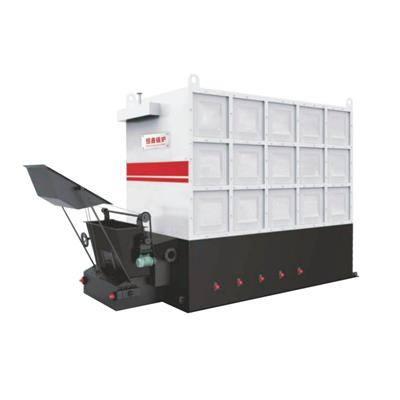
Two details matter for foundry layout. The transport dimensions are compact enough that a mid range unit passes through a standard industrial doorway without dismantling, and the air side is atmospheric, so the duct network and the dryer need no pressure vessel approvals. The exchange surfaces are stainless, the combustion chamber is refractory lined and the feed is automatic, which suits a plant that wants the stove to run unattended through a shift while the moulding line sets the pace.
Take a system circulating 100 tonnes per hour of sand with ten percent new sand make up, so 10 tonnes per hour must be dried. At 7 percent incoming moisture the dry solids are 9.3 tonnes; drying to 0.3 percent leaves 9.33 tonnes of sand, so the dryer removes about 672 kilograms of water per hour. Note that the water is small in mass but large in energy, which is why dryer ratings look modest next to the sand tonnage.
Rotary sand dryers run at 3,000 to 3,800 kilojoules per kilogram of water evaporated once shell losses and exhaust carry over are counted, with 3,300 a fair planning value for an insulated drum. That gives 2.22 gigajoules per hour for evaporation, about 616 kilowatts. Heating the sand from 20 to 70 degrees Celsius adds roughly 110 kilowatts at a specific heat near 0.85 kilojoules per kilogram kelvin, so the dryer itself needs about 726 kilowatts.
The mould wash oven takes 140 kilowatts during its batch cycle, core room hot air 55 kilowatts, and workshop heating 80 kilowatts in winter. The connected total is 1,001 kilowatts. Because the wash oven is intermittent and the heating load is seasonal, a diversity factor of 0.85 is realistic, and a 12 percent margin covers wet sand after a storm, fouled exchange surfaces and the coldest week of the year.
The chosen rating should leave the steady point inside the comfortable firing band so the wet peaks are absorbed without running flat out.
| Item | Basis | Result |
|---|---|---|
| Water to evaporate | 10 t/h at 7 percent to 0.3 percent | 672 kg/h |
| Evaporation heat | 672 kg/h x 3,300 kJ/kg | 616 kW |
| Sand heating | 9.33 t/h x 0.85 kJ/kg K x 50 K | 110 kW |
| Mould wash oven | Batch, 40 moulds per hour | 140 kW |
| Core room and heating | Winter design | 135 kW |
| Connected load | 1,001 kW | |
| Diversity at 0.85 | 1,001 x 0.85 | 851 kW |
| Margin at 12 percent | 851 x 1.12 | 953 kW design output |
| Model selected | LRF-100-SCIII at 1,396 kW | About 68 percent in steady running |
LRF-60-SCIII at 814 kilowatts reaches 117 percent of the design output and is correctly rejected: a stove with no reserve cannot recover after a wet delivery and has no room to modulate when the wash oven cuts in. LRF-100-SCIII carries the duty at about 68 percent, absorbs the peaks, and leaves capacity for a second dryer if the plant adds a reclamation line later. Two LRF-40-SCIII units at 581 kilowatts each are a defensible alternative where partial redundancy matters more than first cost, since one unit can hold about 60 percent of the design load while the other is serviced.
The useful control variable is the sand outlet temperature or the dryer exhaust temperature, not the stove outlet alone. A practical scheme holds the stove outlet at a fixed setpoint, usually 200 to 220 degrees Celsius, and modulates a mixing damper that admits ambient or recirculated air to hold the dryer inlet at the value the drum was sized for. The sand outlet temperature then trims the fuel feed, so a wet delivery automatically raises firing rate and a dry one lets the stove fall back. Because the controller works across the full 50 to 220 degrees Celsius band, the same unit can hold a gentle 120 degrees Celsius for a wash oven in the morning and a full 220 degrees Celsius for the drum in the afternoon.
The stove must stop feeding fuel on loss of combustion air, on a dryer drum stop signal, on high temperature at the dryer inlet, and on high temperature at the stove outlet. A purge sequence before ignition and a post purge on shutdown are standard. Dust collection on the dryer exhaust needs its own differential pressure alarm, because a choked bag house quietly raises the whole system pressure and the flame loses stability.
Sand dust is not usually explosible, but the biomass fuel is, and the dryer exhaust carries fine particles from both. Route spark detection and water quench on the duct between dryer and filter, fit explosion venting on the filter and the duct where the risk assessment calls for it, earth every conductive section, and keep the fuel store separated from the dryer area by a fire rated wall. These measures cost little at the design stage and a great deal afterwards.
Consumption figures below assume the catalogue test efficiency of 80 percent with a small allowance for duct losses, and they are the numbers to use for budget discussions before a fuel contract exists.
| Fuel | Consumption per MWh of useful heat | Practical notes |
|---|---|---|
| Wood pellets | About 279 kg | Steady automatic feed, low ash, easiest to regulate |
| Wood chips | About 384 kg | Moisture sensitive, store under cover, larger feed gear |
| Rice husk or similar agro residue | About 336 kg | Cheap where local, higher ash, plan ash removal |
| Coal | About 195 kg | Alternative design fuel, subject to local emission rules |
For the worked example the plant uses about 15.2 megawatt hours of useful heat in a sixteen hour day, close to 4.3 tonnes of pellets, or roughly 1,250 tonnes a year on a 300 day calendar. At that scale the difference between pellet and chip price is a larger number than the difference between two neighbouring equipment quotations, which is why a stove that accepts more than one fuel is worth considering even when the first choice is obvious.
| Item | What to verify |
|---|---|
| Siting | Boiler room adjacent to the dryer, level plinth, service clearance on the door side, flue route agreed with the building owner |
| Fuel handling | Silo sized for several days, screw or stoker feed tested with the actual fuel, dust extraction at the transfer points |
| Air path | Filter on the ambient intake, insulated duct, expansion joint at the stove outlet, balancing damper at each user |
| Dryer connection | Inlet transition sized for the air volume, thermocouple at the inlet and at the sand outlet, sampling point for moisture checks |
| Dust system | Spark detection, explosion venting where required, earthing continuity measured and recorded |
| Instrumentation | Stove outlet and dryer inlet sensors calibrated, high limit tested, fuel feed and fan interlocks proven |
| Documentation | As built drawings, interlock schedule, commissioning record with the first moisture test results attached |
| Interval | Task |
|---|---|
| Daily | Log stove outlet and dryer inlet temperature, check fuel feed, remove ash, inspect filter differential pressure |
| Weekly | Clean the grate and fire zone, inspect door seals and refractory at the throat, test safety cut outs |
| Monthly | Check exchange surfaces through inspection ports, verify sensors against a reference, review fuel moisture records |
| Quarterly | Deep clean the exchange bundle, inspect the flue and dust collection, tighten electrical terminations |
| Annually | Refractory survey, bundle inspection, stoker overhaul, full interlock test with a written record |
| Mistake | What happens | Better approach |
|---|---|---|
| Sizing on sand tonnage instead of water load | The stove is chosen from the dryer nameplate and runs outside its band | Build the water balance first, then apply a specific heat consumption |
| Ignoring incoming moisture variation | Rain soaked deliveries stall the dryer and the mixer runs short | Keep a margin and specify a stove that modulates, not one that runs flat out |
| Using a direct fired generator for resin sand | Humidity and combustion products disturb resin behaviour | Indirect heating with a separate flue circuit |
| No recirculation on the dryer exhaust | Energy leaves with the exhaust and fuel cost rises quietly | Recirculate part of the exhaust, keep the rest for dilution control |
| Buying a stove without a fuel plan | Seasonal fuel price or moisture erases the expected saving | Confirm fuel specification, storage and ash route before order |
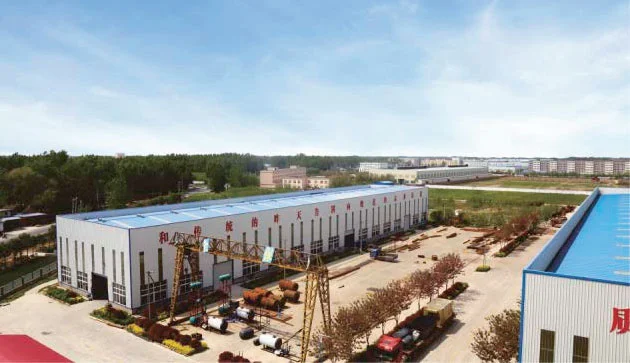
A foundry runs two or three shifts with a moulding line that cannot wait, so the supplier behind the stove should be able to prove manufacturing discipline and respond when something needs changing. Henan Hengxin Boiler Co., Ltd. manufactures under a special equipment production licence and holds ISO9001 and ISO14001 certification with 3A enterprise credit standing; the certificates page lists the documents for review, and the application overview shows the drying duties the platform already serves in metal, mineral and process industries.
Standard models cover the nine ratings in the table above. Beyond that the factory builds to customer drawings and develops custom configurations for unusual duct layouts, dual dryer duty with automatic changeover, integrated fuel silos and stokers, and control integration with a foundry sand plant PLC. For a project enquiry, the sand tonnage, the incoming and target moisture, the dryer type and inlet temperature, the fuel available and the local emission limits are usually enough for a factory proposal with layout, air balance and delivery schedule. Where a site has no solid fuel handling and prefers gas, the same factory supplies the WRF-Y(Q) series oil and gas fired hot air furnace with comparable control features.
Rotary drums usually ask for 250 to 400 degrees Celsius at the inlet, vertical and fluidised bed dryers 150 to 250 degrees Celsius, and mould wash ovens 120 to 200 degrees Celsius. The LRF range delivers 50 to 220 degrees Celsius as standard with a high temperature variant at 250 degrees Celsius, so a drum is normally sized for a lower inlet temperature and a longer residence time, or served by two units in parallel.
It depends on the make up rate and the incoming moisture. In the worked example, 10 tonnes per hour of sand at 7 percent moisture dried to 0.3 percent removes about 672 kilograms of water per hour, which needs roughly 726 kilowatts at the dryer. Doubling the make up rate roughly doubles the water load, so the water balance is the first calculation any quotation should show.
Yes, and it is the usual arrangement. The stove outlet is held at a fixed setpoint and motorised dampers route air to the dryer, the wash oven or the space heating, with the batch oven taking priority for its short cycle. Because the controller covers the full 50 to 220 degrees Celsius band, each user receives its own temperature without a second heat source.
The LRF range is designed for biomass at 3,850 kilocalories per kilogram with coal accepted as an alternative fuel, so a plant can run on local biomass and switch when supply or price moves. The grate, feed gear and ash handling are specified for the fuel mix at the order stage, so the intended fuels should be declared then rather than discovered later.
Foundries that replace an undersized or ageing heat source with a properly matched indirect stove tend to report the same two outcomes: sand moisture stops being a variable that the mixer has to chase, and fuel cost per tonne of casting falls because the stove runs in its efficient band instead of cycling. Both begin with an honest water balance of the sand system, not with a catalogue page. Henan Hengxin Boiler Co., Ltd. supports that first step with application engineers who size hot air systems across drying and process duties, and a proposal with layout, air balance and fuel figures follows once the sand tonnage, moisture points and fuel situation are on the table.