
Company News
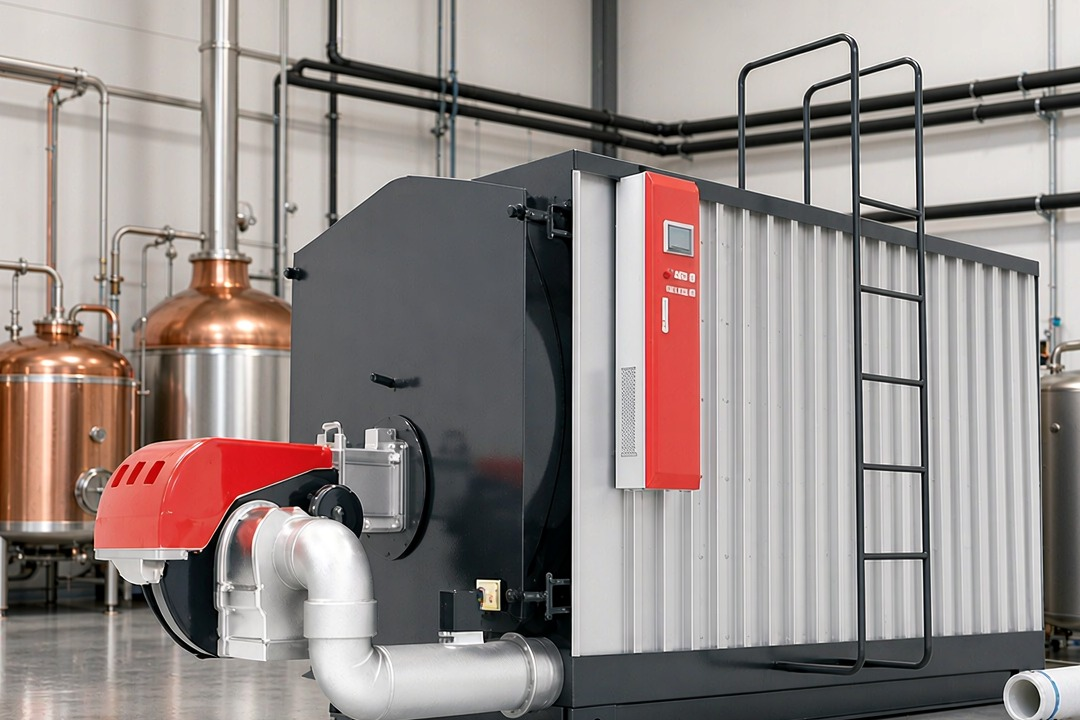
A brewery is a hot water business as much as it is a beer business. Long before the first wort reaches the kettle, water has been heated for mashing; after lautering, more hot water is spent on sparging; and after fermentation, cleaning, keg washing and pasteurization keep drawing warm water for the rest of the week. For many breweries this hot water side of the plant is a larger and steadier energy consumer than the boil itself, yet it is often served by an oversized steam plant or by electric immersion heaters that push running costs up. The oil gas atmospheric hot water boiler offers a simpler route: process water heated to 85 degrees C at atmospheric pressure, in packaged units from 0.7 to 14 MW, running on natural gas, light oil or heavy oil. This guide explains where hot water is used in a brewery, how the CWNS atmospheric series is built, how to size a unit for your brew length and packaging schedule, and which fuel and maintenance arrangements keep operating costs predictable.
Brewing is a thermal process built around warm water rather than high pressure steam. Mashing holds the grist between roughly 63 and 72 degrees C, sparge water is stored at 75 to 78 degrees C, and cleaning in place circuits run caustic and acid solutions at 70 to 85 degrees C. None of these duties needs steam pressure. All of them need water at a controlled temperature, in quantity, at a precise moment of the brew day.
The hot water load in a brewery is also batch shaped rather than flat. A large draw occurs when the hot liquor tank is filled before mashing, a second draw follows during sparging, and steady consumption continues through tank cleaning and packaging later in the day. A boiler house sized only on kettle steam demand often leaves the hot water system underpowered, so operators end up heating water slowly overnight or topping up with electricity. A dedicated hot water boiler smooths this profile, shortens the brew cycle and lets the steam plant, where one exists, concentrate on the wort boil and other true steam duties.
Before selecting a boiler, buyers should map every hot water consumer and its temperature band. The table below summarises the main users in a typical production brewery. Actual volumes vary with the recipe, brewhouse design and packaging schedule, so treat the figures as a planning reference rather than a fixed rule.
| Brewery Area | Typical Water Temperature | Main Duty | Note for Boiler Selection |
|---|---|---|---|
| Hot liquor tank and mashing | 63 to 80 degrees C | Strike water and mash temperature steps | Largest single draw of the brew day, benefits from buffer storage |
| Sparge water | 75 to 78 degrees C | Rinsing fermentable sugars from the grain bed | Needs steady flow and tight temperature control |
| CIP systems | 70 to 85 degrees C | Caustic and acid cleaning of tanks, hoses and lines | Long duration draws, often scheduled at night |
| Keg and bottle washing | 60 to 85 degrees C | Preheating, detergent baths and final rinse | Continuous duty on packaging days |
| Tunnel pasteurization | 60 to 65 degrees C | Warm water baths for filled bottles and cans | Sensitive to temperature overshoot, needs stable supply |
| Floor, drain and hose stations | 50 to 70 degrees C | General hygiene around the cellar | Small but frequent draws across the shift |
The hot liquor tank, often called the HLT, is the heart of the brewery water circuit. It receives cold water, heats it to strike temperature and stores it until the mash tun calls for it. Heating a full HLT is a heavy, short duration load, which is why the boiler should be paired with a buffer tank sized for at least one full strike water volume. With that buffer in place, the boiler can run at a steady firing rate and recharge the tank between draws instead of cycling on and off.
Sparge water at 75 to 78 degrees C rinses the sugars from the grain bed without extracting harsh tannins, which begin to come over above about 80 degrees C. The boiler therefore needs accurate outlet control rather than raw power alone. A modulating burner with a responsive water temperature loop keeps the sparge water within a narrow band and protects extract yield and beer stability.
CIP caustic baths, keg washers and bottle washers consume hot water for the longest stretches of the week, and their demand often continues after the brewhouse has finished. Sizing the hot water boiler to cover the simultaneous operation of CIP and packaging, rather than the brewhouse alone, avoids the classic evening shortfall in which the last fermenter of the day cannot be cleaned properly.
Tunnel and flash pasteurizers hold filled packages in warm water zones around 60 to 65 degrees C. The water must stay within a tight window: too cool and the beer is not shelf stable, too warm and the beer risks thermal damage. A plate heat exchanger fed by the hot water boiler, with its own circulation loop, gives the pasteurizer a stable and independently controlled supply.
An atmospheric hot water boiler operates with an open vent at the top, so the boiler body always remains at atmospheric pressure no matter how hot the water is. As described on the product page of the CWNS series, this kind of non pressurized hot water boiler does not belong to the special equipment category, so its design, production, installation and use are not subject to the same supervision procedures that apply to pressure boilers. For a brewery, that generally means a simpler approval path, fewer certified operator obligations and a faster route from delivery to first firing.
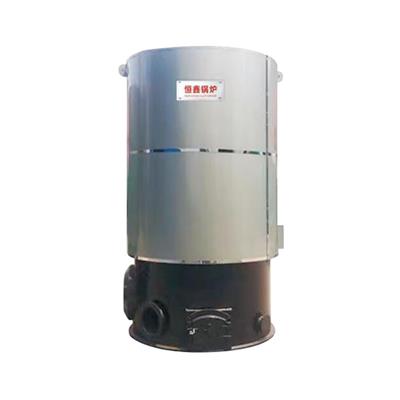
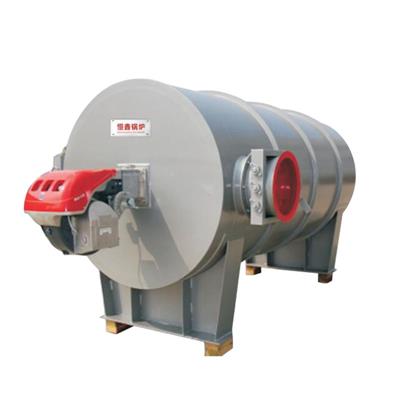
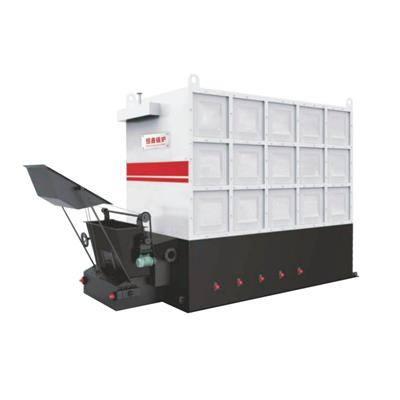
The construction of the series also matches the batch rhythm of a brewery. A three return, fully wet back design absorbs thermal expansion and keeps the rear tube plate cooled by water on both sides. Large water capacity stabilises the outlet temperature when the HLT calls for flow and reduces burner start frequency, which trims gas consumption. Threaded smoke tubes made of GB/T3087 boiler pipe improve heat transfer at low flue resistance, and a condenser at the tail of the boiler recovers both the sensible heat and the latent heat of the flue gas, lifting system efficiency. For sites with emission limits, Siemens FGR flue gas recirculation keeps nitrogen oxides in the 18 to 30 mg per m3 range, and the air layer insulated jacket with embossed aluminium cladding keeps surface losses low.
The CWNS series covers ten factory built models from 0.7 MW to 14 MW, all rated for atmospheric pressure with 85/60 degrees C outlet and return temperatures. The table below lists the models with their transport weight and dimensions, which matter when the boiler must pass through an existing brewhouse doorway or sit on a mezzanine slab. For reference specifications, see the oil gas atmospheric hot water boiler product page.
| Model | Rated Heat Power (MW) | Max Transport Weight (kg) | Max Transport Dimension LxWxH (mm) |
|---|---|---|---|
| CWNS0.7-85/60-YQ | 0.7 | 4320 | 3200x1800x2000 |
| CWNS1.4-85/60-YQ | 1.4 | 6300 | 3800x1900x2200 |
| CWNS2.1-85/60-YQ | 2.1 | 8900 | 4100x2000x2400 |
| CWNS2.8-85/60-YQ | 2.8 | 11200 | 4400x2300x2600 |
| CWNS3.5-85/60-YQ | 3.5 | 13200 | 5300x2400x2700 |
| CWNS4.2-85/60-YQ | 4.2 | 14300 | 5600x2500x2800 |
| CWNS5.6-85/60-YQ | 5.6 | 19200 | 6800x2600x3000 |
| CWNS7-85/60-YQ | 7.0 | 23000 | 6300x2700x3200 |
| CWNS10.5-85/60-YQ | 10.5 | 35500 | 8700x3700x3500 |
| CWNS14-85/60-YQ | 14.0 | 42600 | 8050x3750x3950 |
Common parameters across the range: rated working pressure is atmospheric, rated outlet and return temperature is 85/60 degrees C, nitrogen oxide emissions are 18 to 30 mg per m3, and the design fuel is natural gas, light oil, heavy oil and similar fuels. Because the boiler is built as a packaged unit, most breweries can place it on a simple plinth with pipework connections rather than a full boiler house rebuild.
List every consumer with its average draw and its duration on a worst case day, usually a brewing day that overlaps with packaging and evening CIP. A useful rule of thumb is that a production brewery consumes roughly 2 to 3 hectolitres of hot water per hectolitre of packaged beer once sparging, cleaning and washing are included. A 10,000 hectolitre per year brewery therefore handles on the order of 60 to 90 cubic metres of hot water per month, and much of that volume passes through the boiler on brewing days.
Heating one cubic metre of water from 15 to 80 degrees C requires roughly 75 kWh of heat. Divide the largest single day hot water volume by the number of hours available to produce it, multiply by 75, and add 10 to 20 percent for losses and margin. As a worked example, a brewery that must heat 120 cubic metres over a ten hour brew day needs about 900 kW of average output, so a CWNS1.4 unit provides comfortable headroom, while a plant moving 300 cubic metres per day lands in the 2.8 to 3.5 MW class.
A buffer tank decouples the boiler from short, sharp draws. With a buffer sized for the strike water volume, the boiler runs long and steady, which improves efficiency and reduces burner wear. Without a buffer, the boiler must be sized for the peak draw instead of the average, which typically pushes the selection up by one or two model sizes and raises the installed cost.
The table below gives a starting point that links brewery scale to a sensible CWNS configuration. Sites with strong seasonal swings, such as lager brands that peak in summer, often choose two smaller units so that one can be inspected during the quiet season.
| Brewery Scale | Annual Volume | Common CWNS Configuration | Main Reason |
|---|---|---|---|
| Craft brewpub or startup | Below 5,000 hL | One CWNS0.7 with buffer tank | Low capital cost, simple plant room |
| Regional craft brewery | 5,000 to 30,000 hL | CWNS1.4 to CWNS2.8 | Covers brew day plus evening CIP |
| Mid size production brewery | 30,000 to 100,000 hL | CWNS2.8 to CWNS5.6 | Simultaneous brewing, washing and packaging |
| Large industrial brewery | Above 100,000 hL | CWNS7 to CWNS14, or two units | Continuous duty with standby capacity |
Breweries often ask whether the hot water duty should be served by a steam boiler with a shell and tube exchanger, a pressurized hot water boiler, or an atmospheric unit. The comparison below outlines the trade offs as they apply to a typical production brewery.
| Aspect | Atmospheric Hot Water Boiler | Pressurized Hot Water Boiler | Steam Boiler |
|---|---|---|---|
| Working pressure | Atmospheric, open vented | 0.7 to 1.6 MPa class | 1.0 MPa class and above |
| Regulatory burden | Outside the special equipment category, simpler installation and use | Special equipment supervision applies | Special equipment supervision, certified operators |
| Water treatment | Simple, low blowdown losses | Full treatment required | Full treatment, blowdown and condensate care |
| Fit for 60 to 85 degrees C duty | Direct match at 85/60 degrees C | Needs pressure reducing and mixing | Needs heat exchanger and condensate return |
| Best brewery role | HLT, sparge, CIP, washers, pasteurization | Large district style heating or high temperature loops | Wort boiling and other true steam users |
In practice, many breweries pair an atmospheric hot water boiler for all warm water circuits with a smaller steam boiler only if the process genuinely needs steam. This split keeps each machine on its most efficient duty and shrinks the supervised pressure plant to the minimum the process requires.
The CWNS series is designed for gaseous and liquid fuels, and the right choice depends on local supply, price and site infrastructure.
| Fuel | Storage and Handling | Operational Notes | Typical Suitability |
|---|---|---|---|
| Natural gas | Pipeline supply with a double block and bleed gas train | Clean combustion, simple fuel system, low routine maintenance | Breweries with a reliable pipeline connection |
| Light oil | Day tank with a simple pumping set | Easy storage, quick burner changeover, good standby fuel | Sites without gas or as a backup fuel |
| Heavy oil | Heated storage tank, tracing and preheating before the burner | Lower fuel price, needs viscosity control and atomizer care | Cost driven sites with fuel handling experience |
Breweries in areas with unstable gas pressure often order a dual fuel burner so the plant can switch between gas and light oil during interruptions. If a dual fuel arrangement is planned, reserve space for both the gas train and the oil pumping set at the layout stage, because adding a second fuel system to a crowded plant room later is more involved than allowing for it from the start.
An atmospheric hot water boiler is one of the simplest boiler plants to install, but a few details decide how well it serves the brewery over its life.
Place the boiler on a level plinth and keep the open vent visible, since the vent is what guarantees atmospheric operation.
Install a buffer tank so the boiler tracks the average load instead of every individual draw.
Feed the pasteurizer and the keg washer through plate heat exchangers with their own circulation loops, so each consumer holds its own temperature.
Fit a water softener or suitable treatment for the fill water, because even a low pressure circuit benefits from scale free heat surfaces.
Size circulation pumps with variable frequency control so part load nights do not run the pumps at full power.
Complete the gas train or oil pumping set in a ventilated area with the clearances shown on the foundation drawing.
Connect boiler status and water temperature alarms to the brewhouse control panel so cellar staff can see the hot water state at a glance.
Commission with the manufacturer checklist and log the outlet temperature response during a simulated HLT draw before the first production brew.
Because an atmospheric boiler has no pressure parts supervision cycle comparable to a steam plant, the maintenance routine is short, but it should still be written down and followed.
| Interval | Task | Purpose |
|---|---|---|
| Every shift | Check outlet and return temperatures, burner flame and pump operation | Catch abnormal temperature or combustion early |
| Daily | Review water temperature trend logs and confirm the buffer tank charges fully | Keep the brew day schedule on time |
| Weekly | Test high temperature cutoffs, check the open vent and inspect for leaks | Keep the safety chain functional |
| Monthly | Clean burner components, check gas train tightness and review efficiency trends | Hold fuel consumption at the commissioning baseline |
| Annually | Open the furnace for inspection, clean smoke tubes and the tail condenser, verify controls | Preserve heat transfer and prepare for the next campaign |
Breweries that log outlet temperature against firing rate each month usually spot burner drift before it affects the sparge water band, which protects both extract yield and energy cost.
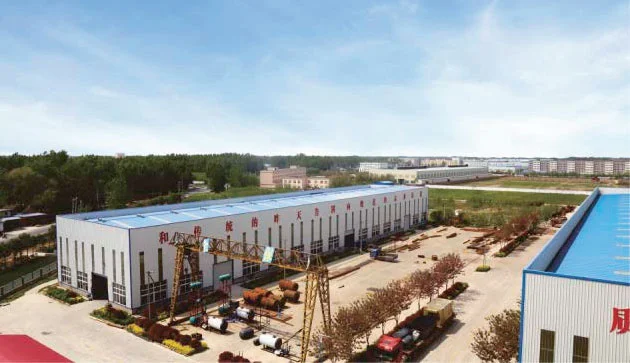
Henan Hengxin Boiler Co., Ltd. manufactures boilers under an ISO9001 quality management system and an ISO14001 environmental management system, holds the special equipment manufacture license for pressure products, and is rated as an AAA credit enterprise. The engineering team supports layout drawings, plant room arrangement, fuel system design and control integration, and accepts drawing based and customized development when a brewery needs non standard connections, capacities or fuel arrangements. Typical brewery installations are described on the brewery industry application page, where buyers can see how different boiler types are matched to fermentation, sterilization and washing duties.
Yes, when the loads are added on a time basis and a buffer tank absorbs the peak draws. Most breweries sequence brewing water heating and packaging washing rather than running both at full demand simultaneously, and the four step sizing method above is built around that overlap. If the pasteurizer must run continuously while the brewhouse brews, verify the combined load and consider two smaller units instead of one.
It depends on the process. Hot liquor tanks, sparging, CIP, keg and bottle washers and tunnel pasteurizers all run on warm water and are served directly by the 85 degrees C atmospheric circuit. Steam is only essential where a process needs it, such as wort boiling in a kettle heated by a steam coil. Splitting the plant this way keeps the supervised pressure equipment small and the operating routine simple.
The boiler body is open to the atmosphere through the vent, so pressure cannot build even if the water heats further. Control cabinets include high temperature protection that shuts the burner down before the outlet approaches the boiling point, and the open tank design gives the system a natural expansion volume. The main consequence of an overshoot is process related, such as tannin extraction in sparging, which is why the temperature loop should be checked during commissioning.
Yes. Hengxin develops boilers to customer drawings and requirements, including special connection positions, control packages and fuel systems, and accepts OEM cooperation. Send the hot water balance, site fuel data and plant room dimensions, and the engineering team will propose a configuration with drawings and a quotation.
If you are planning a new brewhouse, replacing an aging hot water plant or adding a packaging line, the engineering team can review your hot water balance and recommend a CWNS configuration that matches your brew schedule, fuel and budget. Contact Hengxin Boiler with your annual volume, peak hot water demand and available fuel supply to receive drawings, parameters and a quotation for your project.