
Company News
Choosing a heat source for a heating and domestic hot water system usually comes down to three variables: the thermal output the building actually needs, the operating pressure the site can legally and safely support, and the fuel that is reliably available at the gate. An oil/gas atmospheric hot water boiler answers a very specific combination of those three. It delivers hot water at an 85/60 °C design envelope from natural gas, light oil or heavy oil, while the water side is held at atmospheric pressure rather than under a pressurized vessel classification.
That single design decision reshapes the cost structure, the permitting path and the daily maintenance routine of the entire plant room. This buyer guide sets out where atmospheric hot water boilers fit best, how they compare with pressurized units, how to size them correctly, and what to verify before placing an order.
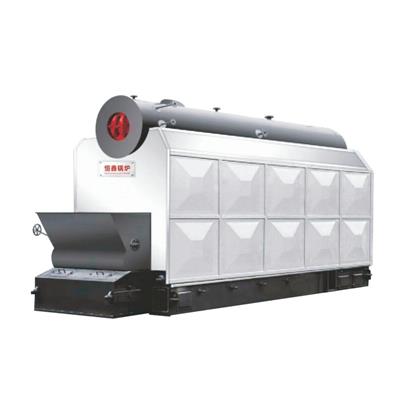
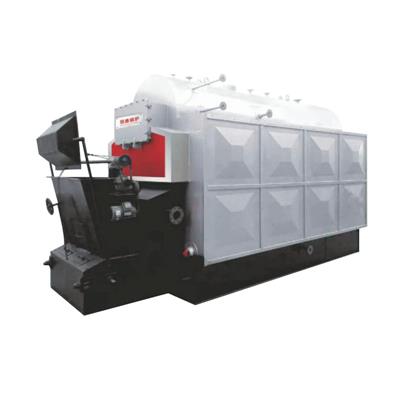
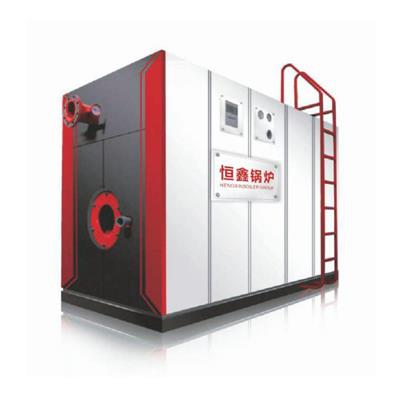
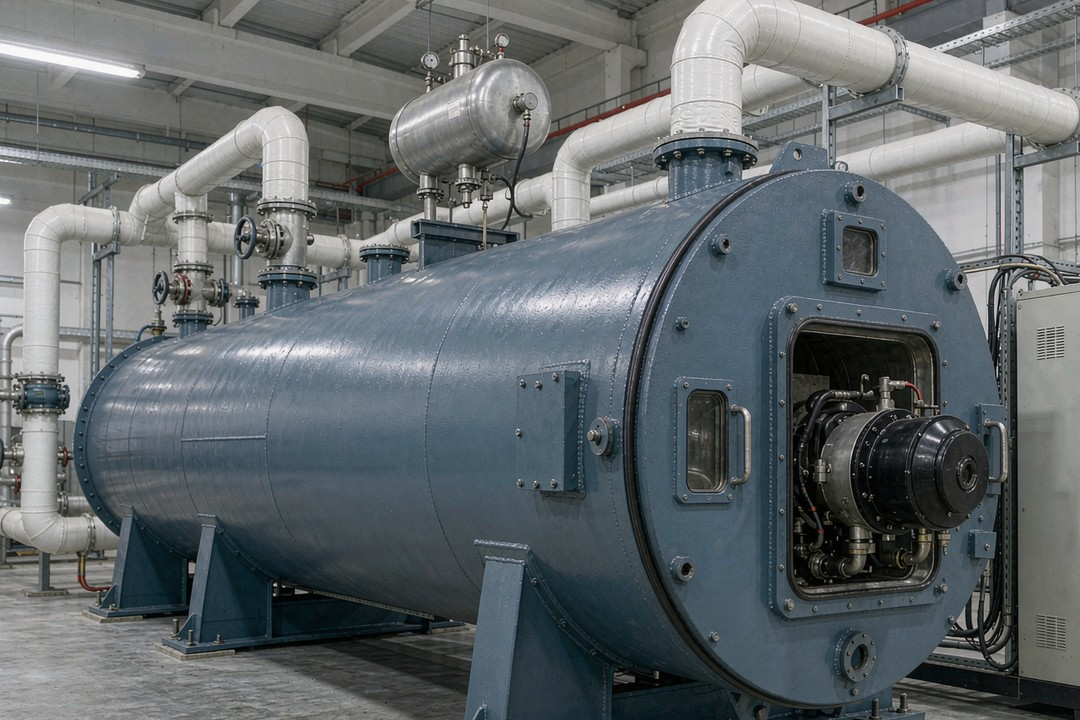
An atmospheric hot water boiler is a water-jacketed shell boiler that operates with the water surface open to atmosphere, typically through an expansion tank or an open vent. Because the shell is never sealed, the water side cannot build pressure above atmospheric. The boiler therefore falls outside the pressure vessel inspection regime that applies to pressurized steam and hot water boilers in most jurisdictions, which is the single most important practical advantage of the design.
Fuel is burned in the furnace section and the flue gas travels through the convective tube bundle before leaving through the stack. Heat is transferred to the water surrounding the furnace and tubes. The circulation pump draws return water at around 60 °C, passes it through the boiler and delivers flow water at approximately 85 °C. Because the system is open, the water volume expands into the expansion tank instead of raising shell pressure.
Rated heat power: 0.7 MW to 14 MW per unit
Rated working pressure: atmospheric
Rated outlet / return water temperature: 85 / 60 °C
Design fuels: natural gas, light oil, heavy oil and other liquid or gaseous fuels
Efficiency class: high-efficiency three-pass wet-back construction with an economiser option
Anything outside that envelope, in particular a requirement for supply temperatures above 95 °C or for direct steam, points toward a pressurized or steam boiler class instead. Where those limits are respected, an oil (gas) atmospheric hot water boiler covers most commercial heating and hot water duties without the pressure vessel overhead.
The comparison table below is the fastest way to decide whether the atmospheric route is appropriate for a given project. Read it against the actual site constraints rather than against a generic preference.
| Criterion | Atmospheric Hot Water Boiler | Pressurized Hot Water Boiler |
|---|---|---|
| Water side pressure | Atmospheric, open vent or expansion tank | Typically 0.7 to 1.6 MPa design pressure |
| Pressure vessel inspection | Generally not classified as a pressure vessel | Subject to statutory inspection and certification |
| Maximum supply temperature | About 85 °C in standard configuration | Can exceed 130 °C in high temperature designs |
| Typical heat output per unit | 0.7 to 14 MW | 0.7 to 116 MW depending on design |
| Operator certification | Simplified requirements in most regions | Licensed boiler operator commonly required |
| Plant room height | Lower, no pressure parts overhead | Higher, thicker shell and headers |
| Best suited to | Heating, domestic hot water, bathing, low temperature process heat | High temperature process heat, long distance distribution, steam adjacent duties |
In practice, the atmospheric option wins whenever the duty is heating or domestic hot water and the distribution network is reasonably short. It loses when the process genuinely needs a high supply temperature or a high differential pressure across a long primary loop.
Atmospheric hot water boilers are widely deployed across commercial and light industrial heat duties. The boiler applications across industries that fit this class most naturally share three traits: a moderate temperature requirement, a demand profile with a daily peak, and a preference for low permitting overhead.
A hotel load is dominated by domestic hot water for guest rooms plus space heating in shoulder and winter months. Both duties sit comfortably inside the 85/60 °C envelope. A storage tank or buffer vessel absorbs the morning and evening draw peaks, which lets the boiler be sized on the average load plus a margin rather than on the instantaneous peak. The absence of a pressure vessel classification also simplifies annual inspection and reduces plant room downtime.
Healthcare buildings need continuous hot water for sanitary use, laundry and sterilisation support, with strict continuity requirements. Running two atmospheric units in a duty and standby arrangement is a common and economical way to reach the required availability without the cost of a pressurized installation. Low temperature operation also reduces scaling rates on heat exchange surfaces, which matters where water hardness is high.
For district heating schemes with a short to medium distribution radius, atmospheric hot water boilers handle base load efficiently, particularly when paired with economisers to recover sensible heat from the flue gas. Where the network is long and the design temperature genuinely needs to exceed 100 °C, the correct decision is usually to move to a pressurized design rather than to force an atmospheric unit beyond its envelope.
These duties are large, steady low temperature loads and are close to ideal for this boiler class. Pool water heating in particular benefits from the steady 85/60 °C output, since the pool heat exchanger operates most efficiently at a modest approach temperature.
Sizing errors in hot water systems almost always trace back to one of three causes: using instantaneous peak demand instead of a diversified load, ignoring the storage volume, or forgetting altitude and water quality corrections. Work through the following steps in order.
Calculate the transmission and ventilation heat loss of the building envelope at design outdoor temperature. For existing buildings, a heat meter reading across a full winter week is far more reliable than a theoretical calculation, and it also reveals the true diversity factor between floors or zones.
Estimate the daily hot water draw in litres at the required supply temperature, then convert it to an equivalent heat load. Because the draw is concentrated into a few hours, the sizing decision is really about storage volume. A larger buffer tank allows a smaller boiler, and it is usually the cheaper combination on both capital and operating cost.
Heating and domestic hot water peaks rarely coincide fully. Applying a realistic diversity factor between the two loads prevents oversizing, which otherwise raises cycling, lowers seasonal efficiency and increases standby losses.
At altitude, the effective heat transfer and the combustion air mass flow both change, so burner settings must be corrected. Where water hardness exceeds roughly 200 mg/L as calcium carbonate, water treatment or a heat exchanger separation should be specified to protect the boiler shell from scale.
Match the burner turndown ratio to the expected load profile. A wide turndown range such as 5:1 keeps the boiler running steadily during shoulder seasons instead of short cycling, and it is one of the least expensive ways to improve annual fuel consumption.
The table below summarises the configuration range for a standard oil/gas atmospheric hot water boiler. Final selections are confirmed against project drawings and site conditions.
| Parameter | Standard Range | Notes |
|---|---|---|
| Rated heat power | 0.7 to 14 MW | Single unit; multiple units for larger demand |
| Rated working pressure | Atmospheric | Open vent or expansion tank |
| Outlet / return temperature | 85 / 60 °C | Design point, not a limit of the burner |
| Design fuel | Natural gas, light oil, heavy oil | Other gaseous or liquid fuels on request |
| Thermal efficiency | High efficiency with economiser | Actual value confirmed in the proposal |
| Burner turndown | Up to 5:1 typical | Selected to match the load profile |
| Control system | PLC with full modulation | Weather compensation and cascade option |
| Safety interlocks | Flame, temperature, water level, gas leak | Compliant with applicable local codes |
One practical strength of this boiler class is the breadth of acceptable fuels. Natural gas is the default where a pipeline is available, and it brings the lowest handling cost and the cleanest combustion. Light oil is common where gas infrastructure is absent or where interruptible supply contracts create a risk of curtailment. Heavy oil is viable where it is locally available and where preheating and atomisation equipment are specified correctly.
Dual fuel burners, which switch between gas and oil automatically, are a frequent choice for facilities that cannot accept an interruption. The trade off is a higher burner cost and a marginally more complex commissioning procedure, but the resilience gain is usually judged to be worth it.
The boiler room must have adequate combustion air openings and ventilation sized to the burner rating, not to the boiler thermal output alone.
Adequate clearance is needed around the front and rear doors for tube cleaning and burner servicing. This is commonly underestimated during plant room layout.
Flue gas discharge height and dispersion must satisfy local air quality rules, and condensate handling is required where an economiser drives the flue gas below its dew point.
Water treatment is not optional in hard water areas. Scale on the water side of a hot water boiler is the most frequent cause of reduced output and premature tube failure.
Because the water side is open, the expansion tank and vent must be correctly sized and must never be isolated by a valve while the boiler is in service.
Before issuing a purchase order, confirm the following points in writing. They separate a straightforward project from a difficult one far more reliably than the headline price does.
Whether the offer includes burner, control panel, economiser, valves and instrumentation, or whether these are excluded.
Whether the efficiency figure quoted is gross or net calorific value based. The two numbers are not comparable.
Whether thermal calculation and the selection report are supplied with the offer, so the sizing can be reviewed independently.
Whether the unit can be customised for an unusual footprint, fuel or temperature requirement. A supplier that accepts drawing based custom development is a genuine advantage on constrained sites.
Which codes and standards the pressure parts, welding and controls are built to, and whether documentation is supplied for local registration.
Commissioning, operator training and the spare parts lead time for burners and control components.
If any of these answers are vague, it is worth requesting clarification in writing before the contract stage, because all six items affect lifetime cost rather than purchase price.
Yes, and this is one of its most common duties. A buffer or storage tank separates the boiler from the domestic hot water draw, allowing a single boiler to serve both space heating and hot water demand. Sizing is normally driven by the combination of the heating load and the stored hot water volume rather than by the instantaneous peak draw.
In most jurisdictions an atmospheric hot water boiler is not classified as a pressure vessel because the water side is open to atmosphere, so the statutory inspection regime does not apply in the same way as for pressurized boilers. The exact requirement depends on local regulation and on the installation, so the applicable rules for the specific site should always be confirmed with the local authority before ordering.
The standard design point is 85 °C outlet with 60 °C return. Because the system is open, the water cannot be heated above the saturation temperature corresponding to atmospheric pressure, which is why the practical ceiling sits near 85 to 90 °C. If a higher supply temperature is genuinely required, a pressurized hot water boiler or a steam boiler is the correct choice.
Natural gas, light oil and heavy oil are all standard, and dual fuel burners that switch between gas and oil are available. Fuel selection affects burner configuration, flame safety devices and the fuel train, so it should be decided at the enquiry stage rather than after the boiler has been ordered.
If the duty is heating, domestic hot water or low temperature process heat, an oil/gas atmospheric hot water boiler is likely to be the most economical and the least administratively burdensome option available. It is worth checking the design temperature ceiling and the local inspection rules first, because those two factors decide the question more often than price does.
To discuss heat load, fuel selection, footprint constraints or a drawing based custom configuration, please contact the Hengxin engineering team with the project parameters. Send the required output, the available fuels, the supply and return temperatures and the plant room dimensions, and a selection report with specifications and drawings can be prepared against those figures.