
Company News
A pharmaceutical plant lives on steam, and it never stops needing it. Sterilizers that prepare injectable-grade equipment, clean steam generators that feed pure steam systems, dryers that finish granules, air handling units that hold humidity inside tight bands during batch production: all of them draw from one boiler house, and a deviation there can put a whole production campaign at risk. The SZS oil gas fired boiler is a horizontal, double drum, D-type water tube steam boiler rated from 6 to 150 tonnes of steam per hour at working pressures from 1.25 to 2.5 MPa, with saturated steam temperatures of 194 to 225 degrees Celsius and a thermal efficiency of 93.3 to 97 percent. That capacity band, and the pressure class above what most fire tube boilers reach, is exactly why water tube steam plants are the standard choice for medium and large pharmaceutical sites. This article maps where steam goes in a pharmaceutical plant, explains the steam grades that matter, shows how to size a unit step by step, lists the full model range, and closes with fuel data, installation and maintenance guidance and a set of frequently asked questions.
Pharmaceutical steam users divide into utility loads, which tolerate ordinary plant steam, and quality loads, which receive steam only after it has been treated as part of the product contact system. Sorting every consumer into one of these groups, with its design hourly steam rate at working pressure, is the first task of any boiler house project, because the answer decides both the boiler rating and the downstream generation equipment.
| Load centre | Typical equipment | What the boiler must deliver |
|---|---|---|
| Sterilisation and decontamination | Chamber autoclaves, dry heat steriliser preheating, waste decontamination units | Saturated steam at 0.4 to 0.8 MPa, pulse loads on batch cycles |
| Clean steam generation | Clean steam generators fed from purified water systems | Steady plant steam as the heating source, usually at 0.6 to 0.8 MPa |
| Process and API production | Reactor jacket heating, extraction and concentration, crystallisation support | Saturated steam at 0.6 to 1.0 MPa, stable pressure during batch steps |
| Drying and finishing | Fluid bed and tray dryers for granules, herbal raw material drying rooms | Steam at 0.4 to 0.8 MPa for air heaters and jacketed trays |
| HVAC and humidification | Air handling unit humidifiers, jacket and tracing lines | Low pressure steam, small but continuous load, critical in dry seasons |
Two features of this load map deserve attention. First, pharmaceutical sterilisation and clean steam generation run batch after batch on a fixed schedule, so the boiler sees a repeating staircase of steps rather than a smooth curve; a water tube boiler with a large drum volume and proper control absorbs these steps without pressure swings reaching the users. Second, drying and humidification rise sharply in winter and in certain dosage forms, which is why the sizing method later in this article works from a load list rather than from floor area or head count.
Buyers sometimes assume the boiler itself must make clean steam, and that misunderstanding distorts specifications. In practice a pharmaceutical site runs three grades. Plant steam is the utility produced by the boiler; it heats, sterilises non product equipment through indirect jackets, and drives air heaters. Clean steam is produced from purified water in a dedicated clean steam generator, and its own heating source is plant steam; it contacts sterilisers and product equipment directly. Pure steam is generated from water for injection inside the same family of equipment and is used where the steam itself condenses on product contact surfaces. The boiler therefore never needs pharmaceutical-grade treatment, but it does need to run at a stable pressure, around the clock, because every generator and steriliser cycle downstream depends on it.
This division has two practical consequences for the boiler house. The boiler pressure is usually held at 0.8 to 1.0 MPa at the header with reducing stations for the 0.4 to 0.6 MPa users, and the connected load must be calculated on the generator side as well, because a clean steam generator consumes roughly the same tonnage of plant steam as the clean steam it delivers. Documenting this logic in the design file also helps during audits, because inspectors routinely ask how the utilities hierarchy was defined.
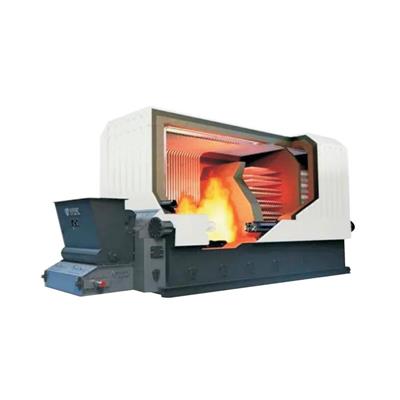
The SZS series is a gas or oil double drum horizontal chamber combustion boiler consisting of upper and lower drums, membrane water wall, burner, convection tube bundle, economiser, condenser and dirt separator. Convection tube bundles sit on one side of the furnace chamber in the classic D-type layout, and natural circulation carries the water around the circuit. Several elements of this construction match pharmaceutical duty directly.
The furnace water wall and convection flue use membrane wall structure, which replaces heavy refractory brick with panel construction. That reduces the thermal mass, so the boiler reaches operating condition faster after a shutdown, and it shortens the installation programme, an advantage when a plant replaces an ageing boiler inside a shutdown window between production campaigns. Units in the smaller frames are delivered quick assembled, while the largest frames are supplied bulk and assembled on site.
At the tail of the boiler, flue gas passes through an economiser and a condenser built from finned tubes before it reaches the chimney. This arrangement lowers the exhaust gas temperature and lifts thermal efficiency to the published band of 93.3 to 97 percent, which reduces fuel consumption directly. For a plant that runs sterilisers and generators every day of the year, the difference between a boiler at 90 percent and one at 96 percent compounds into a large annual fuel figure.
An explosion proof door at the boiler tail protects the structure against pressure excursions. The burner is an original imported Italy Baltur unit with high automation, realising full automatic control of pre purge, ignition, automatic conversion of fire power, automatic boiler shutdown and flameout protection. The control system is programmable and covers automatic water supply, automatic combustion adjustment, oil temperature control for oil fuel, steam overpressure protection, gas pressure protection, leakage detection for gas fuel, front and rear purging and corresponding interlocks. Water level gauges, level control alarms, pressure gauges, electric contact pressure gauges, pressure controllers and steam and water flow meters provide high and low water level alarms, low water level interlock and overpressure alarm and interlock functions. Membrane water cooled walls on the front and rear extend service life. For a plant that documents everything, this completeness of protection and instrumentation makes the qualification file straightforward to assemble.
Walk the site with the engineering team and list every steam user with its design hourly steam rate at working pressure. Autoclave figures come from the steriliser supplier at rated cycle demand, clean steam generator figures from the generator datasheet expressed as plant steam input, process figures from the process design package, drying and humidification figures from the HVAC and process documents. Where a figure is missing, ask the equipment supplier for the connected steam load at design duty rather than estimating from electrical nameplate power, because jacketed equipment can draw far more steam than its installed electric power suggests.
Not every load peaks at the same moment. Sterilisers on staggered batch schedules factor at 0.7 to 0.85, clean steam generators at 0.85 to 0.95 because production campaigns run them nearly continuously, process loads at 0.6 to 0.8 depending on batch overlap, drying at 0.6 to 0.8 and humidification at 0.5 to 0.7 depending on climate. The design hour usually combines the worst production block with winter humidification, and that hour sizes the boiler.
Add 10 to 20 percent on top of the diversified demand to cover main and trap losses, blowdown, and modest growth such as an additional steriliser or an expanded drying line. Sites with long outdoor distribution runs between the boiler house and the production blocks should use the upper end of the band.
Choose the model whose rated output carries the corrected design load at roughly 70 to 80 percent, then review redundancy. Pharmaceutical production rarely tolerates a boiler outage, because a failed sterilisation cycle stops a packaging line or an entire campaign. The common answer is two boilers sized so that one carries the base load while the second stands by or shares the winter peak, and the SZS range, which steps in 2, 4 or 6 tonne increments across most of the band, makes that split easy to arrange. The industries served by the manufacturer, including pharmaceutical plants, are collected on the pharmaceutical industry application page.
| Load, mid size API and formulation site | Connected load (t/h) | Demand factor | Design demand (t/h) |
|---|---|---|---|
| Sterilisers and decontamination | 3.0 | 0.8 | 2.4 |
| Clean steam generators | 1.5 | 0.9 | 1.35 |
| Process, extraction and concentration | 2.0 | 0.7 | 1.4 |
| Drying rooms and tray dryers | 0.7 | 0.7 | 0.49 |
| HVAC humidification, winter | 0.8 | 0.6 | 0.48 |
| Design hour total | 8.0 connected | combined | 6.12 |
In this worked example, the design hour demand of 6.12 t/h plus a 15 percent margin gives about 7.0 t/h, which points to the SZS10-1.25-YQ running at about 70 percent of rated output, a healthy position for efficiency and for headroom on campaign peaks. A two boiler arrangement such as an SZS6 plus an SZS6, each able to carry most of the site alone in an emergency, is the alternative worth pricing in parallel, because redundancy rules in regulated production often outweigh a small difference in purchase price.
The table below summarises the published parameters of the SZS series. All models burn natural gas, light oil or heavy oil, hold saturated steam temperatures of 194, 204 or 225 degrees Celsius according to the selected pressure of 1.25, 1.6 or 2.5 MPa, and reach the thermal efficiency band described earlier.
| Model | Capacity (t/h) | Max transport weight (kg) | Transport dimension L x W x H (mm) |
|---|---|---|---|
| SZS6-1.25-YQ | 6 | 32000 | 7800 x 2400 x 2400 |
| SZS8-1.25-YQ | 8 | 32000 | 7800 x 2400 x 2400 |
| SZS10-1.25-YQ | 10 | 32000 | 7800 x 2400 x 2400 |
| SZS20-1.25-YQ | 20 | 40000 | 8000 x 3600 x 4500 |
| SZS30-1.25-YQ | 30 | 40000 | 8000 x 3600 x 4500 |
| SZS40-1.25-YQ | 40 | 40000 | 8000 x 3600 x 4500 |
| SZS50-1.25-YQ | 50 | 51000 | 8900 x 3900 x 4000 |
| SZS65-1.25-YQ | 65 | 68200 | 10500 x 4300 x 4320 |
| SZS75-1.25-YQ | 75 | 80500 | 12330 x 4400 x 4530 |
| SZS100-1.25-YQ | 100 | bulk, site assembly | supplied in sections |
| SZS110-1.25-YQ | 110 | bulk, site assembly | supplied in sections |
| SZS150-1.25-YQ | 150 | bulk, site assembly | supplied in sections |
Three rows matter most. The capacity row shows that the range steps from 6 to 150 t/h, which covers a single campus boiler house from a first installation to a full multi block supply. The pressure note confirms that each frame is offered across the 1.25, 1.6 and 2.5 MPa classes, so a plant planning future expansion into higher pressure users can select 1.6 or 2.5 MPa now and reduce downstream, instead of replacing the boiler later. The transport weight and dimension rows decide the site logistics: frames up to the SZS75 are delivered as shop assembled units, and the dimensions above are the numbers a route survey must clear, while the three largest sizes ship in sections for site assembly, which suits greenfield power houses where a crane programme is already planned.
Fuel converts directly into the operating budget, and because a pharmaceutical boiler plant runs through nights, weekends and campaigns, annual tonnage is high. Published full load consumption figures for the manufacturer oil and gas steam boiler line correspond to roughly 72 to 76 normal cubic metres of natural gas, or about 60 to 62 kilograms of light oil, per tonne of steam at the efficiency band of this series. A site with a design demand near 7 t/h running twenty hours a day therefore consumes in the order of 10,000 normal cubic metres of gas per working day, a figure the engineering team can check against the gas meter after commissioning.
| Fuel | Indicative consumption per tonne of steam | Note |
|---|---|---|
| Natural gas | about 72 to 76 Nm3 | Cleanest exhaust, preferred where the site has a gas supply |
| Light oil | about 60 to 62 kg | For sites without a gas connection or as standby fuel |
| Heavy oil | about 63 to 65 kg | Requires heated storage, pumping and temperature control |
Gas firing also simplifies compliance around the boiler house: no oil storage bund, no fuel heating system and lower exhaust emissions. Where dual fuel flexibility is required for supply security, dual fuel burners and a light oil standby train can be specified at the order stage, and the supplier confirms the gas train pressure and meter capacity against the burner demand during design.
| Item | What to confirm |
|---|---|
| Water treatment | Water softener and deaerator sized to feed water demand, chemical dosing agreed, feed water quality within boiler code limits |
| Steam side | Steam header, reducing stations for steriliser and generator circuits, trap survey, condensate return plan, metering per user group |
| Clean steam interface | Clean steam generator plant steam inputs sized at design duty, isolation and pressure control agreed with the quality unit |
| Fuel supply | Gas pressure and meter capacity against burner demand, or oil storage and heating for oil fired plants |
| Flue and condensate | Flue route accepted, condensate from the economiser and condenser collected and neutralised before discharge |
| Controls and monitoring | Programmable control accessible, signals for the site monitoring system agreed, alarm and shutdown interlocks tested and recorded |
| Room and route | Transport weight and dimension against door, road and crane route, floor loading, service clearances, ventilation air |
| Qualification support | Factory documentation, inspection certificates and commissioning records delivered in a form the quality unit can file |
Regulated sites add one practical point: sequence the boiler commissioning before the first qualification batch, because steriliser and generator qualification needs stable plant steam, and a boiler that is still being tuned during qualification creates avoidable deviations. Delivery schedules support this planning, since the manufacturer states that boilers under 15 tonnes can be delivered in 15 days and boilers of 15 to 25 tonnes in 20 days, with larger frames and some stock items confirmed at quotation.
| Interval | Tasks |
|---|---|
| Daily | Blowdown, water level and gauge checks, log steam pressure and exhaust temperature, visual burner check |
| Weekly | Feed water hardness test, condensate return check, observe flame pattern, verify panel readings against local gauges |
| Monthly | Safety valve and interlock checks per local code, steam trap inspection, water treatment audit, gas train leak check |
| Quarterly | Combustion tuning check, economiser and condenser finned surface cleanliness, feed pump and softener service check |
| Annually | Internal inspection per special equipment code, gauge and safety device calibration, flue gas analysis, documentation review for audits |
The manufacturer supports this schedule with a service organisation of more than 500 staff, technical consultation within 30 minutes, a clear plan within 2 hours and dispatch of engineers at home and abroad within 24 to 72 hours, with free maintenance within 12 months since shipment. An intelligent boiler cloud platform adds remote visibility of the operating state, which utility teams in multi site networks use to compare plants and catch drift early.
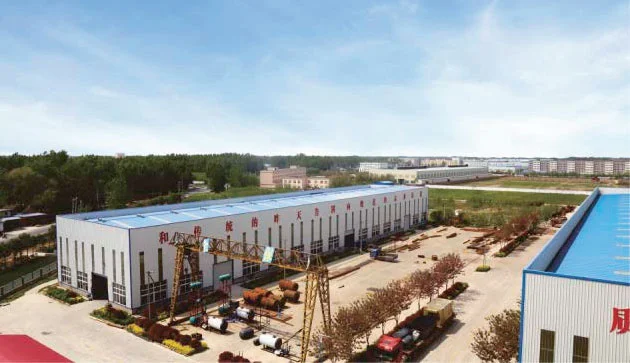
Henan Hengxin Boiler Co., Ltd. brings forty years of factory history to this product class, with 660,000 square metres of factory area, 580 million in total assets, 336 production equipments and more than 300 production models. The company holds ISO9001 and ISO14001 international quality system certification, a special equipment production licence and 3A credit enterprise status, and every boiler leaves the factory through national safety and quality inspection. Buyers who want to verify these credentials can review the certificates and honors published on the company website. Beyond the standard range the company provides R&D innovation, design customisation, EPC project capability and OEM manufacturing, so a plant with an unusual boiler room, a higher pressure class or a dual fuel requirement can be engineered to order from drawings. The SZS oil gas fired boiler product page carries the full specification, and the sales team prepares a sized proposal from a load list, the boiler room dimensions and the fuel data of the site. Send the connected load list, the site layout and the available fuel supply, and request a sized proposal with a delivery schedule that fits the next shutdown window.
No. The standard arrangement is that the boiler produces ordinary plant steam, and dedicated clean steam generators convert purified water into clean steam using that plant steam as the heating source, while pure steam is produced from water for injection in similar equipment. The boiler must deliver stable pressure and sufficient tonnage for the generators at design duty, which is why the connected load of every clean steam generator belongs in the boiler sizing calculation as plant steam input.
Work from the load list rather than from the floor area. In the worked example above, a mid size site with six sterilisers, clean steam generation, extraction and concentration duty, drying rooms and winter humidification reached about 6.12 t/h in the design hour, which after a 15 percent margin points to the SZS10-1.25-YQ at about 70 percent duty. Where regulations or the risk assessment demand redundancy, a pair of smaller frames such as two SZS6 units is the arrangement most often priced in parallel, because one unit can then carry the essential users during a planned or unplanned outage.
The published thermal efficiency band for the series is 93.3 to 97 percent, helped by the economiser and finned tube condenser at the boiler tail that lower the exhaust gas temperature. Against an older boiler around 88 to 90 percent, the difference on a plant that makes tens of thousands of tonnes of steam a year is a large share of the annual fuel bill, which is why the tail heat recovery design has become the default specification for new pharmaceutical boiler houses.
Prepare the connected load list with working pressures and demand assumptions, the boiler room dimensions together with the delivery route, the available fuel and its supply pressure, a water analysis of the make up water, the flue route, and the local code and emission requirements, plus any preference for dual fuel capability or a higher pressure class for future expansion. With these, the manufacturer can confirm the model and pressure class, check the transport route against the published dimensions, and return a sized proposal with a clear plan within two hours and a delivery date aligned to the project programme.