
Company News
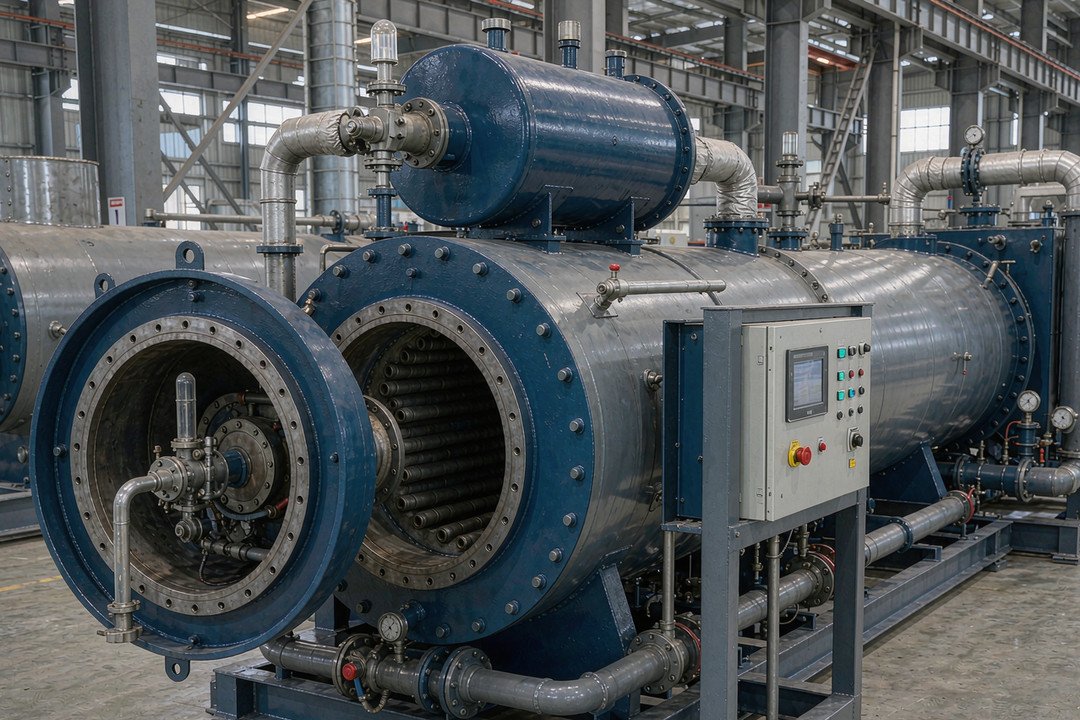
If you are comparing quotations for a new steam or hot water plant, a tubular boiler is usually the first design that appears in the supplier’s proposal. It is a well-understood, robust shell boiler, and for many duties between roughly 1 t/h and 20 t/h of steam it remains one of the most economical choices per unit of installed capacity. The real differences between offers are rarely in the product name — they appear in the tube layout, materials, welding quality, control philosophy, and in how flexibly the manufacturer can adapt the design to your existing drawings and site footprint.
This guide explains how a tubular boiler is built and how it works, lists the specifications worth confirming before an order is released, reviews the industries that use tubular boilers most, and describes how Hengxin handles OEM and drawing-based tubular boiler projects for overseas buyers.
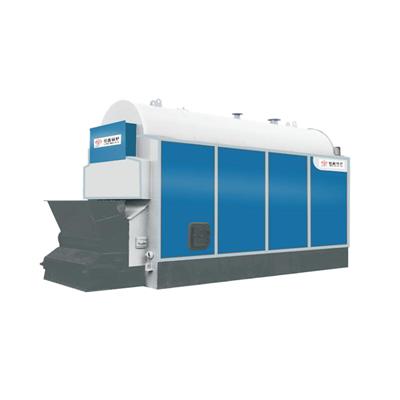
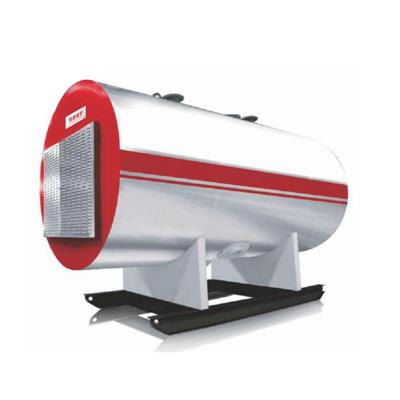
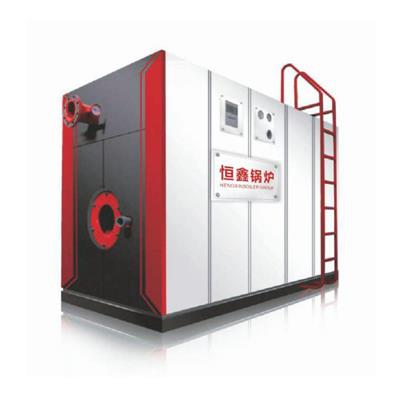
A tubular boiler is a shell-type boiler in which the heating surface is formed by a bundle of tubes instead of a single large flue. The tubes create the gas passages, while water fills the space around them inside the pressure shell. Heat released by the burner travels through these tubes and passes through the tube wall into the surrounding water, producing steam or hot water.
Because the tubes multiply the available heat-transfer area inside a compact shell, a tubular boiler can absorb a large amount of heat in a relatively small footprint. That is why the design is so widely used for packaged industrial boilers that must be shipped as a single shop-assembled unit and put into service quickly.
Two arrangements are common in industrial service:
Fire-tube tubular boilers — combustion gases flow inside the tubes while water surrounds them. Suitable for saturated steam at low to moderate pressure and for hot water heating duties.
Water-tube tubular boilers — water flows inside the tubes and hot gases pass over the outside. Used where higher capacity, higher pressure or faster load response is required.
Both arrangements can be found in the Hengxin tubular boiler series, and the choice between them is normally driven by the steam demand profile and the pressure rating of the downstream process.
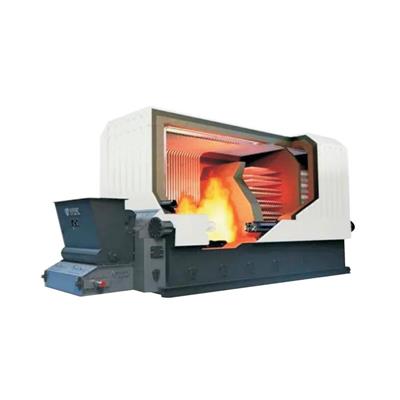
The pressure shell is fabricated from boiler-quality steel plate, rolled and longitudinally seam-welded. At each end, a tube sheet carries the tube bundle; the tubes are expanded into the tube sheet and then seal-welded to form a pressure-tight joint. The furnace — the chamber in which combustion takes place — is either a corrugated section inside the shell or is formed by the first pass of the tube bundle, depending on the design.
Material selection matters more than many buyers expect. Shell plates are normally supplied to a recognised boiler plate specification, and the tube grade is matched to the fuel and the feedwater chemistry. Where heavy oil, biogas or aggressive condensate is involved, the supplier should confirm the tube material in writing rather than defaulting to a standard carbon steel tube.
Most packaged tubular boilers use a three-pass layout. Hot gases leave the burner and travel through the furnace (first pass), return along the second-pass tubes, and then move forward again through the third pass before entering the economiser or the chimney. Each reversal increases the contact time between the gas and the heating surface, which raises overall heat transfer and lowers the flue gas exit temperature. On gas-fired units fitted with a correctly sized economiser — and, where the application allows, a condensing tail-end heat exchanger — thermal efficiency in the low-to-mid 90 percent range can be reached.
Feedwater enters the shell and circulates by natural convection as the tubes transfer heat into it. The steam space above the water line is dimensioned so that steam can separate from the water surface without carrying droplets into the main steam valve. Correct sizing of this space, together with suitable steam drum internals, is what keeps steam quality stable when the load swings.
The table below summarises the parameters that should be fixed in writing before a tubular boiler order is released to the workshop.
| Parameter | Typical range | Why it matters |
|---|---|---|
| Rated steam capacity | 1–20 t/h (other sizes on request) | Sets furnace volume and tube count; oversizing increases standby losses |
| Rated working pressure | 0.7–2.5 MPa | Determines shell and tube sheet thickness and the inspection category |
| Saturated steam temperature | 170–225 °C | Follows directly from the working pressure |
| Feedwater temperature | 20–105 °C | Affects economiser sizing and the fuel consumption calculation |
| Design fuel | Natural gas, LPG, light/heavy oil, biogas, dual fuel | Drives burner selection, tube material and furnace dimensions |
| Thermal efficiency | Commonly 92–97% depending on configuration | Controls running cost; validate against the stated test standard |
| NOx class | Low-NOx burner options available | Increasingly required by municipal environmental permits |
| Control system | PLC with touchscreen HMI, optional remote monitoring | Affects staffing requirements and fault diagnosis capability |
If any of these values is still uncertain on your side, it is better to settle it before manufacture. Changing a tube sheet or a furnace length after the shell has been welded is expensive; changing it on paper costs nothing.
Tubular boilers appear in almost every industry that needs process steam or central hot water. The applications below account for the majority of export enquiries handled by Hengxin.
Baking, sterilisation, cooking, concentration and cleaning-in-place (CIP) all depend on a steady supply of saturated steam. Food plants generally favour gas-fired tubular boilers with automatic control, because they respond quickly to batch loading and keep the steam pressure stable while several lines draw steam at the same time.
Dyeing machines, dryers and stenters need steam at a consistent pressure to hold dye-bath temperature within tolerance. A tubular boiler with adequate steam space handles the repeated start-stop cycle of a dye house better than a small, tightly sized unit.
Reactor heating, distillation, drying of raw materials and curing processes all fall in the capacity range of a packaged tubular boiler. Where the process runs continuously at a steady load, an economiser and oxygen-trim control help keep fuel consumption predictable.
Hot water tubular boilers serve hotels, hospitals, schools, residential compounds and district heating networks. For these duties, low-NOx combustion and quiet, fully automatic operation are usually the deciding factors rather than peak output.
You can review reference projects by industry in the Hengxin industrial boiler application centre, which lists typical boiler models used in food, textile, chemical, paper and central heating projects.
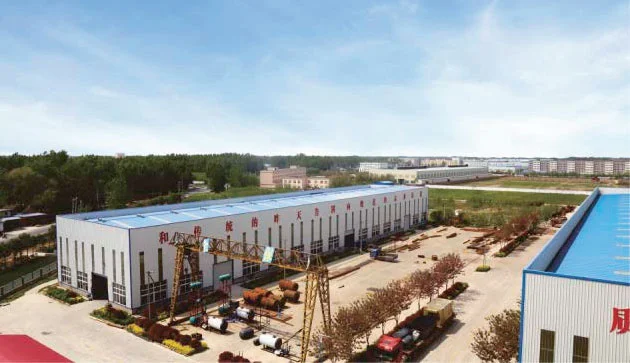
Hengxin Boiler is based in Taikang County, Zhoukou City, Henan Province, and manufactures boilers and pressure vessels under a B-class boiler manufacturing licence issued by the State Administration for Market Regulation. The workshop is equipped with submerged-arc automatic welding machines, plate rolling machines, edge planing machines and vertical lathes, so the shell, tube sheets and tube bundle are produced and inspected in-house rather than subcontracted.
Many enquiries do not fit a standard catalogue model. Buyers bring their own drawings, a replacement boiler for an existing boiler house, or a dimensional constraint such as a container-loading limit or a narrow boiler room door. Hengxin supports:
Design to customer drawings — capacity, pressure, nozzle positions and support arrangements matched to the drawings you supply.
OEM manufacturing — production under your brand, with your nameplate and documentation package.
Site-driven adaptation — split delivery for narrow access, alternative fuel burners, economiser retrofits and control integrations with existing DCS systems.
In practice this means a purchasing team can tender one specification and receive a tubular boiler that matches the boiler house it has, rather than rebuilding the boiler house around a catalogue unit.
Standard packaged boilers are dispatched shop-assembled, which shortens on-site work to positioning, piping, electrical connection and commissioning. Hengxin provides installation guidance, commissioning support and operator training, and supplies spare parts for the burner, control components and gasket sets. For overseas projects, documentation — drawings, quality certificates and installation manuals — is prepared in English to support local registration and inspection.
Capacity errors are the most common and most expensive mistake in boiler procurement. A practical sequence for sizing:
List every steam consumer and its peak and average demand, including standby and cleaning loads.
Apply a simultaneity factor rather than adding all peak demands together; most plants never draw every consumer at full flow simultaneously.
Add a margin of roughly 10–15% for losses, fouling and future expansion — enough headroom without paying for a permanently underloaded boiler.
Check the turndown range of the proposed burner against your lowest real load, so the unit does not cycle excessively at night or during changeovers.
Where the load profile is uncertain, sending your production data to the supplier’s engineering team is usually faster and more reliable than estimating it internally.
A tubular boiler is a pressure vessel, so the inspection trail is as important as the specification. Before a unit leaves the Hengxin workshop it normally passes through:
Material review — verification that shell plate, tube sheet and tube certificates match the design specification.
Weld inspection — visual and dimensional checks on the shell seams, tube sheet joints and nozzle welds, with radiographic or ultrasonic testing where the design requires it.
Hydrostatic test — the completed shell is pressure-tested with water to verify the integrity of every welded joint.
Fit-up and dimensional check — confirmation of overall length, width, height and support positions so the unit matches the agreed foundation drawing.
Controls test — burner sequencing, water level protection, pressure protection and alarm functions are exercised before packing.
Buyers are welcome to arrange third-party inspection or a factory visit before shipment. Reviewing the test records during fabrication, rather than after arrival on site, is the simplest way to avoid delays at the point of installation.
The terms overlap. "Tubular" describes any shell boiler whose heating surface is made up of tubes; "fire-tube" describes the direction of heat flow — gases inside the tubes. Most industrial tubular boilers sold today are three-pass fire-tube units, while water-tube tubular designs are used at higher capacities and pressures.
Yes. Hengxin regularly manufactures to customer drawings, including modified nozzle positions, special support saddles, alternative burner brands and economiser packages. Providing the GA drawing, process data and site constraints at enquiry stage allows the proposal to be priced accurately the first time.
Natural gas, LPG, light oil and heavy oil are standard, with dual-fuel burners available where supply security matters. Biomass-fired and electric tubular-type units are also produced for sites where fossil fuels are restricted. Fuel choice affects furnace volume, tube material and emission performance, so it should be fixed before the design is frozen.
Standard packaged units are typically ready in a few weeks; drawing-based OEM projects take longer because material procurement and design review run before fabrication. Indicative lead times for common capacity ranges are confirmed with the quotation, and partial shipments can be arranged for large or split-delivery projects.
If you are comparing suppliers for a new installation or a replacement unit, send your capacity, pressure, fuel and layout requirements to Hengxin’s engineering team. You will receive a model recommendation, a technical datasheet and a budget price, together with the option of a drawing-based OEM build. Contact details and the enquiry form are available on the Hengxin Boiler contact page.