
Company News
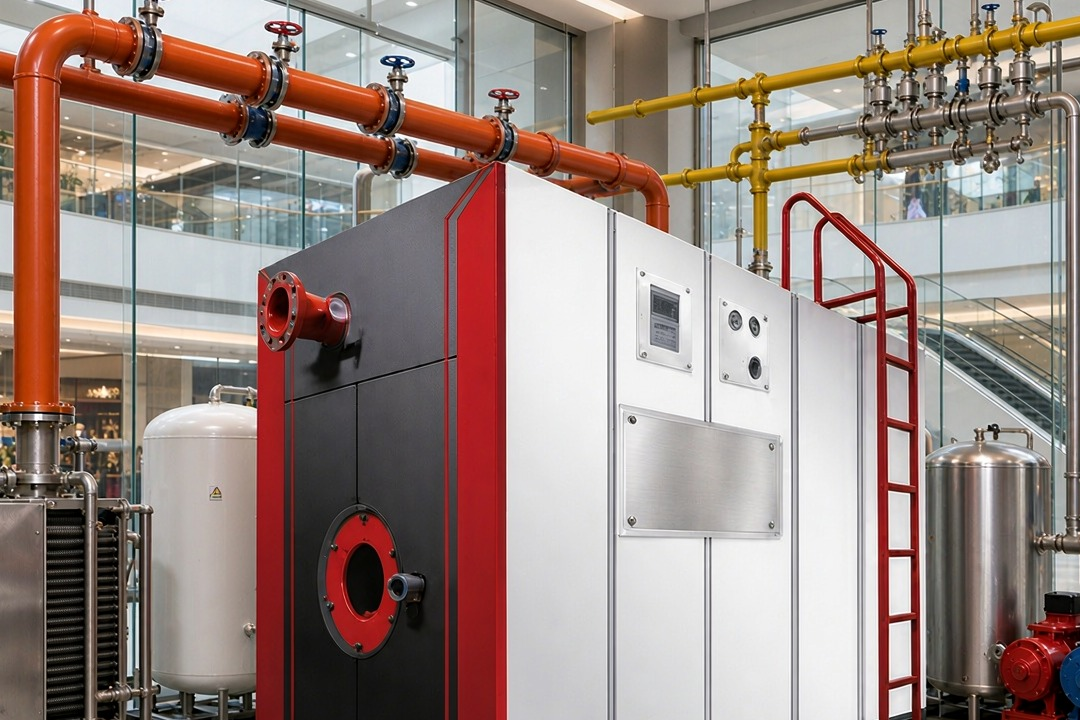
A large shopping mall is one of the hardest ordinary buildings to heat and feed with hot water. The retail halls run huge air handling units, a dozen entrance doors push cold air inside through air curtains all winter, a food court and dozens of restaurants draw domestic hot water in sharp morning and lunch peaks, and an office tower on the upper floors follows a completely different timetable from the shops below. The boiler room at the back of house has to cover all of it quietly, safely and cheaply, in a building where thousands of visitors stand directly above the plant room every day. That combination of safety, part load behaviour and dual duty is exactly where the ZWNS condensing vacuum hot water boiler earns its place, and this article works through the whole plant design: the load map of a mall complex, why negative pressure vacuum technology suits crowded public buildings, how condensing efficiency depends on the return water temperature, how one boiler body serves heating and domestic hot water at the same time, and a full sizing example with the model range and fuel figures.
The worked example is a mixed use complex with a retail podium of about 120,000 square metres and a 30,000 square metre office tower, which is a common scale for a regional shopping centre. The method is the same for any mall project, and every number below can be rebuilt from the floor areas, entrance count and restaurant mix of the project the reader is planning. Typical industries and building types served by this boiler family are listed on the boiler application page.
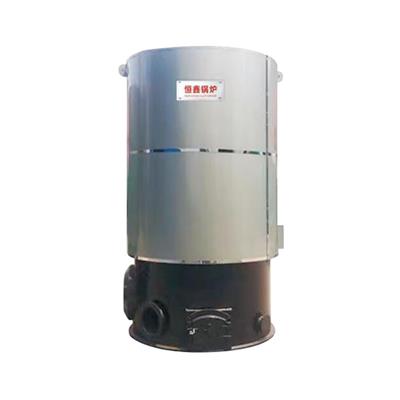
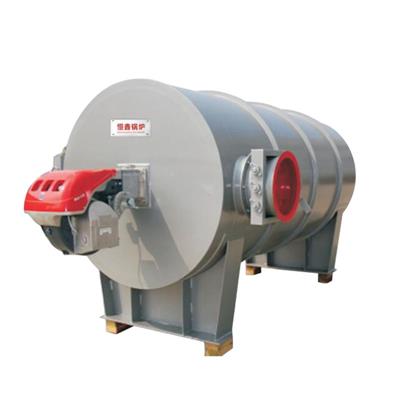
A vacuum hot water boiler is a pressure vessel that never actually operates under pressure. Inside the sealed body, a small charge of heat medium water and steam is held at a pressure below atmosphere, which sets a saturation temperature below 100 degrees C and caps the temperature the body can ever reach. The circulating water of the heating and hot water circuits never mixes with the heat medium; it is heated indirectly through built in heat exchangers immersed in the evaporating medium. Three consequences follow directly from this construction, and each one matters more in a shopping mall than in a factory.
Because the furnace side and the shell operate below atmospheric pressure, the vessel cannot burst in the way a pressurized boiler can. The worst credible failure mode of the pressure envelope is a loss of vacuum, which simply stops heat delivery, rather than a violent release of stored energy. In a plant room under retail floors, next to food storage and below crowded atriums, that difference changes the whole risk conversation with fire authorities and insurers.
Pressurized hot water boilers above defined capacity sit inside pressure equipment inspection regimes in most jurisdictions, and some regions additionally require certified boiler attendants on site. A vacuum boiler, operating below atmospheric pressure, is classified outside many of those regimes, which reduces periodic shutdowns for inspection and removes one of the recurring staffing costs of a mall plant room. The exact classification always follows local code, so the owner should confirm it with the local authority, but the direction of the difference is consistent.
The small charge of heat medium water inside the vacuum body is sealed at the factory and never evaporates away to be replaced. No continuous make up water means no continuous feed of hardness and oxygen into the heat transfer side, so the heating surfaces stay clean and the original efficiency holds for years instead of decaying between chemical cleanings. Scale, which is the quiet efficiency killer of conventional hot water boilers, largely disappears as a maintenance topic. The heat medium charge and vacuum level are monitored automatically, and the unit re establishes its vacuum after a shutdown without operator action.
Good plant design starts with an honest load map, and a mall has a wider mix of duties than most buildings of its size. The table below lists the typical consumers of a retail podium with an attached office tower, with the design basis values a heating engineer would use for a northern Chinese climate.
| Consumer | Design basis | Load character | What a shortfall costs |
|---|---|---|---|
| Retail hall space heating through AHU coils and fan units | 45 to 55 W per square metre of retail area | Weather driven, deep setback overnight is normal | Cold stores at opening hour, complaints on trading floors |
| Office tower heating | 40 to 50 W per square metre of office area | Weekday timetable, strong morning warm up peak | Cold offices, tenant friction |
| Air curtains at entrance groups | 30 to 60 kW per entrance door group | Sharp spikes on windy or freezing days | Cold drafts, ice at thresholds, slipping risk |
| Fresh air preheat and AHU reheat coils | 25 to 35 W per square metre served | Follows ventilation schedule and weather | Stuffy halls, condensation at glazing |
| Food court and restaurant domestic hot water | 15 to 25 litres per seat per trading day at 55 degrees C | Twin peaks at midday and evening, weekend heavy | Restaurants cannot wash and serve, hygiene risk |
| Back of house hot water, toilets, cleaning | 5 to 8 litres per visitor per day | Follows visitor traffic | Washroom complaints, poor cleaning |
| Distribution losses | 4 to 6 percent of connected load | Constant | Hidden shortfall on the coldest weekend |
Two features of this map shape the whole design. First, the heating load and the hot water load peak at different hours: heating peaks in the early morning warm up before opening, while the food court peaks around the lunch service, so the two duties compete rather than add, and a diversity factor can honestly be applied. Second, the summer load does not fall to zero. Domestic hot water continues all year, and many malls keep a low heating circulation alive for dehumidification reheat in the rainy season, which means the plant must modulate down to a small fraction of its winter output without instability.
The condensing part of the ZWNS design recovers latent heat from the water vapour in the flue gas, and the size of that recovery is decided almost entirely by the return water temperature, because condensation only happens on surfaces cooler than the flue gas dew point. A mall built today should be designed around low temperature emitters, and the table below shows why the effort is worth it.
| Return water temperature | Typical thermal efficiency, lower heating value basis | Flue gas condition |
|---|---|---|
| 40 degrees C | 97 to 99 percent | Deep condensation, visible plume largely gone |
| 50 degrees C | 96 to 98 percent | Strong condensation |
| 60 degrees C | 94 to 96 percent | Partial condensation in cold weather |
| 70 degrees C | 92 to 94 percent | Little condensation except at low fire |
| 80 degrees C | 90 to 92 percent | Essentially dry, latent heat not recovered |
The practical recipe for a mall is straightforward. Air handling coils, fan coil units and air curtains all accept 50 to 60 degree water without any loss of comfort, and underfloor heating zones accept 40 to 45 degree water, so the heating circuit is designed at 55 to 60 degrees supply and 40 to 45 degrees return instead of the traditional 85 to 60. Domestic hot water needs 55 to 60 degrees at the taps, which the built in heat exchanger delivers regardless of circuit temperature. Designing the emitters low converts the whole heating season into condensing operation, and the several percentage points of efficiency then apply to the largest energy line in the operating budget of the building.
A conventional plant serving mixed duties either runs separate boilers for heating and hot water, or pushes everything through external plate heat exchangers. The ZWNS body can carry several independent stainless steel heat exchanger bundles immersed in the same heat medium, each serving its own circuit with its own pump set and temperature control, all hydraulically separated from one another and from the heat medium side.
| Circuit | Design temperatures | Served loads | Control |
|---|---|---|---|
| Heating circuit | 55 to 60 / 40 to 45 degrees C | AHU coils, fan units, air curtains, office radiators | Weather compensation by outdoor reset |
| Domestic hot water circuit | 55 to 60 degrees C storage or instant | Food court, restaurants, washrooms, back of house | Storage thermostats plus priority on peak |
| Low temperature circuit | 45 / 38 degrees C | Underfloor zones in atriums and entrances | Own mixing or direct low temperature feed |
| Heat medium side | Saturated at sub atmospheric pressure | Common heat source for all bundles | Automatic, sealed for life |
One consequence deserves emphasis for mall owners. Because the domestic hot water circuit is a closed loop heated through a bundle, the scale forming business of the mall water never enters the boiler body itself; any hardness handling happens on the circuit side where a plate exchanger can be cleaned or replaced cheaply. The boiler body stays factory clean for its whole life, and the circuit side is protected by ordinary softening.
A mall boiler plant lives most of its hours far below its winter peak. In summer the entire duty is domestic hot water plus dehumidification reheat, often 15 to 25 percent of the design load, and in the shoulder seasons heating adds only a few tenths. The ZWNS range uses fully automatic two stage fire regulation with a micro positive pressure chamber combustion design, which holds stable combustion and clean flue gas across both stages, and the burner steps between stages according to the load. Plants sized well end up with the lead boiler sitting on low stage through most summer days, which is exactly where a vacuum boiler is happiest: the heat medium evaporates and condenses gently, the built in exchangers transfer steadily, and there is no pressurized vessel cycling through repeated pressure swings. Sizing rules that follow from this behaviour are simple: choose at least two boilers, let one small enough unit own the summer, and avoid a single large unit that short cycles in July.
The example complex combines a retail podium of 120,000 square metres with a 30,000 square metre office tower and twelve entrance door groups, with a 1,800 seat food court.
| Consumer | Basis | Connected load (MW) |
|---|---|---|
| Retail hall heating | 120,000 square metres at 50 W per square metre | 6.00 |
| Office tower heating | 30,000 square metres at 45 W per square metre | 1.35 |
| Air curtains | 12 entrance groups at 50 kW | 0.60 |
| Fresh air preheat and reheat | 30,000 square metres of AHU served area at 30 W | 0.90 |
| Food court and restaurant hot water | 1,800 seats at 20 litres per seat, plus back of house, with recovery allowance | 1.20 |
| Distribution losses | 5 percent of the above | 0.50 |
| Connected total | 10.55 |
The heating warm up peak sits before opening and the food court peak sits around noon, so the two largest duties rarely coincide; a diversity factor of 0.75 is honest for this mix and gives 7.9 MW. A design margin of 10 percent for fouling, emitter drift and unusually cold weekends brings the design duty to about 8.7 MW.
| Option | Configuration | Load at design peak | If one boiler fails | Assessment |
|---|---|---|---|---|
| A | Single ZWNS10 | 87 percent | Everything stops | No standby in a public building, rejected |
| B | Two ZWNS7.0 | 62 percent each | Survivor carries about 80 percent, comfort held, hot water prioritised | Recommended |
| C | Three ZWNS3.5 | 83 percent each | Survivors carry 80 percent, finest part load | Viable, more units and more maintenance points |
| D | ZWNS7.0 plus ZWNS3.5 | Large unit at 87 percent | Large unit down leaves 40 percent | Weak redundancy, rejected |
Option B is the usual answer at this scale: two 7 MW units each sit at 62 percent at the design peak, both condense deeply at the low return temperatures the design produces, and on the failure of one unit the survivor carries four fifths of the duty, enough to hold comfort in the retail halls while the office tower warms up on schedule and the food court hot water takes priority. In summer a single unit at low stage covers the whole plant, so neither machine accumulates idle hours. Option C suits developers planning a phased expansion of the podium, because a third unit can arrive with the extension.
The ZWNS range as published covers a rated power from 350 to 14,000 kW, fully automatic two stage fire regulation, micro positive pressure chamber combustion, and natural gas, light oil or heavy oil as design fuels. The model ladder below shows the typical steps within that published range, and the exact certified data sheet for the selected model is issued with the offer.
| Model | Rated power (kW) | Hot water outlet (degrees C) | Efficiency, LHV basis (%) | Fuel | Typical duty |
|---|---|---|---|---|---|
| ZWNS0.35 | 350 | up to 85 | 96 to 99 with condensing | Natural gas, light oil, heavy oil | Small mall annex, club building |
| ZWNS0.7 | 700 | Neighbourhood retail, small hotel wing | |||
| ZWNS1.0 | 1000 | Shopping street block | |||
| ZWNS1.4 | 1400 | Community mall, podium section | |||
| ZWNS2.1 | 2100 | Mid size mall plus offices | |||
| ZWNS2.8 | 2800 | Regional mall podium heating | |||
| ZWNS3.5 | 3500 | Regional mall, phased expansion | |||
| ZWNS4.2 | 4200 | Large complex, single unit duty | |||
| ZWNS7.0 | 7000 | Large regional complex, recommended pair | |||
| ZWNS14 | 14000 | Very large integrated development |
Every unit ships as a packaged body with burner, control cabinet, vacuum monitoring and built in heat exchangers, so the site work reduces to foundations, flue, gas, circuit pipework and commissioning, which matters in a mall retrofit where the plant room window for noisy work is short.
Heat demand of the example complex over a year, combining the heating season and the all year hot water duty, lands near 11,000 to 13,000 MWh delivered as useful heat. The fuel table below converts that to purchases per unit of heat at condensing efficiencies.
| Fuel | Consumption per 1000 kWh useful heat | Note |
|---|---|---|
| Natural gas | 104 to 110 cubic metres | At 96 to 99 percent LHV efficiency |
| LPG | 78 to 84 kilograms | Where no gas main exists |
| Light oil | 85 to 90 kilograms | Backup fuel or dual fuel burner |
| Heavy oil | 88 to 94 kilograms | Where economics favour it |
At 12,000 MWh of annual duty the complex purchases roughly 1.25 to 1.32 million cubic metres of natural gas. The difference between condensing operation at low return temperature and non condensing operation at 80 degree return is on the order of 6 to 8 percent of that figure every year, which is usually more than the cost of specifying low temperature emitters during design, so the emitter decision deserves the same attention as the boiler decision.
| Item | Requirement |
|---|---|
| Foundations and vibration isolation | Flat pads or spring isolators, plant room sits below retail floors |
| Flue system | Stainless inner liner, condensate slope back to the boiler, plume position away from mall intake louvres |
| Condensate handling | Gravity drain with neutralisation medium, sized for peak condensing rate |
| Gas train | Regulated supply pressure per burner data, double block and bleed, leak detection in enclosed rooms |
| Circuit hydraulics | Low loss header or decoupler between boiler bundles and variable speed circuit pumps |
| Circuit water treatment | Softened fill water, inhibitor dosing, side stream filtration on open loops |
| Domestic hot water safety | Storage at 60 degrees C or thermal disinfection cycle, blending valves at washroom outlets |
| Combustion air and ventilation | Louvres sized for combustion air plus room heat rejection, dust filtered |
| BMS integration | Boiler sequencer over Modbus or contacts, outdoor reset, remote alarm to facility control |
| Commissioning | Combustion tuning at both fire stages, vacuum system verification, full load test witnessed |
| Interval | Task |
|---|---|
| Daily | Read and log operating temperatures, gas pressure, burner stage behaviour, alarm history |
| Weekly | Check circuit pressures and pump operation, inspect condensate drain flow, walk the plant room for smells or leaks |
| Monthly | Exercise gas safety valves, verify vacuum monitoring and re seal behaviour, clean burner intake filters |
| Quarterly | Sample circuit water chemistry, check blending and circulation of domestic hot water, inspect flue terminations |
| Annually | Combustion analysis at both stages, safety device function test, replace neutralisation medium, manufacturer service visit |
The vacuum body itself asks almost nothing between annual checks: the heat medium charge is sealed, no blowdown exists, and no pressure relief test on a live vessel is needed. Most of the calendar above is ordinary plant room hygiene, and a two technician facility team can run it with the annual manufacturer visit.
Adding every consumer without diversity produces a plant far larger than the building ever needs, and oversized boilers spend their life short cycling in shoulder seasons. Use the diversity between the heating warm up peak and the food court peak, then verify the summer duty against the modulation floor of the selected units.
A plant that heats brilliantly in January and cannot run stably at 15 percent in July is the wrong plant for a mall. Pick a configuration where one unit owns the summer alone at a comfortable point on its two stage curve.
Specifying 85 to 60 degree emitters quietly switches off condensing for the whole season. Coil selection and radiator sizing should be reviewed at 55 to 60 degree supply before the boiler is ordered.
A single boiler serving a mall is a lease negotiation risk: a breakdown during a trading weekend is felt by every tenant. Two or more units with genuine crossover are the standard.
Large food court storage at lukewarm temperatures is a legionella risk. Hold storage at 60 degrees, circulate return loops, and fit blending valves at outlets, so hygiene and comfort are both covered.
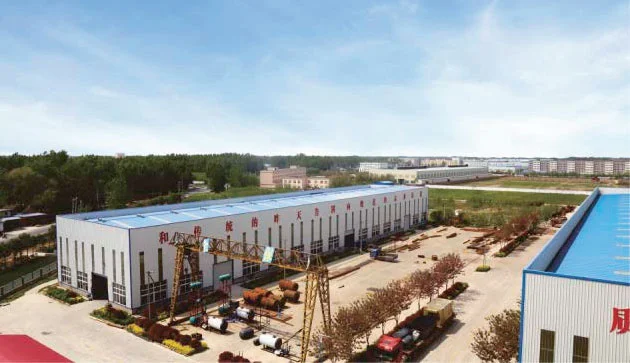
A vacuum boiler is a sealed, welded product whose quality is decided at the factory, so the manufacturer matters more than usual. Henan Hengxin Boiler Co., Ltd. builds the ZWNS range as a licensed special equipment manufacturer certified under ISO9001 and ISO14001 quality and environmental management systems, holds 3A credit ratings as recorded on the company honor and certificates page, and offers draw based customisation and OEM production for projects whose plant rooms impose unusual dimensions, voltage standards or control protocols. Clients are welcome to bring their load schedules, plant room drawings and local code questions for a design review before ordering, and reference installations across the building and industrial sectors covered by the application pages can be discussed for comparison.
The vacuum body operates below atmospheric pressure, so it cannot burst in the manner of a pressurized vessel, and its temperature is capped below 100 degrees C by the sub atmospheric saturation. In many jurisdictions it also sits outside the periodic pressure inspection regime and the certified attendant requirement that apply to pressurized boilers, which lowers both risk and operating cost in a building open to the public. Local code always governs, and the classification should be confirmed with the authority having jurisdiction.
Yes. Several independent stainless steel heat exchanger bundles are immersed in the same heat medium body, each serving its own closed circuit with its own pump and control, so heating, low temperature zones and domestic hot water run simultaneously with full hydraulic separation and no risk of cross contamination.
With return water temperatures held at 45 to 50 degrees C, thermal efficiency on a lower heating value basis runs at 96 to 99 percent through most of the season, because the flue gas condenses continuously. At traditional 70 to 80 degree return temperatures the latent heat is largely lost and efficiency falls into the low nineties, which is why emitter temperature design is part of the boiler decision.
The vacuum is monitored automatically and re established by the unit after shutdowns; the heat medium charge is sealed at the factory and does not need renewal in normal service. Because the medium never admits fresh water, oxygen or hardness, the heat transfer surfaces stay clean and the body avoids the scale and corrosion that age conventional boilers, giving the design a long service life under standard annual maintenance.
A shopping mall complex asks its boiler plant for public building safety, deep part load stability, dual duty hot water delivery and season after season of condensing efficiency, and the ZWNS condensing vacuum hot water boiler was built around exactly those four demands: a sub atmospheric body that removes the pressurized vessel risk, two stage automatic firing with a model ladder from 350 to 14,000 kW, independent built in heat exchanger circuits for heating and domestic hot water, and an efficiency band that holds when the emitters are designed low. Send the floor areas, entrance count and food court seat count of the mall to the Hengxin engineering team, and the reply will include the load table, the boiler configuration, the circuit design and the fuel figures at the local gas price, together with the draw based customisation and OEM options of a licensed manufacturer certified under ISO9001 and ISO14001.